Medieval Egypt Was No Stranger to Class War
Egypt in the Middle Ages was steeply class stratified. When the rains failed, the rich dined on hoarded grain while the starving poor ate grass. Periodically, the masses would erupt in revolt — sometimes with petitions, other times with stones.
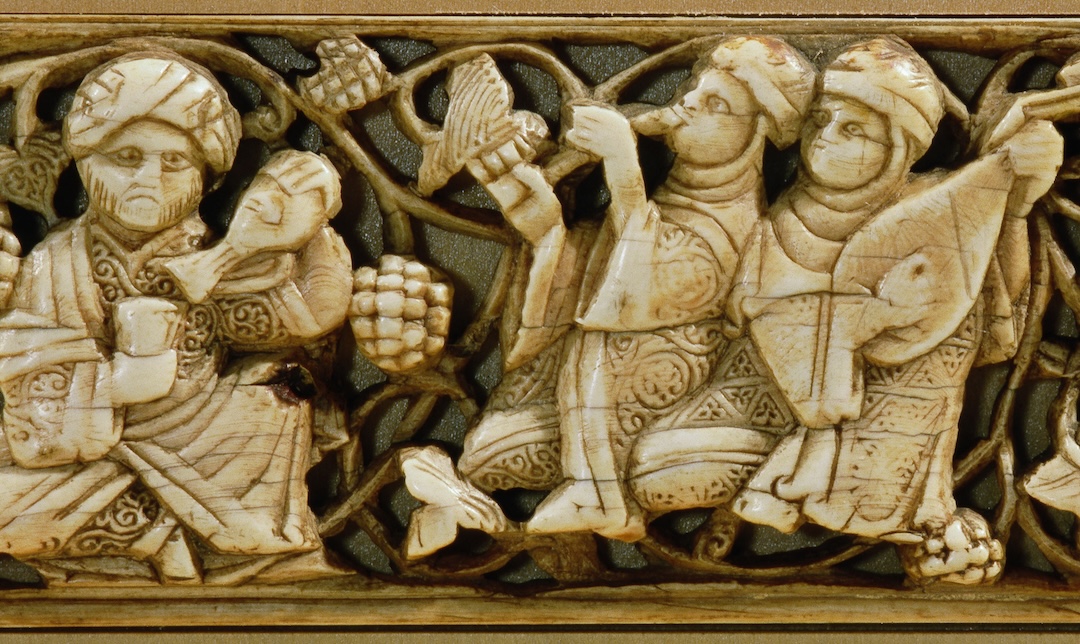
The detail on a carved ivory plaque from a piece of furniture depicting a feast with wine, from Egypt during the Fatimid dynasty, eleventh to twelfth century AD. (Werner Forman / Universal Images Group / Getty Images)
On Roda Island in the Nile stands a stone column nineteen cubits (thirty-four feet) tall and nearly 1,200 years old. It is called the Nilometer. Before the construction of the Aswan Dam, an official would measure how high the river rose and from that reading determine the fate of the country’s annual harvest. By the eleventh century and continuing until the Ottoman Turkish conquest of 1517, the rulers of Egypt had made a tradition of exorbitant pageantry whenever the waterline reached sixteen cubits: the harvest would be reaped, the cosmic and communal order confirmed, the people fed and placated, and the land tax collected.
But not all Nilometer news was good news. If, by around the end of August, the water still had not reached sixteen cubits, the festivities and the land tax would be canceled, and the people would know that hard times lay ahead. Conversely, a continued rise to eighteen or nineteen cubits would mean the Nile was flooding and could take thousands of homes and people with it.
Some believed that such disasters were cosmic warnings against society’s sins, and that the ruling class — military cliques, government officials, and private landowners — was to blame for those sins. But God’s punishment did not fall only on the guilty. “Fear a trial which will not strike those who have wronged among you exclusively,” reads a verse in Al-Anfal, the eighth chapter of the Qur’an. Tyranny and corruption (fasad) were seen as a rot that spread through the entire communal order, as with the People of Lot before their destruction. Divine wrath was an elemental force, not a paper writ delivered to particular individuals. Popular protest was different, as the ruling classes were sometimes reminded. It could be just as sudden, furious, and overwhelming, but it was precise in its targets, and its moral and religious justification was plain to all.