Is Ecuador Still a Democracy?
After barring the opposition party from November’s elections, the far-right government of Daniel Noboa has arrested its leader, Luisa González, blurring the line between democracy and dictatorship.
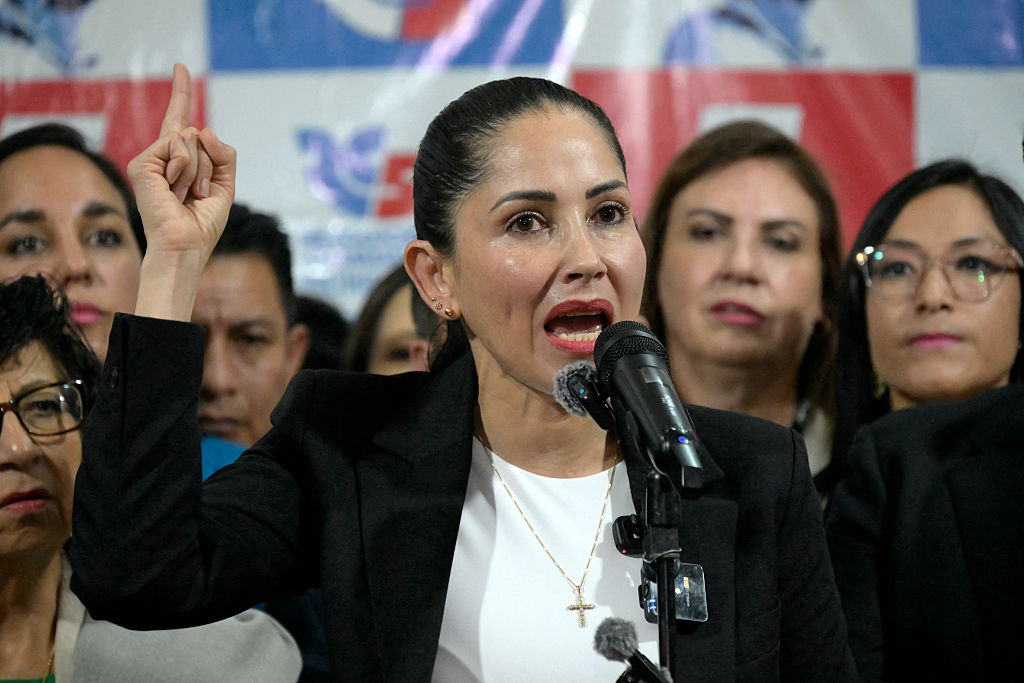
Ecuadoran President Daniel Noboa’s far-right government jailed opposition leader Luisa González on Thursday, just weeks before local elections and a year after she grilled him over the use of his family’s banana shipments for cocaine trafficking. (Rodrigo Buendía / AFP via Getty Images)
“I’d be lying to you if I told you that yesterday I didn’t double-lock the door, just in case they come to take us down in the middle of the night.”
Those were the words of Jahiren Noriega, a member of Ecuador’s National Assembly, the day after the detention of Luisa González, the Movimiento Revolución Ciudadana’s presidential candidate in the country’s last two federal elections and the main opposition figure today.
In Ecuador, where the separation of powers no longer exists, the use of lawfare by the far-right government of President Daniel Noboa blurs the line between democracy and dictatorship. For members of the Movimiento Revolución Ciudadana, the party aligned with the former socialist president, Rafael Correa, the political persecution is nothing new, and left-wing leaders and social movements across Latin America will surely recognize the playbook. But González’s detention last Thursday marks a shocking escalation in Noboa’s bold use of the courts to persecute opponents, and in Ecuador, a country with a rich history of protest that has been unusually quiet throughout his presidency, the Left faces its biggest test yet.