Climate Policies Can Bring Relief on Affordability and Beyond
Americans are suffering under an affordability crisis, while the climate crisis is making life more expensive. Both require urgent action — and both can be addressed simultaneously.
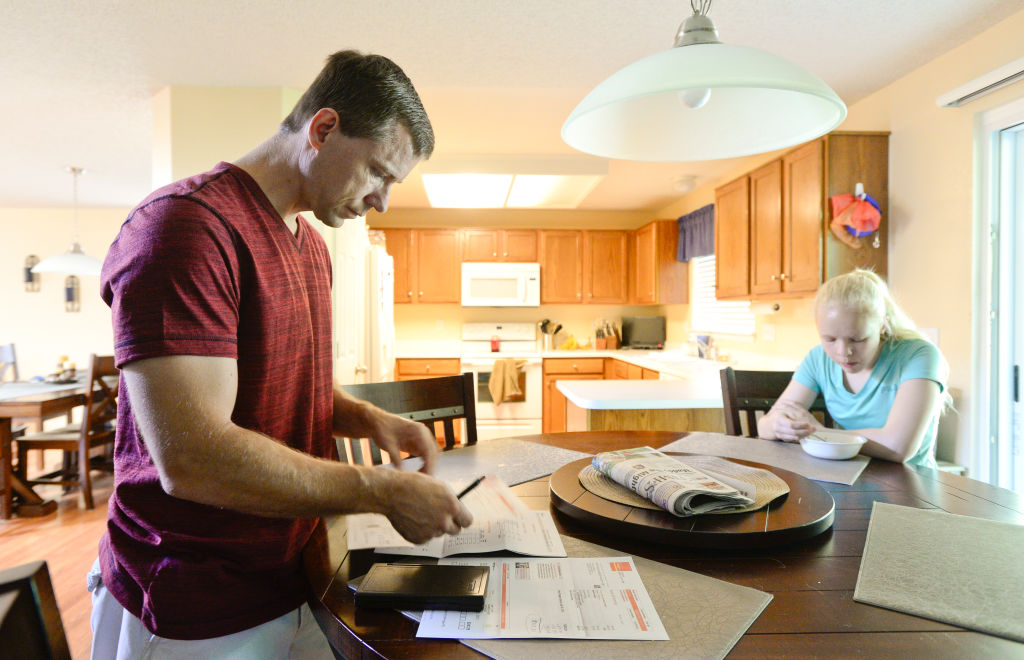
Taking the climate crisis seriously should mean taking the economic crisis seriously, beginning with lowering the many costs average Americans are currently seeing rise because of climate change. (Matt Jonas / Digital First Media / Boulder Daily Camera via Getty Images)
As the US midterm elections approach, one word keeps coming up in campaign promises and headlines: “affordability.” That working people in the United States are struggling to afford basic necessities is a problem that many are willing to acknowledge, but there is very little agreement on what should be done to tackle a core driver of the affordability crisis: climate change.
The climate crisis is already making life more expensive. Electricity rates skyrocketed in 2025 due to historic heat waves; home insurance rates are rising as disasters and extreme weather patterns increase; transportation costs have become one of the biggest sources of financial burden because of the volatile price of fossil fuels. Meanwhile, the Trump administration has withdrawn from global climate commitments, leaped into costly oil wars abroad, backed the deeply unpopular expansion of AI build-out across the country, and continuously decried renewable energy as a “green new scam.”
Failing to act on climate change while entrenching fossil fuel dependency deepens the affordability crisis, inflating the cost of living for working people as the economy buckles under the weight of various forms of environmental instability. And it also threatens the planet in both the environmental and political senses.
Ignoring the climate crisis is not only an economically unsound tactic; it is also a politically unpopular one. Climate and Community Institute’s polling with Data for Progress earlier this year showed that people have connected the dots between their strained budgets and climate change: 80 percent said that extreme weather phenomena impacted their cost of living, and 55 percent said that they wanted elected officials to address climate change and the cost of living through coordinated policies.
Political pundits pushing “climate hushing” — leaving climate out of kitchen-table politics — present a false choice between economic and climate policy and are ignoring what people need. One clear takeaway from the implementation of the Inflation Reduction Act and the legacy of the Joe Biden presidency is that durable climate policy must address the cost-of-living crisis but also implement transformative changes that people can feel in their everyday lives. Climate change is making everything from home insurance to groceries more expensive, but it is also making life more difficult and dangerous. We urgently need an ambitious agenda that connects the dots and offers rapid change to working people’s material conditions across the economy.
Immediate relief policies can take on the climate and economic crises at once, beginning with lowering costs inflated by climate change and alleviating other economic issues. A new series of briefs by the Climate and Community Institute demonstrates how to deliver that relief across the spectrum of everyday life in the areas where people are intensely feeling the effects of the climate crisis. These policies do not treat climate as an add-on or afterthought to piecemeal affordability measures. They alleviate pain points where people need help, from their health to their cooling costs, by moving federal dollars through the budget reconciliation process.
In this approach, “relief” is not just about putting money back in people’s pockets. It requires a whole-economy approach that cuts costs, protects people, and allows them to thrive — all of which require dealing with environmental instability. Actually tackling climate change by decarbonizing the economy will be a long process, but people need relief in the here and now. Putting forward bold policies that show that the government can deliver things quickly and to meet needs is a necessary part of any popular and successful political agenda that wants to win a greener, fairer future.
Cutting Costs and Protecting People
Because climate change is making life more expensive, financial burden is one of the primary ways that people feel the impacts of the climate crisis in their daily lives. Climate policies can provide immediate relief by focusing on cutting costs.
Take electricity, for example, a popular focus in affordability conversations. Electricity costs have exploded in recent years because of the massive data center build-out, extreme weather, and foreign wars increasing already-volatile fossil fuel prices. As residential electricity rates have risen, more and more people have fallen into utility debt. One in six households are behind on their power bills. Meanwhile, utilities are working hand in glove with data center developers and tech companies, creating huge bill increases for everyday people.
The federal government can create an Electricity Debt Cancellation Program, which would provide $20 billion in forgivable loans to utility companies conditioned on eliminating all residential ratepayer debt, reconnecting users, and submitting a concrete affordability plan that tackles the root causes of increased electricity prices, like the climate crisis and data center explosion. This would save people in the United States millions in utility bills and also show them that the federal government can and should intervene more explicitly in managing utilities to keep rates affordable and make electricity green and reliable during extreme weather events.
Beyond financial instability, climate policy can also protect people from the threats to their survival exacerbated by the climate crisis. Extreme heat, hurricanes, wildfires, and severe storms are not just increasing costs for communities already facing a broader affordability crisis but damaging homes and infrastructure while endangering and displacing people.
Federal responses to disaster is one salient part of this picture: instead of building out the public institutions that deliver security, like the Federal Emergency Management Agency (FEMA), the Trump administration has been gutting the already under-resourced agency in order to divert funds for staffing and capacity to US Immigration and Customs Enforcement (ICE), even as FEMA was facing increased demands for emergency disaster response.
The consequences are twofold: not only are ICE’s operations violating people’s rights, but FEMA is forced to help carry out deportations and immigration enforcement rather than disaster relief.
Congress can alleviate these harms by reducing the ICE budget and redirecting resources to FEMA to better fund disaster response as the climate crisis intensifies. Redirecting federal investment from militarized police to disaster response would not only keep people safe from ICE’s intensely unpopular and violent enforcement tactics, but it would allow Department of Homeland Security funding to go to much-needed scaling up of the public institution responsible for protecting people facing hurricanes, wildfires, extreme heat, and flooding.
As of June 2026, more than $100 billion was provided to ICE through budget reconciliation that has gone unused. Moving that money to be used by FEMA would demonstrate that safety can be built through state capacity and preparedness rather than coercive enforcement.
A Right to Thrive
Beyond bringing down the knock-on financial costs from the climate crisis and mitigating direct harm, immediate relief should also support the right to thrive in the fullest sense. Most working people are not only struggling to pay for electricity bills and home insurance premiums, they are suffering from lower quality of life overall. People are working more, making less, and lonelier than ever — and the climate crisis is making this worse.
One way to fix this is through policies that work to adapt communities. The federal government can invest just $10 billion in public parks that would provide outdoor space for community interaction, increase flood absorbency, and offer heat relief in the summer months. Access to public works is not just important for people’s sense of quality of life; it can provide much-needed green infrastructure as cities and towns adapt to a changing climate.
As the United States faces a dire cost-of-living crisis, affordability should be an anchoring priority to provide immediate relief to working people. Climate policy should be central to any agenda that provides this economic relief, and it can also go beyond cutting costs here and there to bringing immediate relief across the spectrum of everyday life. By acting quickly to move federal investments, Congress can show that government can accomplish the first steps of a capacious agenda that brings relief to millions of people who need it.