Milwaukee’s Proud History of Baseball — and Socialism
The Milwaukee Brewers are in the World Series for the first time since 1982. The small-market team’s success this season is a reminder of Milwaukee baseball’s progressive heritage and the city’s proud socialist history.
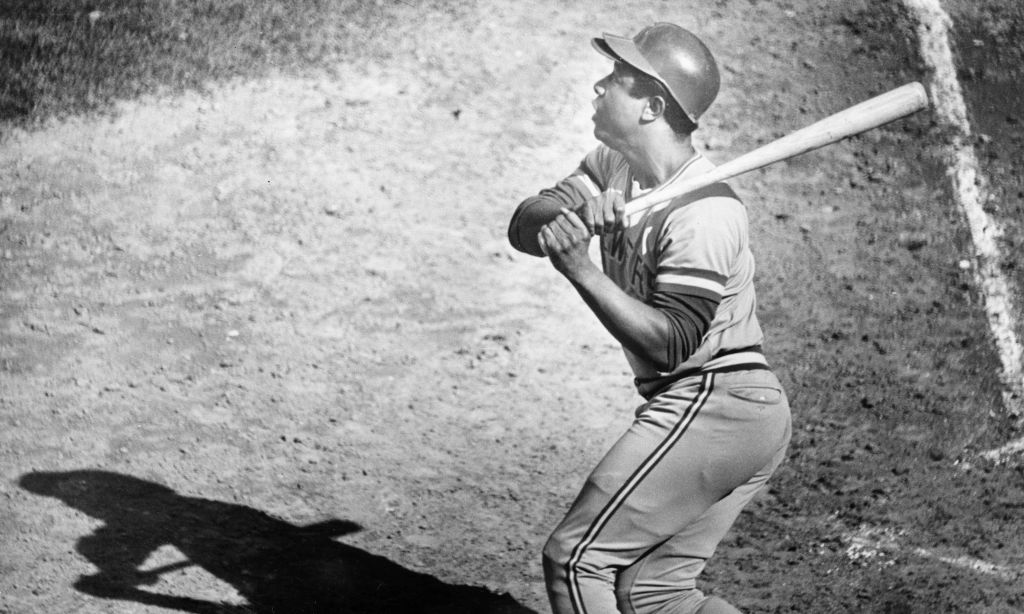
The Milwaukee Brewers’ Hank Aaron watches the flight of a hit off Boston Red Sox pitcher Bill Lee, in Fenway Park on September 14, 1975. (Frank O’Brien / The Boston Globe via Getty Images)
Organizers like to say that all politics boils down to a battle between organized money and organized people. Candidates with the largest war chests tend to win, but contenders who refuse to take donations from corporate interests can prevail if their supporters are well-organized, inspired, and strategic. Likewise, big employers can spend huge sums on union busting, but employees can win union organizing drives if they know how to mobilize workers to stick together and not be intimidated.
The same is true in baseball. Teams in big markets with large payrolls have a decided advantage when it comes to recruiting talented players who command huge salaries, but feisty, scrappy teams with fewer stars can sometimes win championships. Since 2000, more than 80 percent of the teams that have advanced to the World Series ranked in the top half of league payrolls. Teams with the five largest payrolls (out of thirty teams) account for roughly 38 percent of all World Series contestants and nearly half (48 percent) of all World Series champions.
But this year is an exception: the World Series contestants — the Milwaukee Brewers and the Tampa Bay Rays — are both among the poorer teams in baseball. Milwaukee is Major League Baseball’s smallest market in terms of population size and TV audience and ranks nineteenth in payroll ($143.5 million). Tampa Bay is twenty-fifth in market size and ranks twenty-sixth in payroll ($98.3 million).