The Uprising We Got vs. the One We Need
Paul Greengrass’s The Uprising takes on the English Peasants’ Revolt of 1381 with his trademarked “gritty realist” style. The result is a glum plod through the 14th century. This is Robin Hood and His Morose Men when our times call for something much more.
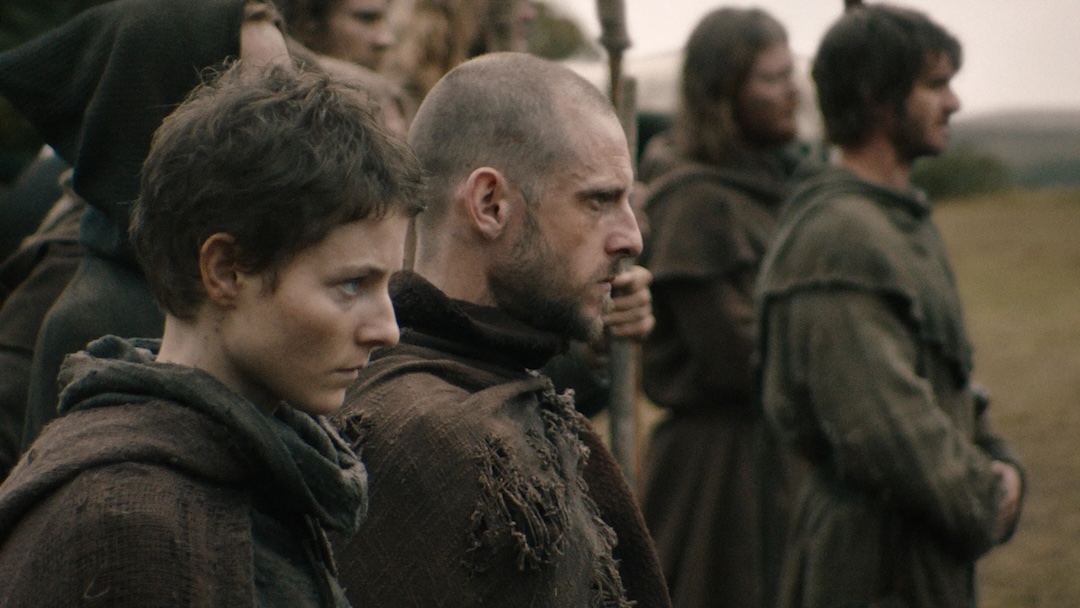
In The Uprising, the oppressed are sympathetic right up until the moment they fight back. (Focus Features)
How do you make a boring film about a peasant revolt? Writer-director Paul Greengrass (The Bourne Supremacy, Captain Phillips, United 93) has found a way. His new film, The Uprising, is about the English Peasants’ Revolt of 1381, and it’s such a glum plod I should’ve forgotten it immediately after seeing it. But somehow it haunts me.
Maybe it’s the dismal blue-lit cinematography, so typical of our spiritless era. And on top of that, Greengrass’s tendency to favor in intense scenes his wobbling, uncertain handheld-camera work that has so little impact, you want to yell at the screen, “Pick a shot, man! You’re the director!”
But mostly, it’s the way the film disapproves of peasant revolts, which you might say is surely impossible. If there’s a peasant revolt, you side with the peasants, obviously — even old Hollywood flicks made by rank conservative movie moguls got that part right. But The Uprising earnestly insists on an “its complicated” stance toward the events of 1381. There’s all that distasteful violence and looting by enraged and starving peasants, for example. And the protagonist, a leader of the massive rebellion, tut-tuts and shakes his head and gets depressed over that in a way that says plainly, “The peasants are revolting in more ways than one.”