In Defense of Victor Serge

Victor Serge’s legacy is not that of a man who abandoned socialism for anti-communism. It is that of a socialist thinker who refused every capitulation — to Stalinism, to liberalism, to despair — and who paid the full price of that refusal.
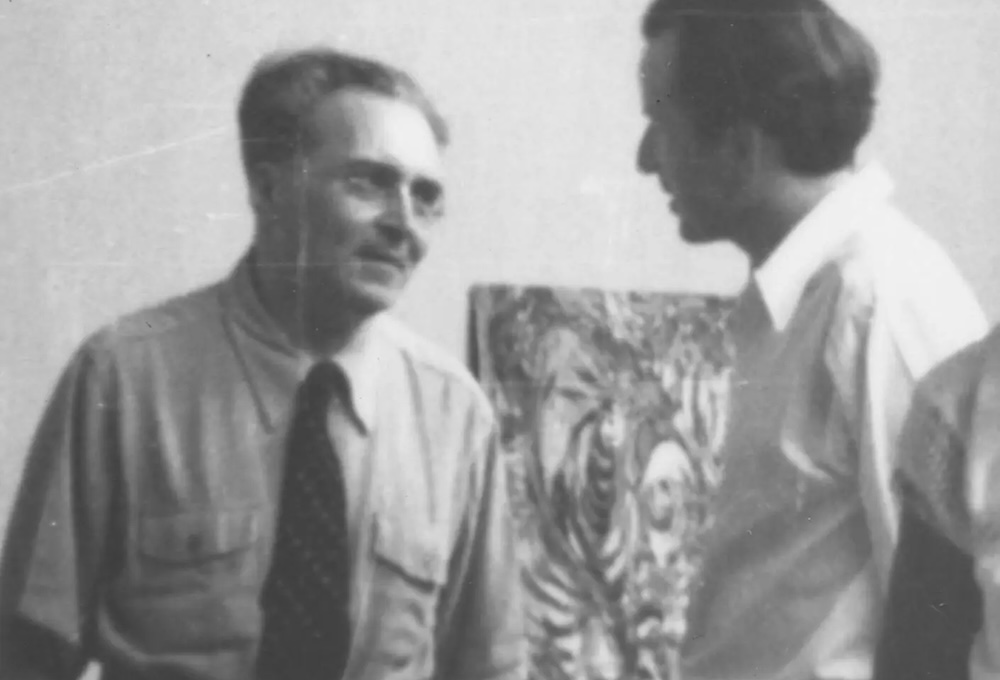
Victor Serge and Wolfgang Paalen in the artist’s studio in Mexico City, May 30, 1942.

Victor Serge and Wolfgang Paalen in the artist’s studio in Mexico City on May 30, 1942.


For decades, anyone writing about Victor Serge had to begin by explaining who he was and why we should care. Despite an enormous literary legacy, he had been literally airbrushed from Soviet history, a forgotten figure even on much of the Left. History is rarely kind to the vanquished, and Serge stood on the side of the defeated, with those who refused to compromise with capitalism or surrender to Stalinism. The cost was high, but Serge’s eloquent voice and mighty pen could not prevent his being sidelined by history, ignored or poorly understood, consigned to a life of poverty. Four of his books were confiscated by the Soviet Censorship (Glavlit), and other writings were left unpublished, though they establish him as a man who belongs to our future.

Who was Serge? A worker, a militant, an intellectual, an internationalist by experience and conviction, and always poor, Serge lived from 1890 to 1947. He took part in three revolutions, spent a decade in various prisons, and was politically active in seven countries. He published more than thirty books and left behind thousands of pages of unpublished work. He was born Victor Kibalchich in Belgium, to Russian anarcho-populist parents in exile, and died in exile himself in Mexico as an independent, nondoctrinaire socialist thinker and writer. He spent the years 1919–1936 for the most part in the Soviet Union, part of a revolutionary generation that sought to create a socialist society.

They were outmaneuvered and defeated by Joseph Stalin, who established a bureaucratic authoritarian dictatorship ruling in the name of communism. Serge devoted what remained of his life to understanding the Soviet experiment’s promise and its failure — not to renounce socialism but to rescue it from the catastrophe of Stalinism.

He opposed capitalism first as an anarchist, then as a Bolshevik. He opposed Bolshevism’s undemocratic practices and then opposed Stalin as a Left Oppositionist. He argued with Leon Trotsky from within the anti-Stalinist left, and he opposed both fascism and the emerging Cold War as an unrepentant revolutionary Marxist. His perceptions often put him at odds with his co-thinkers in the West, causing him much grief, isolating him from the very movement he had devoted so many years to, at such great risk.

Yet he did not succumb to pessimism. He never wavered in his commitment to the creation of a society that defends human freedom, enhances human dignity, and improves the human condition. To Serge, democracy was not an accessory to socialism but its indispensable condition. Through his essays, memoirs, notebooks, novels, and journalism, he sought to understand the defeats of the twentieth century in order to illuminate the possibilities of the future, calling for a renewal of socialist thought and practice.

Writing from exile in Mexico in the final years of his life, he offered a warning to the “fossilized dogmatists” who believed European revolution was inevitable after the war.

A dark age is opening up before Europe and the world. The best revolutionaries have been destroyed by past defeats and the war. Time will have to elapse before new cadres are formed. The old socialist programs and routines have been superseded and must be renewed. Stalinism, victorious thanks to the unconditional support and concessions made by the Allies, will be more dangerous than ever. . . .  If we want to save Europe we have to start by bringing together all free democratic forces in order simply to practice the art of not dying away.

Serge’s admonition captures the revolutionary but resolutely independent thought of a man who insisted, above all, that socialism without liberty and democracy is not and cannot be socialism. As he put it in 1942:

We want to participate in the construction of a socialism restored to its dignity and real aims, which can only be through an organization of free men. We want honest and clear ideas within a healthy workers’ movement invigorated by fraternal competition and free debate. From the heart of threatened democracy, of socialism and the workers’ movement, above all we defend freedom of opinion and the human dignity of the militant, the rights of minorities and a critical spirit. We fight relentlessly, and we will not cease to fight, against controlled thought, the cult of the leader, passive obedience and the despicable ploys of parties subject to blind discipline as well as the systematic use of lies, slander and assassinations.

Rediscovering Serge is no longer a rescue operation. The logjam has broken: the publication of his Carnets (Notebooks, 1936–1947) by Agone, the new editions of the Memoirs of a Revolutionary and his novels by New York Review Books, and now two major new biographies — Mitchell Abidor’s Victor Serge: Unruly Revolutionary and Claudio Albertani’s Le jeune Victor Serge, the first volume of a biography not yet translated into English — mark something of a Serge renaissance. We have entered a period in which the task is no longer simply to introduce his literary and revolutionary legacy but to defend it.

We write from different political traditions — anarchism, the Left Opposition, revolutionary socialism — but we are united by a shared conviction that Abidor’s biography, for all its archival depth, misreads its subject. Serge’s legacy is not that of a man who abandoned socialism for Cold War anti-communism. It is that of a socialist thinker who refused every capitulation — to Stalinism, to liberalism, to despair — and who paid the full price of that refusal.

Don’t Pigeonhole Serge

Coming from distinct political and intellectual traditions frees us from the temptation to confine Victor Serge within a single, tendentious interpretation and from subjecting him to the verdict of hindsight, as though every stage of his life inevitably pointed toward his supposed later anti-communism. Whether we come from anarchism, Trotskyism, revolutionary socialism, or other currents of the Left, one thing should remain common: the refusal to transform a life defined by struggles, defeats, and resistance into a trial by innuendo. It is from this shared concern — not from agreement on every political question — that we approach Abidor’s biography.

Yet this is precisely what Abidor does all too often. The book contains valuable material, including important documents and moving accounts — for example, of Serge’s years in France. The problem is not that Abidor is harsh on Serge; it is that his central interpretive approach strikes us as profoundly flawed.

He psychologizes Serge, casts doubt on his sincerity and moral character, and exaggerates anecdotes and phrases taken out of context. The partisan use of real material ends up producing a distorted image of Serge. Falsification does not necessarily imply inventing facts; it can consist of arranging them in such a way that they no longer correspond to their original context.

As an anarchist, one might reasonably have expected Abidor’s criticism to focus on Serge’s decision to join the Bolshevik Party in 1919, marking his break with the anarchism of his youth. But this is not the case. In his account of Serge’s youth, Abidor treats the anarcho-individualist movement, in which Serge was an active participant for nearly a decade, with scant sympathy. More seriously, in discussing Serge’s role in the Liabeuf affair, the 1910 political campaign surrounding the execution of the worker Jean-Jacques Liabeuf. Abidor notes that the socialist journalist Gustave Hervé was prosecuted for public statements, whereas Serge was not. Although he acknowledges that no documentary evidence explains why Serge escaped prosecution, he nevertheless invites the reader to infer that his immunity reflected dubious dealings with the police. The lack of evidence functions less as a reason for historical caution than as an invitation to suspicion.

Abidor reserves his sharpest criticism of Serge for the final years of Serge’s life. By then, working in increasing isolation, Serge had deepened his analysis of Stalinism. Some of the judgments expressed in his correspondence, notebook entries, and later writings are open to debate and bear the unmistakable imprint of the extraordinary circumstances in which they were written. The violence of Stalinism, the memory of the Moscow Trials, the catastrophe of World War II, Trotsky’s assassination, and Serge’s own political isolation during his final exile in Mexico all weighed heavily on his thinking.

Recognizing this hardening of tone, however, does not vindicate Abidor’s interpretation. Does it amount to a conversion on Serge’s part to crude, vulgar anti-communism? We do not believe it does.

Abidor reads Serge through his own lens — he calls it his “inner paradigm” — and suspects him of insincerity, as if Serge were expressing opinions he didn’t hold. His central argument is that Serge became a staunch anti-communist in his later years. He bases this on a flawed premise: the idea that the Soviet Union under Stalin still represented, in however distorted a fashion, the socialist project.

Indeed, Abidor accepts that the USSR was a communist state — a surprising position for someone who professes an affinity with the anarchist tradition. He even calls it “the only socialist state” without seriously considering Serge’s analysis that Stalinism represented a system antithetical to socialism, ultimately anti-socialist and antihuman. In the final pages of his biography, Abidor writes that Serge’s insistence on the protection of political freedom and democracy “turned him into an uncompromising enemy of communism.” There could be no clearer statement of Abidor’s acceptance of Stalin’s own definition of his system as communist — a definition that would make Karl Marx shudder, and one that Serge spent his life refuting.

Fortunately, we need not speculate: Serge’s ideas are clearly documented in his essays and articles, notably in “For a Renewal of Socialism” (Pour une rénovation du socialisme), written in Mexico in the 1940s and published in French in Masses: Socialisme et Liberté (June 1946). There, Serge asserts that “collectivism is not, as one might have been tempted to assume, synonymous with socialism, and can even take on anti-socialist forms of exploitation of labor and contempt for humanity.” Serge’s definition of socialism places less emphasis on the economic structure of society than on its political and legal organization — that is, on human rights, freedom, and democracy.

In his unpublished manuscript “Économie Dirigée et Démocratie” (Directed Economy and Democracy), Serge analyzes Soviet “planning” as the antithesis of democracy, and of planning itself: not the conscious regulation of society by freely associated producers, as Marx defined it, but peremptory commands (ukases) issued from above, impossible to fulfill except on paper. He describes the USSR for what it was: a system operating through terror against its own population, run by Stalin’s dictatorship of the secretariat and secret police. It had nothing in common with the ideals of October.

A letter from Serge to René Lefeuvre, included in the 1984 edition of 16 Fusillés à Moscou (16 Shot in Moscow), shows a man preoccupied with Lefeuvre’s publication of a report that is insufficiently critical of American imperialism — a stark contrast to Abidor’s reductive portrayal: “I understand that the Stalinist threat alarms you. But it must not make us lose sight of our overall vision. We must not play into the hands of the anti-communist bloc; and, judging by the early issues of Masses, we deserve to be criticized for doing so.”

A similar sentiment appears in Serge’s Notebooks. In September 1944, he wrote that “the battle is open between the totalitarian Communist Party and socialist democracy.” He immediately clarified that the decisive opposition was no longer situated, as it was in 1917–1918, between socialist revolution and capitalist reaction, but also between Stalinist totalitarianism and democratic socialism. In 1942, regarding Spain, he writes that the objectives of the democratic revolution “can only be achieved by the socialist masses” and must be transcended by sweeping measures of “nationalization that entail planning.” In September 1944, when contrasting the “totalitarian Communist Party” with “socialist democracy,” Serge formulates the alternative in terms of “Stalinist totalitarianism” versus “democratic socialism,” making no concessions whatsoever to Western liberalism.

In an interview given to Protean Magazine in December 2025, Abidor declares: “[Serge] wanted to be a New York intellectual. At the end of his life, if he could have been anything in the world, he would have been a New York Jewish intellectual.” This is a forced and unprovable construct. Serge was not navigating the trajectory of the New York intellectual milieu — the Max Eastman and Max Shachtman arc, the familiar story of ex-Trotskyists moving rightward toward the Congress for Cultural Freedom. That is a real historical trajectory, but it is not Serge’s.

Enriching Socialism, Not Denouncing It

Tellingly, Abidor sees Serge’s long-held respect for the individual as anti-Marxist, which is to misread both Marx and Serge, who took this value as both starting point and conclusion. Marx argued that human freedom and self-realization could only be possible with the abolition of capitalism, which reduces the individual to a commodity. Rosa Luxemburg insisted on freedom of individual thought, especially for one’s enemies. So did Serge.

Serge’s political experience did not lead him to renounce socialism after Stalin’s triumph but to enrich it with a declaration of human rights. In “For a Renewal of Socialism,” published in Masses: Socialisme et Liberté (June 1946) Serge calls for updating Marxist thought in light of psychology, science, and new social formations. This was a renewal, not a rejection.

Working in isolation, deprived of the revolutionary generation who had understood both Marxism and Stalinism from the inside, Serge was grappling with the contours of the postwar world, attempting to analyze a formation in process of becoming. He could see the tendencies but died just as the Cold War was taking shape, before its implications were fully evident.

Serge died in November 1947. The Truman Doctrine had been proclaimed in March of that year; the Congress for Cultural Freedom, the CIA’s cultural apparatus, dates from 1950. The full ideological architecture of postwar anti-communism did not emerge until after his death. Projecting that framework onto Serge is not interpretation. It is tendentious anachronism, just as it is ahistorical to suppose, as Abidor does sotto voce in the Protean interview, that Serge “would have” supported the Americans in Vietnam.

Abidor attaches great significance to the fact that Serge served as Mexico correspondent for The New Leader, viewing it as proof of his ideological convergence with right-wing social democracy. The truth is more prosaic: Serge had no money and almost no means to earn a living in Mexico. He lived by his pen, but the Soviet state systematically closed off his publishing options. Manuel Alemán, future president of Mexico, admitted there was intense Soviet pressure to deny Serge any means of public expression. So Serge wrote wherever he could get published and, in the case of The New Leader, paid. He also refused to submit to censorship: he told Nancy and Dwight Macdonald that the magazine permitted a pluralism the Trotskyist press itself did not tolerate. At the same time, Serge wrote for Politics, the libertarian socialist journal edited by Dwight Macdonald.

Here then, is the Serge of his final years: not an anti-communist nor a cold warrior but a socialist thinker seeking to renew the tradition under extremely adverse conditions. Above all, Serge was a great writer. He evokes the atmosphere of the 1920s and ’30s inside the Soviet Union and the Communist movement, and spells out the dilemmas of the 1940s with a sense of immediacy and clarity. It is striking that Abidor fails to address the importance of Serge’s novels and poems for understanding the tragedy of a revolution that devours itself.

Five months before his death, in a letter dated June 22, 1947, addressed to “Podoliak,” the pseudonym of Ukrainian writer Hryhory Kostiuk, Serge declared: “I remain — unshakeably — a socialist, a partisan of democratic socialism. The system against which I have fought and continue to fight — and which you know well — I regard as a form of totalitarianism; that is to say, something new, yet profoundly inhumane and anti-socialist.” Kostiuk was neither a Western liberal nor a Cold War anti-communist; he was a Ukrainian revolutionary intellectual who had experienced Soviet terror firsthand, the editor of Vaplite, a journal in which Serge had published. This is not the portrait of a man settling into Cold War anti-communism. It is that of a man fighting to make his voice heard against isolation, unwaveringly affirming the necessity of socialist commitment against Stalinist totalitarianism.

We were surprised by Ian Birchall’s review in Jacobin, given the high regard we have for him as a historian. Undoubtedly, his review is more measured than Abidor’s text, but it remains troubling that Birchall finds convincing Abidor’s conclusion that “in his last years, Serge saw communism as the main enemy.” Birchall acknowledges that one can only speculate about what Serge would have thought regarding Korea or Vietnam, but nonetheless suggests a political trajectory for Serge that his writings do not support.

This point is all the more striking given that Birchall himself had previously cited Serge’s letter to Lefeuvre as evidence to the contrary. That letter reveals a Serge alarmed by Stalinism but explicitly refusing to play into the hands of an anti-communist bloc. It compels us to resist overly simplistic readings: Serge does not cease to be a socialist because he identifies Stalinism as a central threat. He attempts, under tragic circumstances, to maintain an independent revolutionary position between Stalinist bureaucratic authoritarian rule and the Western capitalist bloc.

Abidor, for his part, conflates rhetoric with analysis. The polemics of an exile do not constitute a political program. The bitterness of an outcast is not a doctrine. A man hunted by Stalinism in Mexico City, living in a world of assassinations, threats, and settling of scores may produce terrible pronouncements. But nothing is gained by transforming these statements into a certificate of belonging to a definitively established political family. Victor Serge was a man of passion and complexity, a political maverick but never a renegade. A biography should neither condemn nor absolve him but rather seek to understand him, to read his life and work on their own terms. There is a difference between writing history and conducting a prosecution.

Serge, like any human being, was capable of error and contradiction. Tested by so many adversities, trying to think freshly about what socialist democracy could mean in the postwar world, Serge was a critical Left Oppositionist who never abandoned socialism, unlike those who succumbed to the rhetoric of the “god that failed.” He did not convert the failure of Stalinism into the failure of socialism. He did not renounce collective emancipation. On the contrary, he sought to liberate socialism from its bureaucratic and totalitarian deformation.

For this reason, we must, in conclusion, oppose the inquisitorial logic of Unruly Revolutionary with the testimony of the poet Octavio Paz, who met Serge in Mexico in 1942:

I was immediately drawn to Serge. I spoke at length with him, and I still have two of his letters.. . . .  Nothing could be further removed from the pedantry of dialecticians than Serge’s human warmth, his simplicity and his generosity. A sensitive, living intelligence. Despite his sufferings, his setbacks, and his long years of arid political disputes, he had managed to retain his humanity. He owed this, undoubtedly, to his anarchist roots; also to his great heart.. . . .  For me, Victor Serge was the epitome of the fusion of two opposing qualities: moral and intellectual intransigence combined with tolerance and compassion.

Share this article

Contributors

Claudio Albertani is a historian and professor at the Autonomous University of Mexico. He is the author of Rebelión y anarquía: El joven Victor Serge (1890–1919). Together with Claude Rioux, he prepared Victor Serge’s Carnets (1936–1947).

Suzi Weissman is an emerita professor of politics at Saint Mary’s College of California. She is the author of Victor Serge: The Course Is Set on Hope and Victor Serge: A Political Biography. She hosts Beneath the Surface on KPFK 90.7 FM Los Angeles and podcasts at Jacobin Radio.

Christian Dubucq is the French translator of Claudio Albertani’s biography of the young Victor Serge.

Filed Under