A New Leader Wants to Move Bulgaria Left
Bulgaria’s Socialist Party survived the end of communism, but in more recent years its neoliberal record and nationalist postures drove it toward defeat. New leader Krum Zarkov told Jacobin how he plans to turn the party toward a renewed socialism.
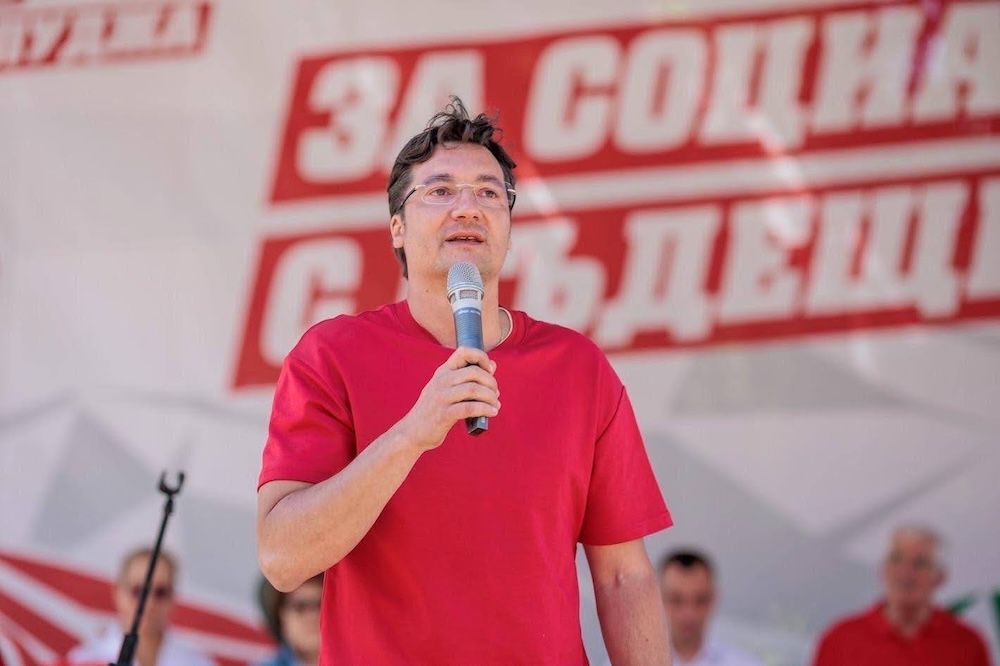
Krum Zarkov speaks to supporters at the Bulgarian Socialist Party’s 135th anniversary celebration, on August 1, 2026. (BSP Press Center)
Bulgaria might not be the first country you associate with the socialist movement. But left-wingers have played an outsize role in the southeastern European country, ever since some twenty activists founded the Bulgarian Social Democratic Workers’ Party at a clandestine mountain rendezvous in 1891. After the Russian Revolution, the newly formed Bulgarian Communist Party (BCP) launched a failed uprising in 1923, and, after playing a decisive role in the antifascist partisan resistance during World War II, took power with Soviet backing.
Lasting from 1944 to 1990 and combining Soviet-style planning with nationalist policies that, over time, grew increasingly hostile toward the country’s Turkish minority, the BCP’s rule nevertheless fundamentally transformed Bulgaria. Starting from an overwhelmingly rural peasant country, its version of socialism built an industrial economy in a matter of years, eliminated illiteracy, provided affordable housing to millions, and carried out vast infrastructure projects that Bulgarians still rely on today. When the winds of change began to blow in 1989, BCP leaders proved more farsighted than many of their Eastern Bloc peers, renaming themselves the Bulgarian Socialist Party (BSP) and initiating democratic elections that they then won handily.
The BSP alternated between government and opposition for the better part of the next three decades, remaining the country’s only mass-membership party. Yet politically it drifted further to the right — first leading Bulgaria into the European Union and becoming an enthusiastic proponent of neoliberal austerity, and then, in the late 2010s, under leader Korneliya Ninova, morphing into a staunch defender of “traditional Bulgarian values” against Western “gender ideology.” Meanwhile, Bulgaria descended into political dysfunction, with eight parliamentary elections between 2020 and 2026.