Frances Stonor Saunders Exposed the Cultural Cold War
The historian Frances Stonor Saunders died recently at age 60. Her book Who Paid the Piper? pulled back the curtain on postwar CIA funding of Western cultural institutions — despite repeated attempts to censor it, including by her American publisher.
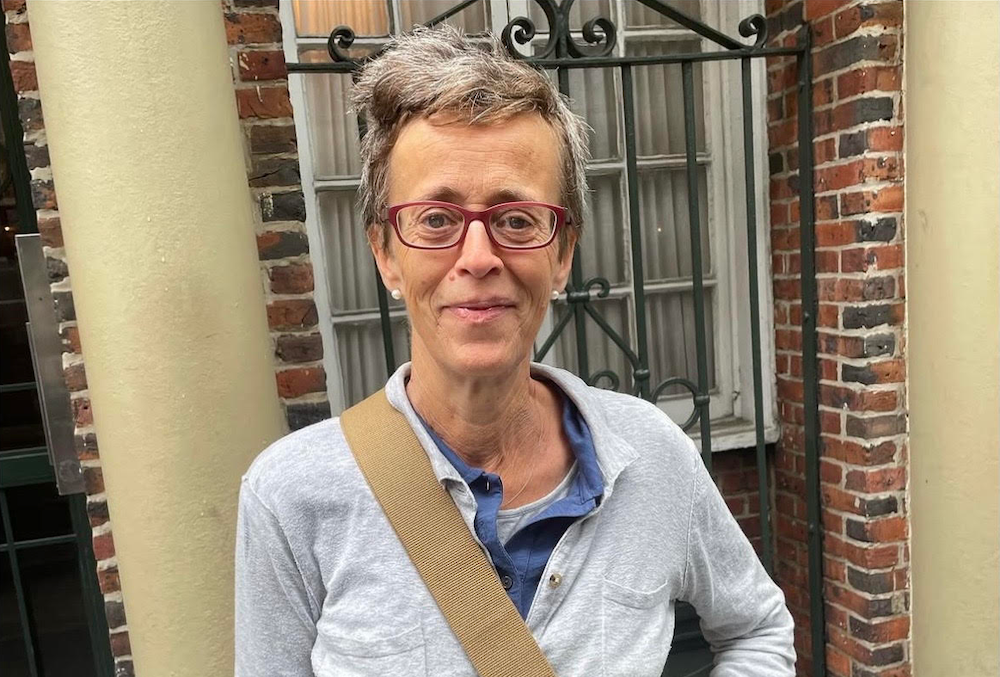
We owe the historian Frances Stonor Saunders, who died last month, a great debt for her tireless work excavating the history of the CIA’s “cultural Cold War,” funding everything from fine art to magazines to music after World War II. (Courtesy Joel Whitney)
With her landmark 1999 debut, Who Paid the Piper? The CIA and the Cultural Cold War, Frances Stonor Saunders “single-handedly established a new branch of sub-history,” as novelist Ian McEwan observed. The book won many accolades, though sympathizers of Western anti-communism clamored to downplay its revelations: that between 1950 and 1967, intelligence agencies partnered in a covert front, launched by the Central Intelligence Agency (CIA), to manipulate Cold War intellectuals in a program whose basis was propaganda and censorship.
With abstract art exhibits and classical music tours, the CIA’s Congress for Cultural Freedom also founded dozens of intellectual magazines (most famously Encounter in London) while its associated fronts funded press agencies, anti-communist student activists and labor unions, ethnic studies, and the pro-war Vietnam Lobby; sent moles into Hollywood back offices to censor scripts; and used its growing apparatus to enforce Western cultural domination. Though Saunders was born the week the Congress for Cultural Freedom was exposed in the New York Times as a CIA front, The Cultural Cold War, as her debut was called in the United States, was an invaluable guide to many writers publishing in her footsteps — including me, in writing my first book Finks: How the CIA Tricked the World’s Best Writers.
Saunders died of a brain tumor on August 31 at age sixty. She published three other works of nonfiction, a feature documentary, and a miniseries for British Channel 4. After learning that her own manuscript was dropped by her original publisher, I came to view the censorship we face today — on college campuses, in nongovernmental organizations, in the media, and in the broader culture wars — as seeded by this official covert anti-communism revealed in The Cultural Cold War. The below is adapted from my profile of her in my 2024 book Flights: Radicals on the Run.