Frederick Douglass Had a Radical Respect for the Constitution
Frederick Douglass believed the US would only live up to its ideals when it granted equal rights to all citizens. He thought the best way to do this was to show that the Constitution was a radical document capable of delivering on this promise.
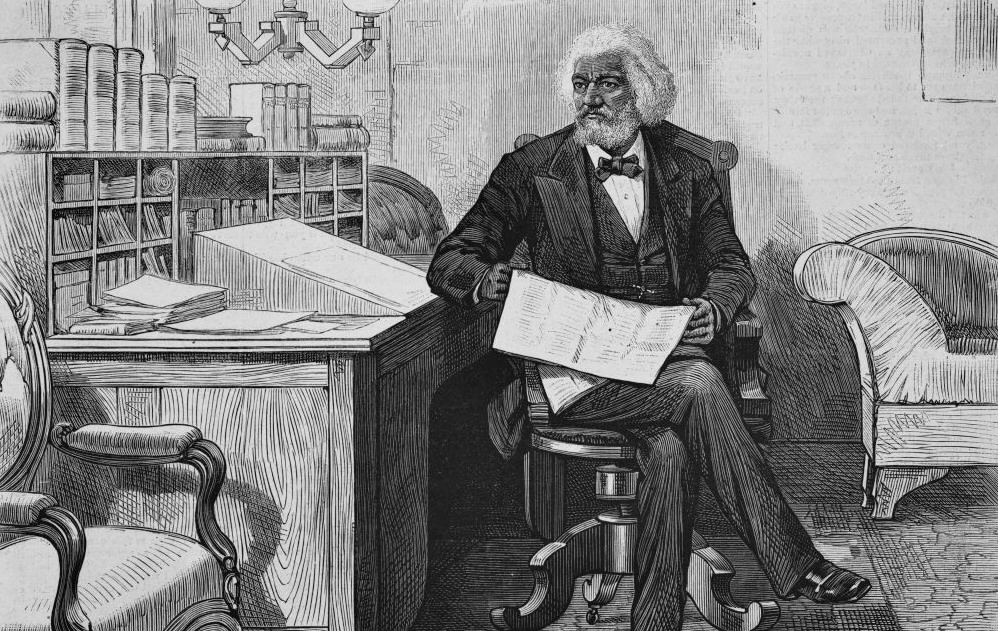
Today’s constitutional debates echo arguments from the nineteenth century. At their center stood Frederick Douglass, whose interpretation of the Constitution challenged both defenders of slavery and those who thought America irredeemable. (Graphic House / Archive Photos / Getty Images)
Is the US Constitution for or against slavery? Questions concerning the legacy of America’s founding and how to interpret the Constitution have long gripped public discourse; in recent years they have become inseparable. From the 1980s came the originalists, a group of legal theorists who sought to recover the Constitution’s original meaning through textual analysis buttressed by historical investigation. Adhering to the document’s original meaning, they argue, promotes institutional stability and the rule of law.
Scholars have long contested these claims, challenging the plausibility of recovering an “original meaning” or doubting the authoritative nature of such meaning even if discovered. Recently, however, a second phenomenon has brought constitutional discourse closer to political discourse. The 1619 Project has inspired new attacks against the originalist normative claim, as it recasts the nation’s history in terms of its legacy as a slaveholding nation committed to white supremacy. Scholars are now challenging originalism on the grounds that it is part and parcel of a tradition of oppression that cannot demand a people’s loyalty, much less respect.
This reframes the question from the accessibility of original meaning and its authoritative nature to the problem of original meaning as it relates to constitutional evils. Still, originalists continue to defend the founding of the United States as a moment that instilled constitutional norms worth preserving. Indeed, they are compelled to do so. Originalism would not be worth its salt — promoting stability and the rule of law — if it meant only preserving oppression and white supremacy. Increasingly, we find two historical accounts representing two mutually exclusive Americas: an America founded on perpetuating slavery and white supremacy versus an America dedicated to liberty and equality.