The Canton–Hong Kong Strike Changed China’s History
This year marks the 100th anniversary of the Canton–Hong Kong strike, one of the longest general strikes in history. The strike was a remarkable experiment in working-class democracy and its outcome shaped the course of 20th-century China.
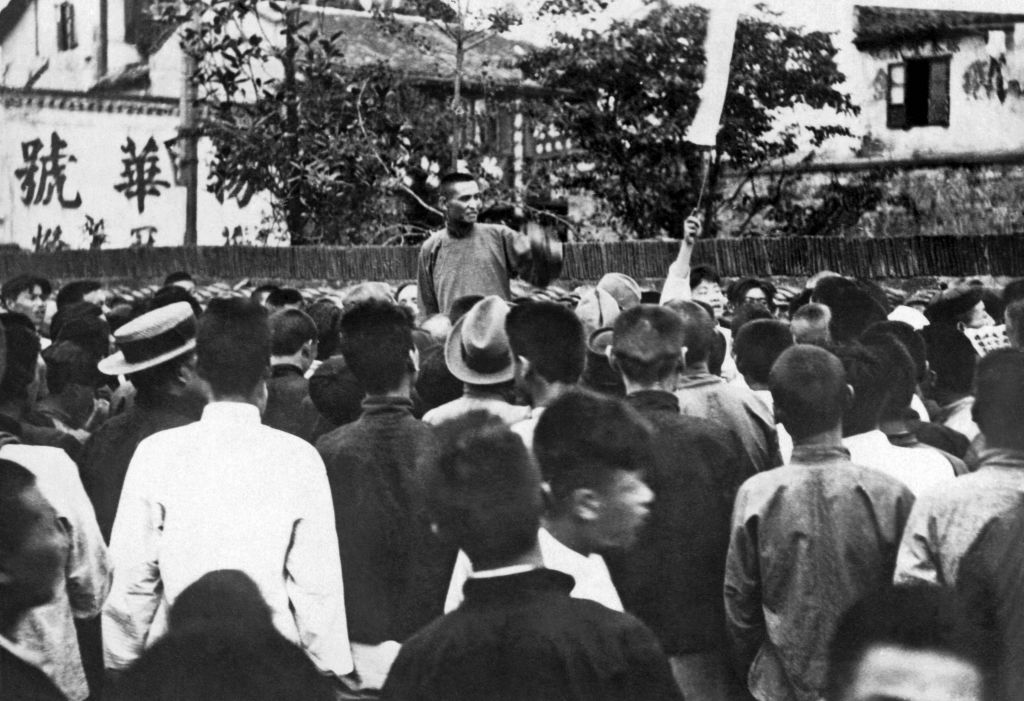
A century ago, workers in Hong Kong and Guangzhou waged one of the longest continuous general strikes in history. They built democratic unions to fight British imperialism and led Hong Kong’s first struggle for universal suffrage. (Underwood Archives/Getty Images)
A century ago, workers in Hong Kong and Guangzhou — then generally known in English as Canton — waged one of the longest continuous general strikes in history. At the time, foreign powers such as Britain and Japan had carved China into spheres of influence. Wave after wave of students’ and workers’ movements struggled against this imperialist control, especially the May Fourth Movement of 1919.
This anti-imperialist upsurge reached a fever pitch on May 30, 1925. That day, the police opened fire on students who were marching toward the British-controlled part of Shanghai to protest the murder of a Chinese worker at a Japanese-owned cotton factory during a recent strike.
The May 30 massacre spurred workers in Hong Kong, then under direct British colonial rule, to strike in June. The Canton–Hong Kong strike lasted sixteen months, shutting down a central British commercial outpost. It was also the impetus for China’s national reunification for the first time outside of monarchical rule. Aided by the organizing acumen of a nascent Communist Party of China (CPC), then operating within the big-tent Kuomintang (KMT), Chinese workers governed Canton and paralyzed Hong Kong.