The Women Who Fought Japan’s Empire
Japanese colonialism is infamous for its brutalization of women, abducted and forced into sex slavery. Less known is women’s role in fighting against the Japanese Empire, brilliantly brought to life in two recent novels.
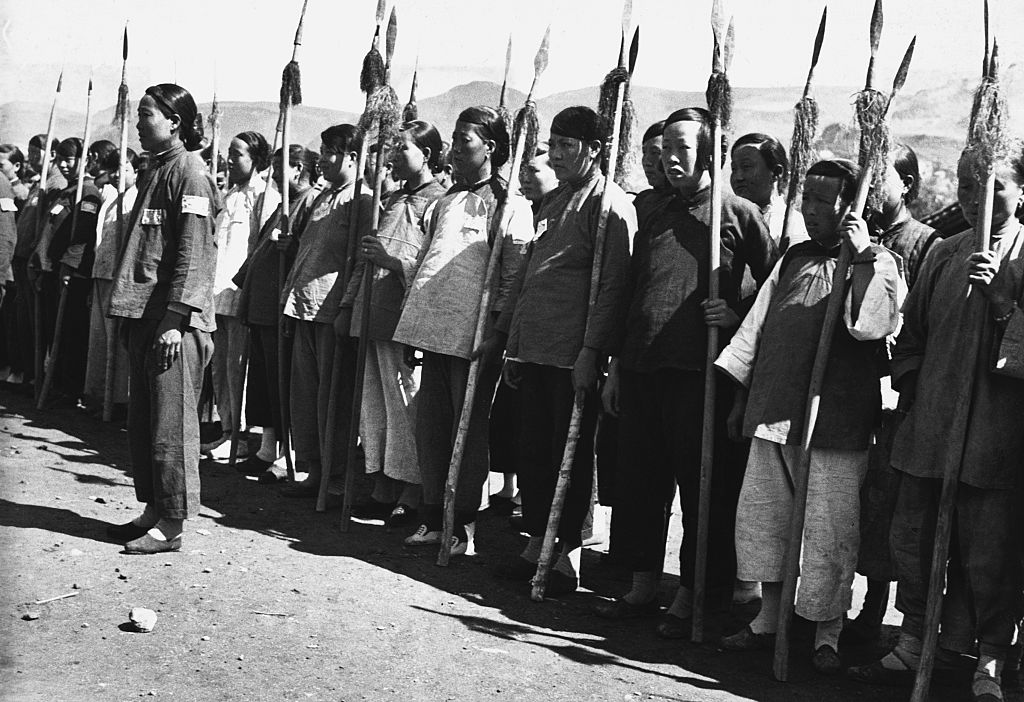
A group of guerrilla fighters in China, circa 1935. (Hulton-Deutsch Collection / Corbis via Getty Images)
In Capitalists Must Starve — a novel by Park Seolyeon, translated from Korean by Anton Hur — a labor activist climbs to the rooftop of a rubber factory in Pyongyang, Korea, using a makeshift rope fashioned out of twisted Japanese cotton, staging a solo protest against unfair wages under Japanese colonial rule. In Emma Pei Yin’s fictional debut When Sleeping Women Wake, a young rebel leader fires shot after shot at pursuing Japanese soldiers from behind wooden barrels of moldy fish at a Hong Kong pier, buying time for civilians to escape onto rescue boats that will spirit them away towards safer shores.
It’s rare to find depictions of Japan’s brutal invasion across East Asia in English-language literature; portrayals of female anti-colonial resistance are practically nonexistent. These scenes, both based on real events, are among the few representations of women fighting against Japanese occupation in the region — a rich but forgotten history that remains largely unexplored in popular anglophone narratives of World War II.
Capitalists Must Starve and When Sleeping Women Wake differ in style and context. Yet both novels dive deeply into the gendered experiences of women living under Japanese subjugation through a lens of not only survival, but also self-actualization. Under the daily indignities of war, the protagonists dare to ponder the possibilities: what of love, what of empowerment?