The Last Revolutionary Filmmaker
Japanese filmmaker Masao Adachi spent nearly three decades in Lebanon alongside the Palestinian resistance. Today, stripped of his passport and largely ignored at home, he’s making the most politically alive cinema in Japan at 87 years old.
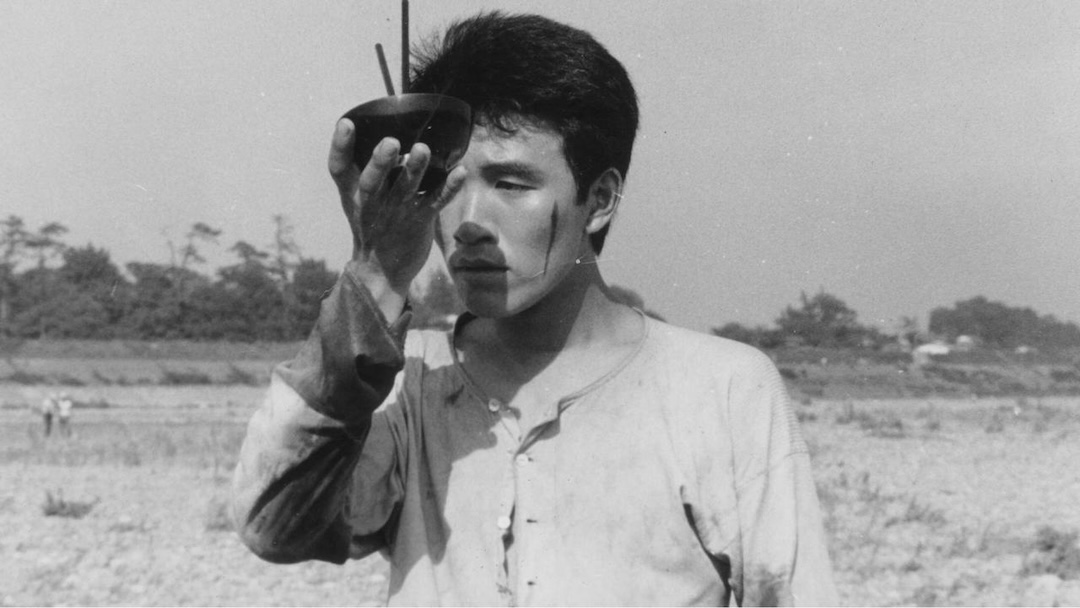
A still from Masao Adachi’s 1961 short film, Bowl. (Mubi)
When the French-Swiss film director Jean-Luc Godard died in 2022 at the age of ninety-one, obituaries celebrated both his boundless cinematic inventiveness and the radical politics that shaped his work. To some, his death marked the end of an era of politically committed filmmaking. But in Japan, another artist as equally radical is still, at age eighty-seven, hard at work.
In the last four years alone, Masao Adachi has released two movies, both dealing with political militants — including Shinzo Abe’s assassin — and has also worked with other artists, like French filmmakers Éric Baudelaire and Philippe Grandrieux in the early 2010s. His most recent collaboration is with Palestinian filmmaker Kamal Aljafari, whose new short film, Masao Adachi Takes a Passport Photo — chronicling Adachi’s latest attempt to apply for a passport — screened at the Toronto International Film Festival and will play at the New York Film Festival this autumn.
As Adachi told the The New York Times in 2012, he is pleased that these new endeavors do more than just burnish his reputation as an elder statesman of the Japanese New Wave. “Through this way,” he said, “I’ll continue to revolt.”