Japan’s Student Movement and the Revolutionary Politics of 1968
- Gavin Walker
Historians often neglect Japan’s New Left protest movement in the late 1960s, but it was one of the largest in any country. Radical student activists brought the university system to a halt — and changed the future of Japanese politics.
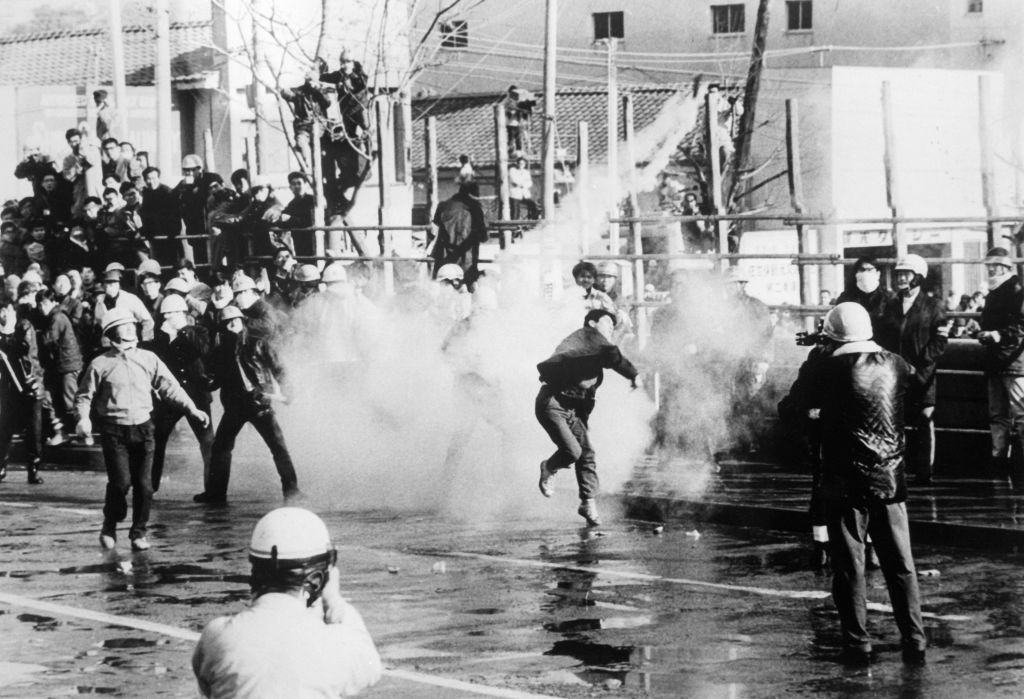
A student throws a grenade at the police in the main street of Sasebo, Japan, on January 30, 1968. (Keystone-France / Gamma-Rapho via Getty Images)
The 1968 moment in Japan is represented above all by the Zenkyōtō student movement, the “All-Campus Joint Struggle League.” The movement began at the University of Tokyo and Nihon University, and expanded rapidly to the other major universities over the subsequent three years.
Across the country, 127 universities — 24 percent of the national four-year university system in total — experienced strikes or occupations in 1968. In 1969, this rose to 153 universities or 41 percent. There was also a Zenkyōtō movement in the Japanese high schools.
We ought to state clearly that there was a prehistory to the 1968 Zenkyōtō movement. There were, for example, student movements in 1965 at Keio University and in 1966 at Waseda University against the raising of tuition fees. Moreover, the second half of the 1960s saw an intensification of the American war on Vietnam, and the resistance movements against it were also forerunners of the development of the Zenkyōtō.