Immanuel Wallerstein Predicted the Fall of the US Empire

Soon after 9/11, world-systems theorist Immanuel Wallerstein warned that US imperial decline was inevitable. But US leaders didn’t want to hear that their glory days were in the past, and they’ve managed that decline in the worst possible way.
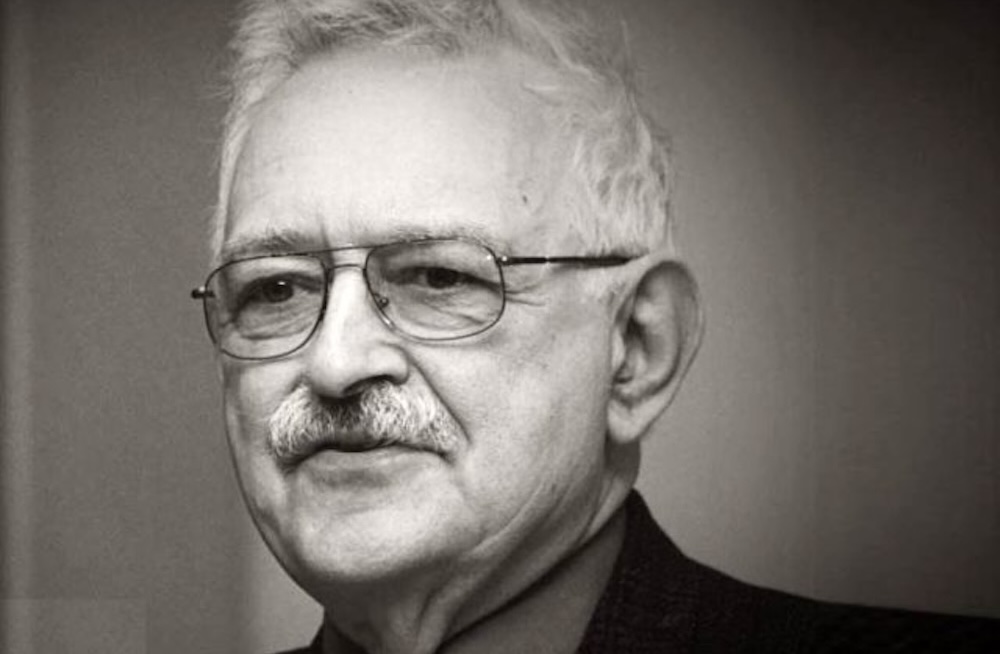
A photograph of world-systems theorist Immanuel Wallerstein, date unknown.

Immanuel Wallerstein believed that the US could respond to imperial decline in two ways: by becoming a more progressive, egalitarian society, or by lurching toward neofascism. It’s unfortunately clear which of these tendencies is more powerful today. (Semaanurbulbul / CC BY-SA 4.0 [cropped])


In July 2002, Immanuel Wallerstein appeared on C-SPAN’s morning call-in program. He had just written an essay for Foreign Policy magazine with a provocative title: “The Eagle Has Crash Landed.” Wallerstein argued that the US position of dominance on the world stage was in decline.

As he was speaking, less than a year had passed since the terrorist attacks of 9/11 and the subsequent US invasion of Afghanistan. The Bush administration was preparing its military and the American public for the invasion of Iraq that would begin in March 2003.

George W. Bush, it should be remembered, was a popular figure at the time. The president’s approval rating hit a record 90 percent the previous September, and remained over 70 percent when Wallerstein went public with his message of decline.

However, it must have seemed to Wallerstein precisely the right moment to intervene. He had written about US hegemonic decline since the early 1980s. Yet he still believed, in the moment between the invasions of Afghanistan and Iraq, that America had the opportunity to effectively manage its decline.

Wallerstein did not think it was possible to extend a great power’s global dominance indefinitely. He saw that great powers become hegemonic — a term that refers to unmatched global dominance — due to economic, political, and military factors that also ultimately cause such hegemony to erode. US hegemonic decline began much earlier than 9/11, with the economic downturn of the 1970s and the American war in Vietnam.

For Wallerstein, the United States faced the choice of all waning hegemonic powers: to decline gracefully or to decline precipitously. George W. Bush chose the latter. Today Donald Trump has further accelerated US decline by aggressively deploying one of the few weapons left for a dying hegemon: its extremely strong military.

Cycles of Hegemony

Why was US hegemony in decline? For Wallerstein, American hegemony of the twentieth century hardly differed from Dutch hegemony of the seventeenth century or British hegemony of the nineteenth. These three powers (and only these three, he thought) achieved hegemony by riding a wave of economic forces they could not quite control and by prevailing militarily over a rival. After triumphing, the hegemonic power went on to create organizations in its image. The British, for example, prevailed over France and then created the Concert of Europe in 1815.

America’s rise to hegemony began following the global recession of 1873. As Wallerstein told the story, Great Britain’s declining share of world markets was due to the United States and its chief rival, Germany. The United States became a major producer of steel, then automobiles, whereas Germany became a major producer of industrial chemicals. Each state’s economic rise followed an internal political crisis and (relative) stabilization: for America, the Union victory in the Civil War; for Germany, unification under Prussian leadership after war with France.

Wallerstein understood the two world wars to be an extended thirty years’ war between the rivals. He noted that the United Provinces of the Netherlands and Great Britain also became hegemonic following wars lasting about three decades (in the Dutch case, this came after the original Thirty Years’ War between 1618 and 1648).

After prevailing over Germany and the Axis powers in 1945, US leaders believed that it needed three things to maintain its prosperity: one, international customers for its industrial production; two, a world order guaranteeing commerce at a low cost; and three, a compact of sorts ensuring that production would be unimpeded.

Washington achieved these objectives by reconstructing Western Europe and Japan, by creating major international institutions such as the United Nations, and by striking a kind of bargain with the Soviet Union. The last of these moves, symbolized by the Yalta conference of February 1945, was for Wallerstein much more significant than the founding of the UN two months later.

In the conventional view, the Cold War of roughly 1945 to 1991 (to use the longest possible measurement) was a contest between American and Soviet adversaries. For Wallerstein, this period was really structured around an implicit compact between the great powers. The American sphere of influence covered about two-thirds of the world, with the Soviet sphere of influence accounting for the rest. Each power could dominate its zone of influence and use the threat of the other to corral reticent partners. Yalta was enforced by a “balance of terror” between the nations.

The peak of American hegemony ran approximately from 1945 to 1970. Like all hegemons, the US became a victim of its success. By 1970, Western Europe and Japan were in Wallerstein’s view the economic peers of the United States. In the process of building up trading partners, crucial to American postwar success, the US also built up rivals.

Like all hegemons, the United States began to lose its economic advantage in the same sequence through which it was originally built. First, the hegemon loses its advantage in agriculture and industry. Then it loses an advantage in commerce. Finally, it loses its advantage in finance.

Also in the 1970s, Washington’s defeat in Vietnam exposed US military weakness and showed its inability to impose its will on the world. Vietnam, Wallerstein wrote, symbolized a rejection of the US world order by the forgotten peoples of the world, sometimes called the Third World, sometimes called the Global South. The independence movement in Vietnam against colonial powers (France, Japan, and the United States) was an extension of the global protest movement that came to a head in 1968. According to Wallerstein, “the 1968ers did not merely condemn US hegemony. They condemned Soviet collusion with the US, they condemned Yalta,” and they saw only “two camps — the two superpowers and the rest of the world.”

The collapse of the Soviet Union in 1991, again contrary to conventional wisdom, was for Wallerstein a disaster for the United States, because it lost its great Other. In a 1992 essay, Wallerstein insisted that the Cold War was “not a game to be won but rather a minuet to be danced  . . .  The end of the Cold War in effect eliminated the last major prop of the US hegemony and the US prosperity, the Soviet shield.”

Washington’s response to hegemonic decline has been to assert its greatness, in speech and in deeds, seeking to reclaim its position in the world. But, as Wallerstein explained on C-SPAN, “if you’re number one, you don’t have to shout that you’re number one. People know that you’re number one. If you have to shout, there’s something wrong. There’s something going on.”

Shooting the Messenger

Many C-SPAN callers were not happy with Wallerstein’s message of decline. One asked if flags flew on the Yale campus, given Wallerstein’s apparent anti-American bias. Another accused Wallerstein of being a Vietnam draft dodger, without realizing Wallerstein had been drafted at an earlier stage during the Korean War. A third shivered at the thought of Wallerstein as president: “If a guy like him were to be running the United States, the United States would end up like an armadillo, rolled up in a ball, waiting to be kicked.”

Such expressions of outrage were normal for Wallerstein, who had written about the national-psychological toll that hegemonic decline takes upon those who experience it. It was a potentially dangerous period for domestic politics and the leaders to whom the public might turn.

On the show, Wallerstein explained he was just the messenger, and that the United States was isolating itself from the world — not simply from nations it needed to court but from its closest allies too. “If you overestimate your power, and you go around acting like a bully,” he said, “you lose more than if you engage in elementary dialogue.”

Some callers saw Wallerstein as being engaged in an attempt to reform US foreign policy. One asked how to respond to accusations of anti-Americanism. Wallerstein explained that he tried using reason. He argued that US foreign policy operated against individual interests:

I’m not appealing to your altruism. I’m appealing to your selfishness. You are bringing about a much swifter negative impact on the US and the lives you live. In terms of your own standard of living, in terms of your risk of death, in terms of everything that you stand for, you’ll be worse off pursuing these policies than if you shift policies.

Decline did not mean catastrophe. Historically, hegemonic powers do not fall very far. They land among the other great powers, albeit with greater material comfort than most (just look at the Netherlands or the United Kingdom today).

Furthermore, as Wallerstein wrote in that 1992 essay, decline could be “the greatest blessing of all.” The United States had an opportunity to embrace morality. It “was Abraham Lincoln who sounded the moral note: ‘As I would not be a slave, so I would not be a master.’”

In the early 1990s, Wallerstein saw two possible futures for America. One would involve neofascism, characterized by social conflict, with the lower strata subject to brutality and prejudice. The second, more hopeful scenario would be a form of national solidarity through social democracy and the movement toward egalitarianism.

Although Wallerstein was not prone to overly optimistic predictions, he thought the egalitarian path was more likely than the neofascist path. He envisaged catharsis from “a shared social stress,” combined with American economic prosperity and popular notions of liberty, that would produce a movement against the major aspects of “unequal allocation”: gender, race and ethnicity, age, and class. He figured that the momentum of 1968, having disrupted American hegemony and dethroned the ideology of centrist liberalism, would lead to a mass movement for progress.

Wallerstein also had history as his guide. In the first two instances of hegemony in the capitalist world-economy, Dutch and British, hegemonic decline was followed, eventually, by a movement toward welfare and equality. Why should the United States be so different?

However, Wallerstein also left open the possibility of neofascism. If the end of the Cold War meant the end of US dominance over two-thirds of the world, then it also meant the end of centrist liberalism as a cultural guarantor of the capitalist world-economy. At least since the revolutions of 1848, centrist liberalism had been the gravitational force that kept the radical left and conservative right in check.

Centrist liberalism promised the realization of democratic rights and economic well-being, not immediately for all peoples, but in a slow and orderly process to be managed by the state over generations. Centrist liberalism, as Wallerstein put it in his book The Modern World-System IV, was used by “the strong [to] temper the discontent of the weak.” Strong individuals tempered the discontent of weak masses, and strong states tempered the discontent of weak states.

Yet the US economic advantage faltered as the Global South began to reject the Yalta power structure. After one of the main players, the Soviet Union, fell apart, the weak masses and states proved to be not so weak after all. In this situation, for Wallerstein, “conservatives would again become conservatives, and radicals, radicals. The centrist liberals did not disappear, but they were cut down in size.” The ideological possibilities were now endless.

After the Cold War, Wallerstein saw great potential for American hegemonic decline to be accompanied by domestic economic redistribution. Ten years later, the radical movement had not materialized, while conservative hawks were firmly ensconced in power. They sought to flex military might because, in their thinking, “if Washington doesn’t exert its force, the United States will become increasingly marginalized.”

But Wallerstein saw their actions having the opposite effect. Given the inevitability of decline, the muscular foreign policy of the Bush administration “will only contribute to the United States’ decline, transforming a gradual descent into a much more rapid and turbulent fall.”

In retrospect, Wallerstein’s 2002 essay and television appearance constituted an attempt to move the United States off of its trajectory. He had evidently abandoned hope for a social democratic movement and now redirected his attention to the declining hegemonic power itself.

In the summer of 2002, over six-in-ten Americans favored opening up a second war in Iraq. Wallerstein’s opinion was that of an unpopular but persistent group of critics. When faced with such criticism, President Bush would note simply note that history would judge his actions.

Today it is clear that the hawks could not preserve American hegemony, nor remake the world in a manner more conducive to US interests. What has transpired between then and now?

Decline and Denial

The twenty-first century has not gone well for the United States. American leaders have pushed to reclaim lost hegemony. As US economic power has diminished in comparison to the rest of the world, Washington has used its military to demonstrate strength and to achieve policy ambitions.

In fact, the United States has embarked on more military interventions since 1991 than it did between 1798 and 1990. This choice was the classic strategy of a declining hegemon in denial, aware of its descent, but unaware that its best viable option was the proper management of decline.

The United States has not made the world more peaceful or more prosperous, nor has it improved the nations it invaded. In European Universalism: The Rhetoric of Power (2006), Wallerstein questioned the logic of interventionism. The invading power rarely makes the invaded place better off than if it had not intervened, a conclusion confirmed by US military adventures across the Middle East.

Wallerstein’s 2002 verdict could have been written this year (or this week for that matter). He wrote that the United States finds itself “a lone superpower that lacks true power, a world leader nobody follows and few respect, and a nation drifting dangerously amidst a global chaos it cannot control.” The backlash of 1968ers that he described came from the nonaligned Global South as well as discontented masses at home. In the twenty-first century, the concatenation that began at the level of the world-system quickly moved to American domestic politics, and then outward again.

The end of the Cold War unmoored radicalism and conservatism from centrist liberalism. The effects were drastic. Decades of neoliberal consensus were challenged by the likes of Donald Trump and Bernie Sanders. When Trump assumed the presidency — first in 2017, again in 2025 — he did so as a critic of America’s liberal order.

However, “America first” has not resulted in the revival of domestic production, improved social welfare, or the protection of workers. Instead, Trumpism is characterized by massive, brazen corruption (at home and abroad), militarism abroad, and domestic policies of mass deportation. The United States has continued to expand its military commitments and military spending, but without a commitment to domestic social welfare. Meanwhile, optimism about the future among Americans has overall declined since 2013.

In short, the United States has chosen the neofascist path that Wallerstein initially considered the least likely: social conflict, brutality, and prejudice. Members of the upper strata have sought to hold on to their remarkable privileges and rewards. Americans consequently have more precarious lives, living paycheck to paycheck, with fewer protections against the risks of illness, age, and employment instability.

In 2026, America’s war in Iran encapsulates two tendencies of US hegemonic decline. One is the inability of the United States to get its way despite an extremely powerful military. The other is the discontent of the American public at a diminished standard of living and a leadership class it no longer trusts.

Such feelings of discontent, as Wallerstein noted, can be powerful catalysts for political action. Washington may find itself surprised once again by chaotic global and domestic events it cannot control.