While Trump Cuts Food Aid, ICE Sits on $100 Billion
Five million people have lost food assistance since Donald Trump signed the One Big Beautiful Bill Act. Meanwhile, ICE has received $113 billion from the GOP’s reconciliation bills — and spent just 12% of it.
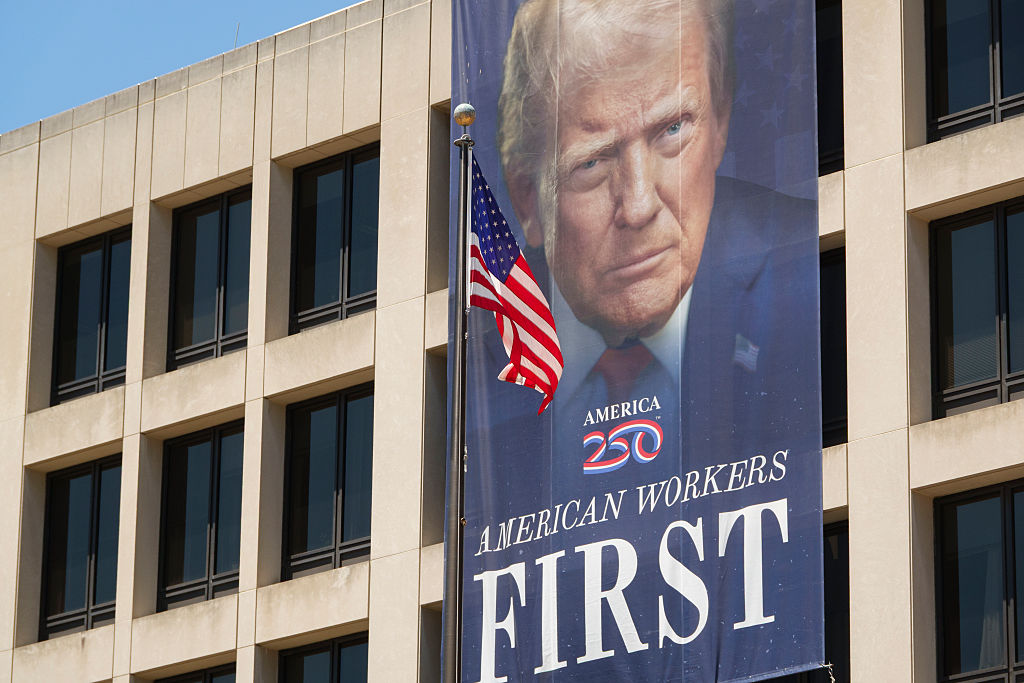
Food insecurity is the worst it’s been in over a decade, and Donald Trump’s response has been to slash food assistance further. Meanwhile, ICE is sitting on $100 billion — a grim indictment of the administration’s priorities. (Kevin Carter / Getty Images)
The United States is in the midst of a food assistance purge. Enrollment in the Supplemental Nutrition Assistance Program (SNAP), formerly known as food stamps, has dropped by more than five million people over the latest year of available data from the Department of Agriculture (USDA).
The sudden drop-off in SNAP participation isn’t due to reduced needs. According to the USDA’s latest report on food insecurity — defined as having limited or uncertain access to enough healthy foods — forty-eight million Americans lived in food insecure households in 2024, or 14.4 percent of the population. Food insecurity is the highest it’s been in over a decade.
The Trump administration doesn’t appear confident in its ability to bring these numbers down. Not only did it cancel this year’s food security report covering 2025, the administration canceled all future iterations, claiming that the reports “do nothing more than fear monger.” A desperate excuse, considering the cancellation couldn’t be justified on the grounds of cost, quality, or utility: the USDA food security report is the most comprehensive on the issue, costs less than $1 million to produce, and informs the implementation of about $100 billion in food assistance through SNAP, which served on average forty-two million people per month last year.
The White House’s actual reason for canceling the food security report was likely the fear of what it might show. If SNAP participation data is any indication, the Trump administration has likely made food insecurity much worse, principally by enacting the One Big Beautiful Bill Act (OBBBA), the party-line reconciliation bill the administration successfully rallied the majority Republican Congress into passing last summer. SNAP enrollment had been relatively steady since 2021 — it’s not like folks have been given a break from rising food prices — until Donald Trump signed the aforementioned bill into law in July 2025. This graph shows what’s happened since.

Enrollment held steady until the One Big Beautiful Bill Act became law in July 2025, then plunged. It stood at forty-two million in April 2021. By April 2026, it had fallen 11 percent, to thirty-seven million.
One way OBBBA precipitated the enrollment nosedive is by expanding SNAP work requirements. In order to be eligible to receive food assistance, SNAP enrollees must work at least eighty hours per month. Adults over fifty-five and adults with dependents under eighteen were previously exempt. Under OBBBA, fifty-five- to sixty-four-year-olds are now subject to work requirements, as are adults with dependent children fourteen years or older. The GOP law also removes exemptions for people experiencing homelessness, veterans, and eighteen- to twenty-four-year-olds transitioning out of foster care.
Critically, SNAP enrollees must also report their hours to the state in order to remain eligible for food assistance. The main reason people lose SNAP benefits is not ineligibility, but a failure to submit paperwork (re)verifying eligibility. OBBBA creates more onerous paperwork.
Thanks to these cuts to SNAP and other social programs, OBBBA is projected to leave most Americans worse off.
You Can’t Eat ICE
Far from “restoring fiscal sanity” as Trump and Republicans claim, for every dollar their flagship bill “saves,” it adds nearly $4 to the deficit through tax cuts and spending on military and paramilitary agencies. Immigration and Customs Enforcement (ICE) is one such agency.
In July 2025, ICE received $75 billion through OBBBA, including $45 billion for prisons and $29.9 billion for recruitment and hiring. At least those were the stated purposes in the bill’s text. For the most part, it’s up to the Trump administration to decide how exactly to spend those funds. For example, in March, the administration took $465 million from recruitment and hiring to buy eight Boeing 737 passenger airplanes and two luxury Gulfstream G650 private jets, the latter of which are said to provide a “seamless blend of privacy, efficiency, and indulgence” for “executives, celebrities, and high-net-worth individuals.” Call it caviar fascism.
In June 2026, ICE received another windfall through the GOP’s second reconciliation bill of Trump’s second term, the Secure America Act. By the time it was enacted, ICE still had more than $61 billion left over from the first reconciliation bill. According to the latest budget execution data from the Office of Management and Budget, ICE is sitting on $100 billion in unused funds.
This backlog is not by design. Earlier this year, the Trump administration’s budget said that ICE would use $36 billion from OBBBA by the end of the fiscal year on September 30. The agency is on track to use just half that amount.

As food assistance for needy Americans is cut, ICE is bewildered by the scale of its own budget. It’s a grim indictment of the Trump administration’s political priorities and a rebuttal to anyone who still believes the cuts were about fiscal discipline.