Housing Inequality Is a Central Plank of Modern Capitalism

It’s tempting to view access to housing as a generational issue, but that approach is a political dead end. It diverts our focus from the class inequalities and profiteering that are the real cause of the housing crises afflicting so many countries.
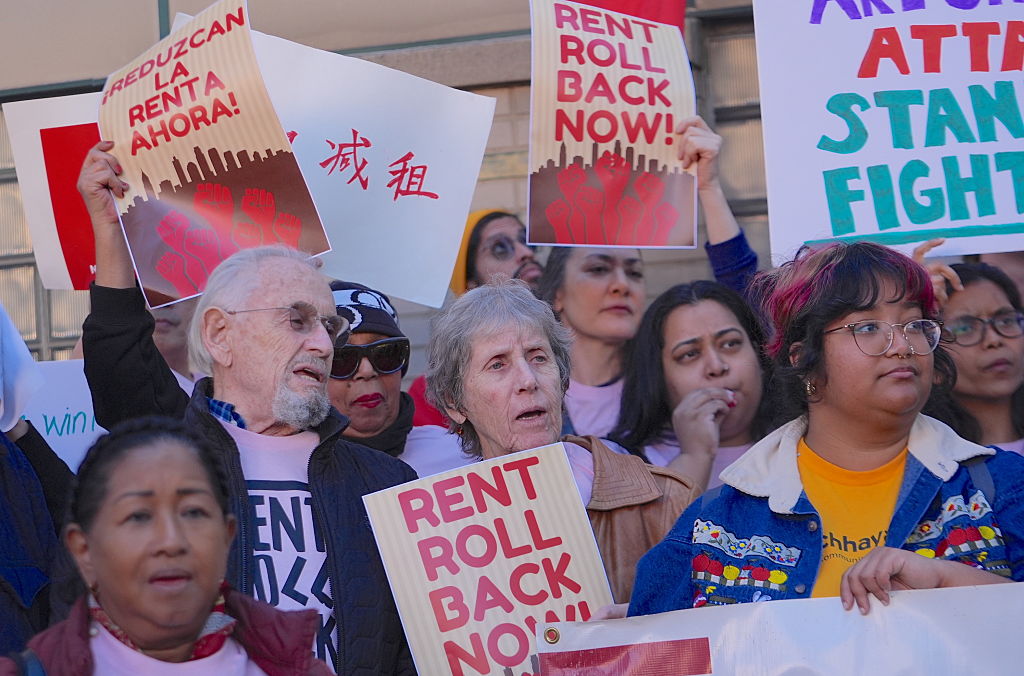
New Yorkers gather outside LaGuardia Community College in Long Island City,, Queens, on May 7, 2026, to demand a rent freeze.

New Yorkers, including union activists and members of the New York State Tenant Bloc, gather to demand a rent freeze on May 7, 2026, in Long Island City, Queens. (Selcuk Acar / Anadolu via Getty Images)


In recent years, renters’ unions have played an increasingly prominent role in a number of countries, with tenants’ groups exerting influence on national discussion and to some extent on the policies of governments and political parties. Spain, Portugal, Ireland, and Scotland have all implemented some form of rent control since 2021. Against that backdrop, several writers have sought to combine the questions of political strategy raised by tenant struggles with the political economy of housing.

Michael Byrne’s book, Beyond Generation Rent, is part of this trend, examining inequality, financialization, and evictions. It’s a welcome and worthwhile contribution that brings a social critique of landlordism into contemporary academic economics. It also fleshes out a much-needed theory of how and why the private rental sector is inherently organized around the pursuit of economic rents, profiting from control of a scarce asset, and it brings the economic debate into the same discussion as the work of renters’ unions and their prospects.

Byrne pulls no punches as he discusses the “impunity” of landlords in their relationship with tenants and the chronic insecurity this produces for the latter. He correctly identifies landlordism as a social relationship that depends on a power asymmetry between the asset owner and the resident. This ground has been well covered in recent years, particularly in Nick Bano’s Against Landlords, but by bringing it closer to the political economy debate, Byrne helps us grasp how the private rental sector operates and its role within the wider economic system.

A Theory of Rent

Since the classical economists of the eighteenth and nineteenth centuries, there has been a general understanding of landlordism as a form of economic rent. This is the sort of activity that most economic thinkers oppose, although many contemporary mainstream economists would draw a sharp distinction between the investment of landlords in property development or improvement and the passive income that arises merely from owning land or a home.

In spite of this broad consensus, there are few explicit frameworks that show how and why the rent paid to landlords constitutes an economic rent. Byrne offers his theory of “home rent” as the value appropriated by landlords, determined by the local area in which the home is located and its value as someone’s home (particular to the sitting tenant). This allows landlords to profit from ownership of housing, including the appropriation of the value the tenant generates by making the place feel like home.

Byrne does not attempt to draw conclusions around what home rent represents for the wider political economy of the capitalist system. That would help us answer the question of how important rent is to the functioning of contemporary capitalism and in what ways. However, he does touch on the work of others, including Javier Moreno Zacarés, whose analysis suggests that real estate capital ends up undermining capital accumulation in general by pushing up rents and asset prices.

In my view, rent is crucial to the wider economic system. I have argued elsewhere that “real estate” has formed an increasingly central component of neoliberalism, as a source of stable returns in a financialized system. Nonetheless, Byrne’s decision to leave this question open within his own analysis is clear and well explained.

Generation or Class?

The book’s title is partly a call for analysis that moves beyond the clichés that mar much writing on the crisis, and partly one of its own central claims. According to Byrne, the housing crisis is not so much a divide between affluent, home-owning boomers and asset-poor younger generations as it is one between renters and property owners (especially multiple property owners) of all ages. This is broadly right, although sometimes Byrne (and others) can overstate the limits of the “generation rent” perspective.

In most of the Global North (the Global South is a more varied and complex story) postwar capitalism did lead to a massive “cohort effect,” when people born at a certain time had much better prospects of homeownership than subsequent generations. This doesn’t mean there are no working-class baby boomers — there are many, of course — or that no one in the millennial or Zoomer generations are middle class. But in terms of housing prospects at least, there are profound differences between these generations in most cases.

In political discourse across much of Europe and the United States, this has led to far too much emphasis on age group as a dividing line, rather than class and tenure. The most useful position is likely to be one that holds a few truths simultaneously. While questions of class and tenure are critical, postwar welfare state capitalism did produce vastly different housing economies than the neoliberal form that succeeded it. Even so, an excessive focus on age as a determining factor is a barrier to class solidarity.

Class vs. Tenure

Of course, class isn’t the same as tenure status. People’s housing situation may be critical to their standard of living, not to mention their relationship to place. But it says nothing directly about their relationship to work. Although homeownership does offer a degree of meaningful security, owning a home only amounts to owning capital when it is put to use in producing rent or sold for capital gains (of course, it still represents wealth regardless of what you do with it).

Homeownership is crucial in modern capitalism. On the one hand, the scale of residential accumulation makes it ever harder to attain, as housing is concentrated in the hands of ever fewer actors. On the other, it still provides just enough people with a material stake in capitalism to help maintain consent for the current system. Byrne refers to the term “late homeownership societies,” which describes a transition from the mass homeownership of the last century to a much more precarious settlement in which more and more groups are locked out.

As Byrne observes, the internationalization of landlordism makes the sector increasingly sensitive to faraway decisions. When the European Central Bank or the Federal Reserve hike interest rates, residents all over the world are likely to be affected.

Mobilizing Tenants

Byrne rightly notes that we need further research on the build-to-rent sector: purpose-built housing from corporate landlords. In some countries, including the UK, this sector appears to be at a crossroads, facing possible limits on its spectacular growth to date in a period of stagnating house-building.

Some key insights have already emerged from existing research, including from Common Wealth. In the UK at least, build-to-rent homes skew toward comparatively affluent tenants, with a bias toward either higher-end housing or simply very high rents. Either way, this suggests that the sector’s continued growth as a share of the market spells bad news for accessibility and affordability.

There are flaws and blind spots in some parts of the book. An otherwise valuable analysis of homeownership and housing inequality, particularly in the Western anglophone countries, does not take sufficient account of the role of social housing, which sits outside the system of housing wealth. But social housing is a critical factor here. In a system of deep housing wealth inequality, with some owning vast sums of housing wealth while others own nothing, the prospects and security of social housing tenants differ greatly from those of private renters who are locked out of ownership.

However, the final sections of Beyond Generation Rent offer a lot of worthwhile analysis. Byrne summarizes the achievements of renters’ unions in Scotland, England, and Ireland, as well as European cities like Madrid, Barcelona, and Berlin.

In Scotland, for example, no-fault evictions were effectively banned almost a decade ago, rents were frozen after the pandemic, and long-term rent controls have since been introduced. In England, the campaigning efforts of unions have eventually secured similar gains on no-fault evictions alongside a range of other improvements to rights and a ban on “bidding wars,” though rent hikes remain uncontrolled (leaving the UK an outlier compared to its neighbors).

Most interesting is the degree of success arising from Berlin’s “Expropriate Deutsche Wohnen & Co.” (DWE) campaign. This led to a successful referendum vote for socializing the homes owned by corporate landlords, many of which were former public homes. Byrne describes this as proposing “one of, if not the most, radical forms of housing redistribution ever undertaken in a capitalist society,” potentially outstripping postwar housing requisitions in war-torn Europe or the state-backed Dutch squatting policy in the 1970s.

However, the referendum vote has not yet been implemented, and a second binding referendum is now expected to be held in order to force the issue. In the meantime, a city government commission has justifiably noted that compensation to the landlords can be given at below market rates.

The proposed structure for DWE would combine centralization with democratic, bottom-up elements, providing benefits of scale along with accountability and distribution of power. With nonresidents able to join and participate, the campaign’s configuration also has the potential to sweep more supporters into the movement and fuel more ambitious demands. If tenant organizing can radically expand the horizon, this begins to offer an answer to the question of whether real leverage can be built and in what ways.

Byrne’s claim that the rise of corporate landlords offers an easier base for tenants to organize around, as they face a smaller and more recognizable adversary, is convincing (renters’ movements in some countries and regions still face a more diffuse market of landlords, including Britain).

His program also points in at least roughly the right direction, toward greater security and affordability for tenants but, more importantly, also toward a significant expansion of nonmarket housing, restrictions on private landlordism, and direct redistribution.

Here we might add the importance of asserting democratic control over development and urban planning, which is implicit in at least some forms of socializing the rental sector. But this non-prescriptive agenda is a decent starting point.