Billionaire David Ellison Is Blackmailing Hollywood
Paramount Skydance owner David Ellison is holding California hostage as his $110 billion Warner Bros. takeover falters — exposing a mogul more interested in power and prestige than preserving the film industry he claims to love.
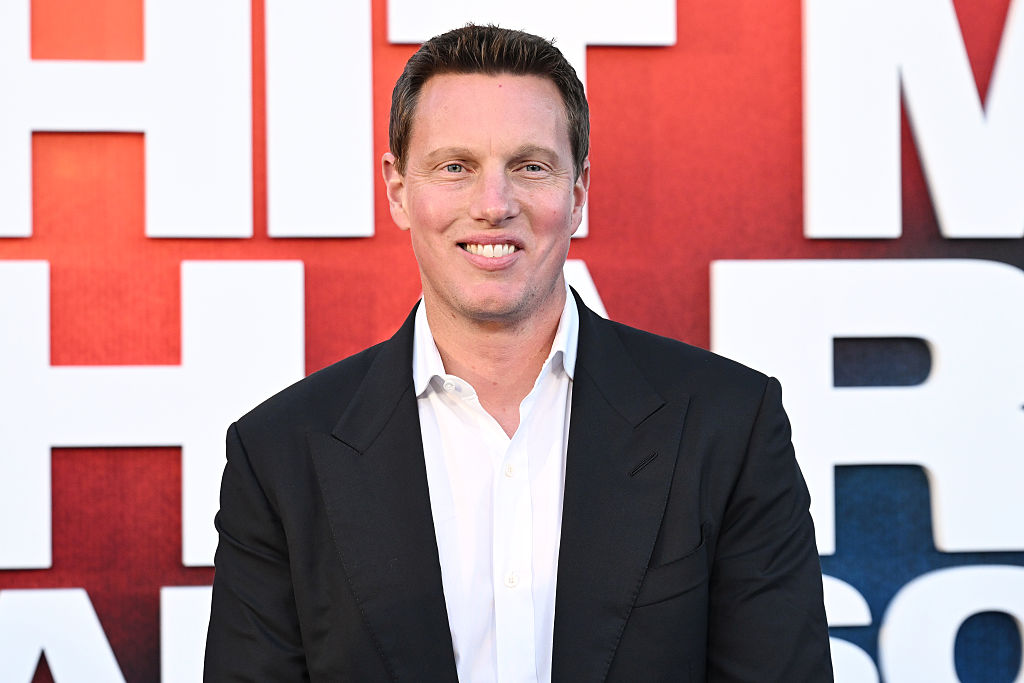
David Ellison isn’t “saving cinema.” He’s threatening thousands of workers to protect a $110 billion vanity deal. (Gilbert Flores / Variety via Getty Images)
Paramount Skydance’s billionaire owner David Ellison made the stunning announcement yesterday that, if he’s blocked from acquiring legacy studio Warner Bros., he intends to move the entire company out of California. The machinations behind this are complicated, the latest sign that the merger deal is far more difficult and imperiled than many financial analysts expected it to be.
Indeed, rather than representing simply another twist in the protracted saga, this episode marks a true mask-off moment. Ellison’s threats prove what many have long believed: this is an ego-driven crusade by a billionaire nepo baby who doesn’t care about the future of the industry he’s claiming to protect.
Back in February, when Paramount agreed to spend over $110 billion to purchase Warner Bros. Discovery, it was assumed that the acquisition would sail through legal review by the federal government, officially closing later this summer or early in the fall. However, in July, a group of twelve state attorneys general (AGs) filed a lawsuit against Paramount, effectively freezing the sale until the case can be heard next March.
That’s a problem for Ellison, who will soon have to start paying $7 million per day to Warner Bros. shareholders until the deal closes. Delaying to March would cost Ellison over $1 billion in fees alone, meaning that he’s been scrambling to pressure the AGs into dropping the suit.
Ellison, the Trump-Aligned Media Tyrant
Why is Ellison so desperate to save such an expensive and risky deal? If you ask the AGs, Ellison’s goal is to acquire Warner-owned CNN and force it through the same sort of authoritarian makeover that Ellison imposed on CBS.
Ellison’s actions with CBS were horrifying, but it is important to keep the cable news aspect in perspective. While CNN remains profitable, its financials are declining, and viewers are leaving in droves. Cable networks, as a business, are in a death spiral as the people who used to watch TV flock to streaming, social media, and YouTube. And Ellison’s remake of CBS News hasn’t just been devastating to everyone interested in a free press; it’s been wildly unsuccessful. Under Ellison’s leadership, CBS has posted some its worst ratings ever.
If Ellison were simply interested in building a right-wing media empire, it would be much easier and less expensive to achieve than this deal has turned out to be. So why continue pursuing it? If you asked Ellison, he would say his reason is simple: he loves movies and wants to save them.
In his New York Times op-ed, he positions himself as a defender of the art form, evoking the images of E.T. making Elliot’s bicycle fly and Luke Skywalker gazing on the twin suns of Tatooine to prove that he is not just a cinephile but the only person standing between cinema and its obsolescence. He doubled down on the tactic recently, by promising that the merged Paramount and Warner Bros. will release thirty movies in theaters every year. That would represent a major increase from the combined number the two companies currently release as separate entities.
If dangling the shiny object of thirty movies in theaters per year was the carrot, then his latest maneuver represents the stick. Ellison announced that unless California Attorney General Rob Bonta settles with Paramount and allows the merger to move ahead, Ellison will move Paramount’s entire operation out of the state of California. This brutally obvious piece of blackmail shows Ellison’s true priorities.
Destroying Hollywood to Save It
David Ellison can wax poetic about E.T. and Star Wars and pay empty lip service to the artists who are actually working to preserve and advance the art of filmmaking, but actions are worth far more than a few cynical words. Threatening to move Paramount out of California is definitive proof that Ellison is not serious about the industry he’s claiming to protect.
For one thing, this sudden announcement represents a stunning displacement for the thousands of workers who actually make the movies. Ellison’s decision was so hasty that he hasn’t even decided where Paramount will move to — floating Georgia, Texas, and Tennessee as possible destinations. Workers at Paramount and Warner Bros. are already in crisis, living through months of uncertainty as they wait to find out whether they’ll be among the thousands of people expected to lose their jobs as a result of the acquisition. Now Ellison is adding a possible cross-country relocation to the tumult.
Then there’s the matter of the film industry itself. Ellison’s threat is especially devious given that it comes at a time when the film industry in California is in a tremendous crisis. Production in the state has been declining for years, as producers have uprooted work to cheaper cities that offer more lucrative tax credits. As a result, over 50,000 jobs have been lost, and the crisis became a key issue in this year’s elections, with candidates for both LA mayor and California governor making pledges to bring the industry back.
So Ellison’s threat is shrewdly timed to exert maximum leverage on California’s politicians, but it also shows how little he actually cares about the industry he’s claiming to save. Keeping the film industry in California is about more than the glamour and weather of LA; there’s over a hundred years of institutional knowledge that’s been passed down through the generations of film professionals who live and work in the city. That knowledge is the lifeblood of cinema; it is vital to keeping the art form alive and moving it forward. When the industry moves from LA, the practical-effects shops and large support staffs don’t move with it, leading to an increased reliance on computer-generated effects and, increasingly, artificial intelligence.
Cinema is already losing its tactility, and the lost jobs only speed up this loss of institutional knowledge, degrading the art form until we may someday reach the point where the knowledge of how to create those images — like those legendary shots from E.T. and Star Wars Ellison claims to revere — is lost forever.
Ellison Doesn’t Want to Make Great Movies — He Wants to Be a Mogul
If Ellison was truly guided by a love of cinema, he wouldn’t be threatening a move that could land a fatal blow to the industry. In fact, he wouldn’t need to do this deal at all. Ellison is spending over $110 billion to buy Warner Bros. For that much money, he could finance decades worth of big-budget, inspiring movies in the lineage of Star Wars and E.T. Even the $1 billion in fees caused by this latest delay could pay for ten movies with the scale and ambition of a blockbuster success like Sinners.
But Ellison’s Paramount hasn’t shown any interest in doing things that way. At a time when original movies have been doing better than ever, Paramount’s 2026 releases include a new Scary Movie, a new Jack Ryan, a new Scream, and yet another adaptation of A Christmas Carol. Ellison’s future plans for the studio include mining decrepit IP like Days of Thunder for sequels and developing a shot-for-shot remake of A Nightmare on Elm Street.
In contrast, Warner Bros., the target of his acquisition, won eleven Oscars and grossed over $4 billion in 2025 under the leadership of actual film lovers Michael De Luca and Pam Abdy, who’ve opted for taking chances on original material like Zach Cregger’s Weapons, Ryan Coogler’s Sinners, and Alejandro González Iñárritu’s forthcoming Digger. In fact, the studio’s Best Picture–winning One Battle After Another was shot almost entirely in California, with the location photography and practical filmmaking providing vital texture to the movie.
Perhaps the best way to understand Ellison is that he’s neither an earnest cinephile nor a devious political schemer. Instead, he seems to be a spoiled, lazy rich guy hunting for a shortcut. Ellison wants to buy, not build, his way to the top of a prestigious and exciting industry without having to do any of the difficult, boring, and risky work of actually making things that people like. Rather than saving cinema, allowing Ellison to succeed in purchasing Warner Bros. would be the strongest evidence yet that the movies are cooked.