Medicaid Cuts Could Kill Safety-Net Health Centers
Federally qualified health centers are an essential source of medical care for poor and working-class Americans, especially in rural areas and neighborhoods of color. Medicaid cuts in Donald Trump’s Big Beautiful Bill could shut them down.
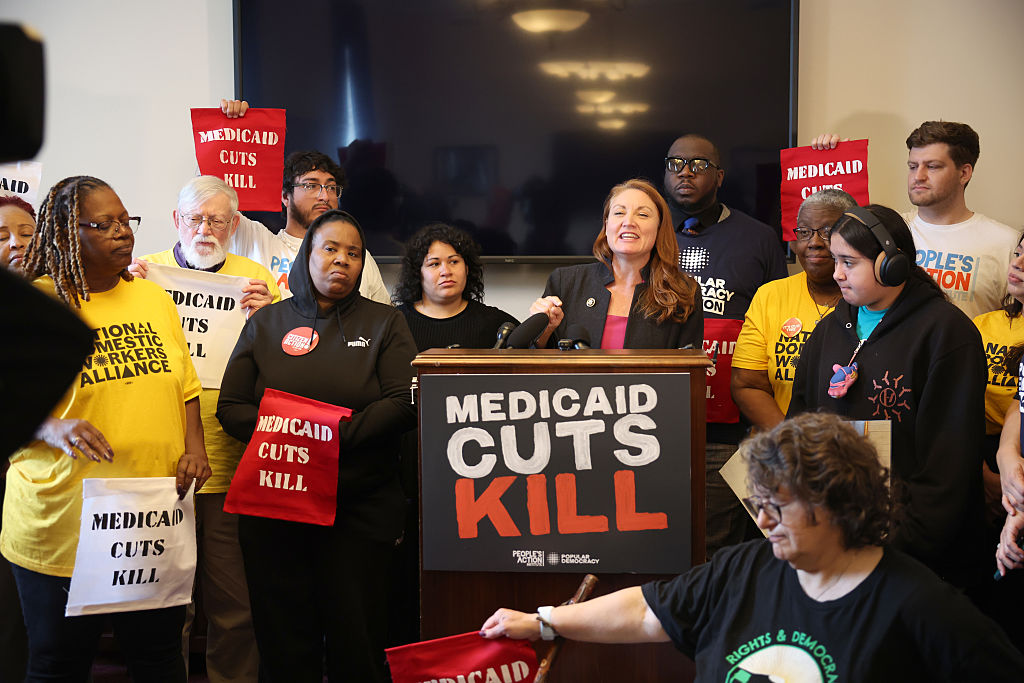
Medicaid is a primary revenue source for federally qualified health centers that serve patients who may not otherwise be able to access health care. Donald Trump’s Medicaid cuts may deal a fatal blow to these vital safety-net providers. (Tasos Katopodis / Getty Images for People’s Action Institute)
If you’ve ever driven through an American city, odds are you have seen a federally qualified health center (FQHC). FQHCs are safety-net medical providers dedicated to providing health services to people who may not otherwise have access to quality primary and outpatient care. According to one FQHC nurse, the facilities function to “fill gaps in our disaster of a health care system . . . and to address health disparity and provide health care to folks who just can’t be part of the capitalist health care system in America.”
These clinics form the backbone of medical care for uninsured and underinsured Americans. In California alone, there are approximately 171 FQHCs and forty-three “look-alike” locations that function similarly but with key differences in their funding sources. In 2024, California FQHCS served nearly six million patients, 30 percent of whom are children, and the vast majority of whom live below the poverty line. Almost three-quarters of patients at these facilities received Medicaid benefits. Millions of Californians who may have otherwise been unable to receive medical care are supported by FQHCs.
FQHCs are unique compared to other medical facilities, in that they receive about 9 percent of their funding from a federal 330 grant that requires clinics to follow a strict set of requirements on who they serve, how they spend money, and how their governing bodies are composed. (“Look-alike” clinics do not receive these federal grants but still serve a similar function to certified FQHCs.) The other 91 percent of funding for these facilities come from other sources, namely revenue from medical services provided. Since a majority of FQHC patients are insured by Medicaid, that program’s funding is a primary lifeline of these health centers.
Donald Trump’s 2025 One Big Beautiful Bill Act (H.R. 1) proudly slashed vital Medicaid spending. Because of its passage, the program will lose almost $800 billion in federal dollars over the next ten years, and enrollment requirements will be much tighter. Together these changes are projected to reduce Medicaid enrollment by 10.3 million.
These cuts begin a snowball effect. While the bill rips away health care access for millions of Americans, it also kneecaps health centers by cutting a major funding stream. According to one FQHC employee:
It would be impossible for most of my patients to get health care without Medicaid. They’re just barely making it through, and so having Medicaid allows them to access care. I have no idea what they would do, how our clinic would survive, how patients would go on [without it].
From there, the snowball continues downhill. Fewer patients will come in the door, eating away at the revenue stream from Medicaid. Lower revenue means closures at rural clinics, and fewer appointments mean people will need more emergency care when health issues reach a crisis point. Emergency Departments are required to serve the uninsured, and with higher volumes hospitals have to eat more of the cost of care.
When hospitals lose funding, emergency departments are forced to close; nurses and support staff lose their jobs; equipment gets updated less frequently; wait times are longer; and remaining workers are stretched even thinner than they already are. Even people who don’t utilize Medicaid for their own health care will feel the effects of its budget-slashing.
As of 2024, 79 percent of total functional expenses of California FQHCs go to program service expenses — things like staffing, patient care, and other spending used to further their community-oriented missions. There simply is not enough room in the budget to eat the enormous cost of lost Medicaid revenue.
So how do FQHCs staunch the bleeding? In California, a solution has been proposed: the billionaire tax. So far, this proposal has been endorsed by California’s Democratic Party but denounced by Governor Gavin Newsom.
California faces a loss of roughly $100 billion dollars in Medicaid funding over the next five years. With this onetime 5 percent tax on the wealth of Californians worth more than $1 billion, The tax would raise upward of $100 billion to “replace lost federal dollars and protect essential services,” as the proposal’s advocates put it. If passed, 90 percent of these funds will go to filling gaps in the health care budget lost to the Big Beautiful Bill, and 10 percent will go to food assistance and K–14 education.
The money taken by a 5 percent wealth tax will barely be missed by the two hundred individual billionaires living in California, but it would mean the restoration of medical care for millions of poor and working-class Californians.
Yet like Newsom, California FQHCs and other health care organizations are notably opposed to the proposition. The lack of support from FQHCs themselves is surprising, considering that this measure may be the only viable solution for keeping their organizations afloat.
Across the country, Trump’s Medicaid cuts are primed to mortally wound federally qualified health centers and other health care providers. Unless something is done to fill the funding gap, and fast, we can expect a grim toll in human well-being and lives.