Puerto Rico’s Independence Movement Is Gaining Strength

Since the 19th century, the choice between independence and incorporation into the US has been a central issue for Puerto Rican politics. Support for the left-wing Puerto Rico Independence Party is now surging among the country’s youth.
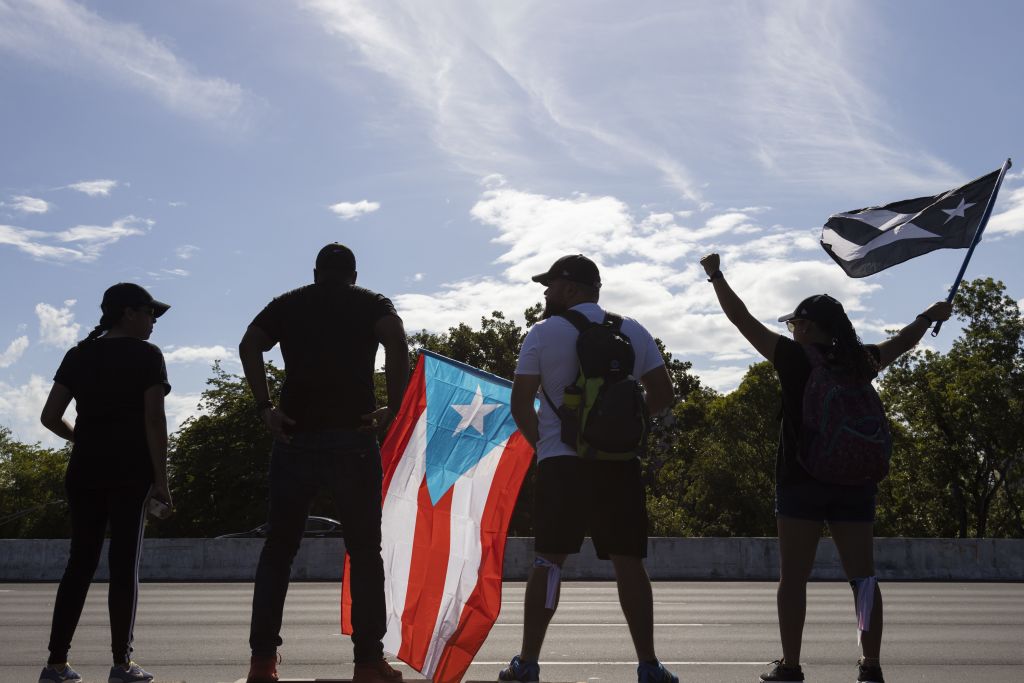
Protesters block a main highway during the demonstration to demand the resignation of Puerto Rico's Governor Ricardo Rossello on July 22, 2019, in San Juan, Puerto Rico.

Rafael Bernabe’s history of the Puerto Rico independence movement, Obstinate Star, can serve as a key tool for those on the US left who want to understand Puerto Rican politics beyond the occasional tokenization of the island by Democratic Party elites. (Alejandro Granadillo / Anadolu via Getty Images)


In a recent speech in the city of Nashville, former Democratic presidential candidate Kamala Harris spoke about the need to “revisit” several questions about the US political system: the Electoral College, the Supreme Court, and statehood for Puerto Rico and Washington, DC. While the US media was keen to pick up on her comments about the Electoral College and the court, the mention of Puerto Rico was an afterthought.

The call for Puerto Rican statehood has become a recurring theme in the mainstream Democratic discourse. However, it owes more to white liberal fantasies of multicultural imperialism than the real desires of the Puerto Rican people for a change in political status. In fact, the Puerto Rican statehood movement is much more aligned with the Republican Party than their Democratic rivals. The country’s current pro-statehood governor, Jenniffer González, is an ardent Republican and Trumpista.

If the Democratic consultants who are advising Harris had taken a little time to research contemporary Puerto Rican politics, they would have seen that the independence movement is taking off among the country’s youth. The pro-independence candidate Juan Dalmau made history by winning nearly 31 percent of the votes in the 2024 gubernatorial election.

The choice between independence or incorporation into the colonial metropolis has been the defining characteristic of Puerto Rican politics since the nineteenth century. This is a debate that sociologist Rafael Bernabe, a former Puerto Rican senator from the Citizens Victory Movement, traces in Obstinate Star: A History of the Puerto Rico Independence Movement. Bernabe tells the story of the men and women who kept the dream of Puerto Rican independence alive over the past two hundred years, while focusing on the role that the country’s working class played within the movement.

An American Nation

While often excluded from the conversation about the Latin American independence campaigns of Simón Bolívar and José de San Martín, the Spanish colonies in the insular Caribbean, Cuba, and Puerto Rico provided soldiers to both sides of the conflict. One such soldier whose life Bernabe discusses is Antonio Valero, a Puerto Rican officer in the Spanish army who participated in the Mexican independence negotiations and decided to join the military of the newly independent nation.

However, shortly after independence, Valero’s republican ideals put him at odds with Agustín de Iturbide, who had crowned himself Emperor of Mexico, prompting him to flee to Gran Colombia, where he would enlist in the military and fight for Peru’s independence. Valero never stopped dreaming of liberating his homeland and tried to convince Bolívar to free Spain’s remaining Caribbean colonies. This plan almost came to fruition in 1827 but was abandoned due to the possible threats a continuation of the war could pose to Gran Colombia’s newfound independence.

In Obstinate Star, Bernabe shows that the dream of Puerto Rican independence did not die with Bolívar’s abandoned invasion of Cuba and Puerto Rico but reconfigured itself as part of a cosmopolitan Antillean identity promoted by a new generation of Cuban and Puerto Rican intellectual patriots.

The two leading Puerto Rican figures of this new generation were Ramón Emeterio Betances and Eugenio María de Hostos, both of whom would prove to be key advocates for Puerto Rico’s independence in the late nineteenth century and the intellectual architects of the Puerto Rican nation. Both appear extensively throughout Bernabe’s history: key supporters of the Lares uprising against Spanish colonial rule in 1868, they connected the fight for Puerto Rican independence with the Cuban revolutionary movement and other struggles for liberation in Latin America and Europe.

The book also highlights how the independence movement adapted to changing circumstances after the Spanish-American War, when the island became a US colony in 1898, emphasizing the connections and confrontations between sectors of the movement and the growing labor movement on the island. In the 1930s, ’40s, and ’50s, these connections and differences were most pronounced in the eclectic politics of Pedro Albizu Campos and the Puerto Rican Nationalist Party.

Albizu Campos espoused a militant populist nationalism that sought to connect Puerto Rico with contemporary social movements in Latin America, bringing together independence supporters of all ideologies, from conservative nationalists to communists. Bernabe is keen to highlight the ideological contradictions within the Nationalist Party and the ways it struggled to win over the working class from the Socialist Party, which supported statehood.

Puerto Rico and the US Left

Obstinate Star also emphasizes the strong relationship between the Nationalist Party and the US left in this period. The author focuses in particular on the ties linking Albizu Campos to the Communist Party USA and the left-wing New York Congressman Vito Marcantonio. He goes on to analyze the years following the foundation of the Commonwealth in 1952 and shows how the experience of the 1959 Cuban Revolution revived the independence movement.

The Pro-Independence Movement (MPI), much like the 26th of July Movement in Cuba, moved toward an open embrace of Marxism-Leninism and eventually transformed into the new Puerto Rican Socialist Party. The Puerto Rican Independence movement went on to follow a similar path to many left-wing forces around the world between the 1960s and the 1980s, becoming increasingly radicalized.

During these years, many small armed organizations developed and engaged in actions against US colonialism like the 1981 bombing of Muñiz Air Base and the 1983 Wells Fargo robbery, at the time the largest bank robbery in US history. Bernabe’s account takes care not to romanticize these events while placing them within the broader historical and political conditions in which they took place, intricately breaking down many of the complex debates that unfolded among the Left at that time.

During the same period, the Puerto Rican diaspora in the United States sought to identify itself with the island’s independence movement. For some, this meant joining the diaspora section of the Puerto Rican Socialist Party and seeing themselves as part of a divided nation. Bernabe argues that this approach often led to the prioritization of the independence struggle over support for other movements in the US. A contrasting line came from El Comité, an organization that originally emerged from anti-gentrification struggles and advocated for Puerto Ricans in the United States to organize as an oppressed nationality within the multinational US working class rather than as part of a divided nation.

The debate between these two positions led to a polarization that continues to exist today between sectors of the Puerto Rican left. On the one hand, there are those who emphasize the need to focus principally on independence; on the other, there are those who seek to organize within the US left while leaving the question of independence for Puerto Ricans still living on the island. This is a debate that the contemporary US left ought to study when trying to engage with the Puerto Rican diaspora.

Beyond Tokenization

Even though Puerto Rico remains one of the world’s oldest colonies, its independence movement has a rich history that continues today in the electoral success of the Puerto Rican Independence Party and the growing popularity of the independentista pop king Bad Bunny. Bernabe shows that the independence movement is not a monolith but rather a heterogeneous force made up of activists from a wide range of ideologies and backgrounds.

Obstinate Star can serve as a key tool for those on the US left who want to understand more about contemporary Puerto Rican politics beyond the success of Bad Bunny and the occasional tokenization of the island by Democratic Party elites. Bernabe also provides a key resource for those on the island and in other Latin American countries looking to understand how, despite the country’s colonial situation, the Puerto Rican independence movement has reflected wider political trends throughout Latin America, from a historian with direct experience in the movement.