Richard Pryor’s Daughter on His Radical Legacy

Historian Elizabeth Stordeur Pryor discusses her new memoir, the history of the N-word, and why her father used comedy to confront racism.
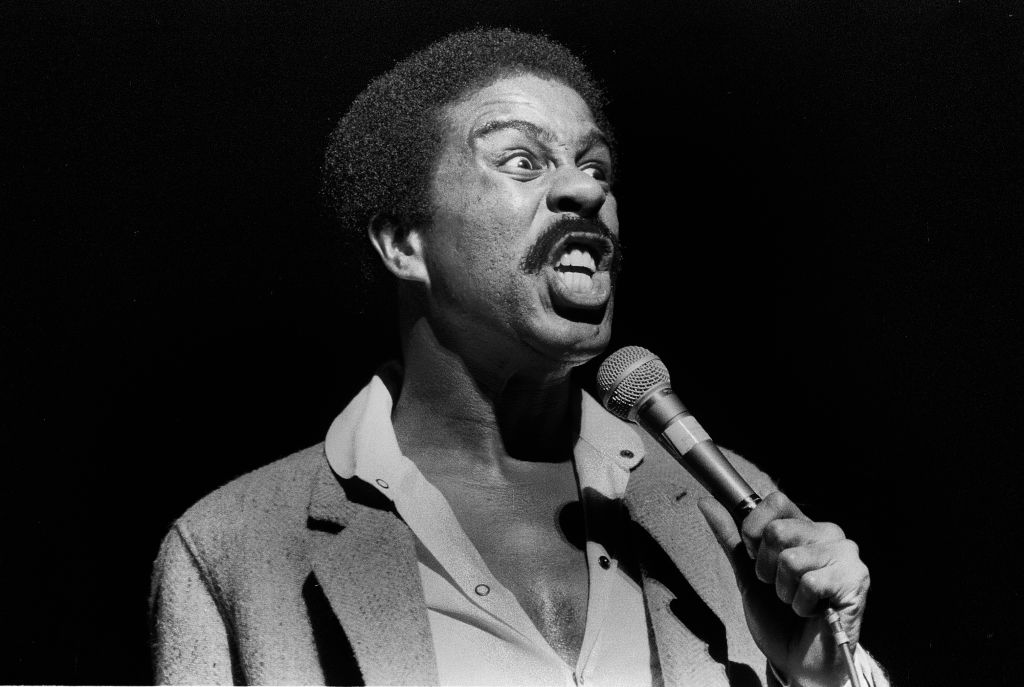
Richard Pryor performs at the Auditorium Theater in Chicago, Illinois,  on July 28, 1978.

Richard Pryor didn’t just change comedy. He changed how America talked about race. (Paul Natkin / Getty Images)


Interview by
Ed Rampell

Elizabeth Stordeur Pryor does through academia and as a nonfiction author what her father, Richard Pryor, did through comedy. During his heyday in the 1970s and ’80s, Pryor was a trailblazing stand-up comic, actor, and screenwriter who boldly pioneered new ways to discuss and challenge race onstage and on-screen. Pryor was the comedic dimension of Black Power, who often costarred in comedies with Gene Wilder and as a working-class hero in Paul Schrader’s Blue Collar (1978).

In what could be called his “Pryor offense,” Richard’s routines frequently invoked the N-word until a dramatic event led him to repudiate using it. Now, in Something We Said: Richard Pryor, a Notorious Word, and Me, his daughter Elizabeth Stordeur Pryor deconstructs the history and etymology of that infamous word, interweaving it with a personal memoir of being raised by a Hollywood legend, while also telling the story of her troubled father who parlayed tales about growing up in a brothel into topical humor that impacted the national discourse on racial and gender dynamics.

Elizabeth Stordeur Pryor, who is a professor of history at Smith College, was interviewed via phone in Oakland.


Ed Rampell

Something We Said is a unique book combining a behind-the-scenes look at a celebrity, your personal memoir, the history of a social issue, and how they all intertwine.

Elizabeth Stordeur Pryor

I took inspiration from lots of different books: Cheryl Strayed’s Wild, because I loved the way she was able to be in the present and hearken back to the past; Isabel Wilkerson’s Caste and The Warmth of Other Suns, where she’s moving back, introducing characters, giving their bigger history and interiority. That’s where my idea about blending all the stories together came from. Plus, Christina Sharpe’s In the Wake: On Blackness and Being.

Ed Rampell

What’s the origin of Something We Said?

Elizabeth Stordeur Pryor

In the Spring semester of 2010, I was in my second semester of my first year teaching at Smith College, as a newly minted history professor. I was teaching about the Civil War and specifically about the Fugitive Slave Act, and a student asked me if I’d seen Blazing Saddles, which completely threw me off, because I never talked to my students about the fact that my father was Richard Pryor. I felt the student was trying to out me as his daughter, because my father cowrote, with Mel Brooks, Blazing Saddles, a satirical 1974 comedy about race. So, I said I’d seen Blazing Saddles, but I hadn’t. If I had, I probably would have cut off what happened next at the pass.

She quoted a line from the film I have no doubt was written by my father, that used a disparaging word for people of Chinese descent and the N-word, and the students heard the slurs. In that moment I just got so shaken up. It was like worlds colliding. My personal history with the word as a biracial, Jewish person who was also Richard Pryor’s daughter and as a college professor looking at the way I could be intentional about teaching these histories, because sometimes they get uncomfortable. It can get really intense when you’re teaching them, and I really didn’t understand that yet.

Also, the history of the word itself. I asked myself: Do I really know what it means? Does it mean the same thing now that it meant then? How do I get into the histories? The more I dug into those histories, the more my father’s name kept coming up because of his groundbreaking work in the 1970s, and his willingness to use the word to force audiences to reckon with their racism.

Ed Rampell

According to your book, Richard hired you to work on his autobiography, but you had writer’s block and couldn’t. Do you think Something We Said finally fulfills that mission?

Elizabeth Stordeur Pryor

I really do. I feel like it’s an apology, making amends. A way of reconnecting with him and telling our story together and telling his story. I hope it reintroduces a younger audience to his work. I taught a course last semester, “Richard Pryor’s America,” and was shocked my students really don’t know who he is, as important as his voice was in the 1970s.

Ed Rampell

The “notorious word” in your book’s subtitle is the N-word. What is the etymology of the N-word and the history of its use and abuse?

Elizabeth Stordeur Pryor

The book is told in three parts: the story of my relationship with my father and the way the word weaves in and out of that; the story of my work in the classroom; another part is this history, to center the history of the word, to be able to understand other parts of the book. It was 1619 when the first twenty Africans were kidnapped and brought to Jamestown, and the word was applied to them. It becomes a foundational ideology about thinking of black people as “other.”

The word really becomes a slur when black people begin to become free. In the 1830s, in the antebellum North, it’s really an attack on black freedom, mobility, prosperity, economic and political participation. When people are no longer actually enslaved, the word hooks them like a shackle. Because now we have people who are incredible orators, who are being invited to dinners by huge American luminaries being called this word. It’s serving as a gatekeeper in the public space, keeping black people out, like a tool of segregation. It evolves into violence.

I also found out that, almost from the late 1700s, black people were reclaiming it and using it as a subversion and protest in their own speech to talk about themselves, much in the way that you might hear it in hip-hop. It wasn’t my father, important black writers from the ’70s, and Black Power intellectuals who started using the N-word in this way; they were building on centuries of oral tradition of protest.

The comedians were historians. They weren’t just making up stories about their lives, but they were connecting them to this larger history. They understood the context of their experience as black men.

Ed Rampell

You write about two different meanings and pronunciations of the N-word.

Elizabeth Stordeur Pryor

This is an intervention that fifteen, twenty years ago young people started making in American English: the N-word with a hard r and the N-word with the soft a. There are two meanings to these words. The hard r is that white, racist version that’s the last word somebody being lynched heard, used during slavery, and instances of police brutality. The other is this version my father most often used, and it was in the title of two of his Grammy Award–winning albums. Even though my father spelled it exactly the same way, the essence of the word meant a kind of camaraderie.

Ed Rampell

Who is allowed to say the N-word in public and in private, and why?

Elizabeth Stordeur Pryor

There’s a book that basically has that title, The N Word, by Jabari Asim. He grapples with that question, and I think it’s important. To me, polemical debates about who should and shouldn’t say the word only tell part of the story. What I wanted to do was go deeper. For me, I obviously feel that if you’re hurling a slur at someone, you have no business using that word. I don’t think it’s possible, unless you came from a very particular experience. I don’t come from that experience, and I’m a black person. You have to come from a very particular experience for that word to be authentically spoken by you.

I like to flip it and ask: Why does this word resonate so much for black people, for black artists like my dad and hip-hop artists? If it is a word of protest against injustice and inequality, then the word will continue to resonate as long as those systems stay in place.

Ed Rampell

Richard Pryor used the N-word in his stand-up comedy acts, movies, and record album titles. You write that his expression of the N-word was “something daring and new” and that he was “the voice of a black generation.” How and why did he use it?

Elizabeth Stordeur Pryor

I never had this conversation with my father. It’s on my list of many I wish I could have with him. As a historian I feel I can speak to it. In 1967, my father has this moment of understanding. He’s performing in front of an audience that wouldn’t accept his own grandmother as an audience member. He said he no longer wanted to do the schticky comedy he thought was going to make him famous. He dropped the mic and walked offstage in Las Vegas and started truth telling, talking about the real experiences he had in his home. The way the word is used by him is funny, but it forces the audience to reckon with their own stuff. Namely, if it’s a white audience, their own racism. He’s really inviting them to be part of his black world, as opposed to him going to their white world.

Ed Rampell

Richard ended up repudiating the N-word. Why?

Elizabeth Stordeur Pryor

In 1979 he went to Africa. In Kenya, he took stock. He was surrounded by black people doing the most menial jobs and running the country. In that context, outside of the white supremacy of the United States, he didn’t even think of using the N-word, because it had no meaning in the context of the black world he was in. After that, he said, “I’ll never call another black man the N-word.” It took that international travel to understand that to be black in the United States wasn’t the only kind of black experience a person could have. In his stand-up he said, “It hit me like a shot, I cried.” It was really powerful for him. And I never heard him call a person that again.

Ed Rampell

Tell us about your course at Smith College about your father.

Elizabeth Stordeur Pryor

It was really an incredible experience. Part family history, part examination of his work. It was deep seeing his comedy through [students’] eyes. In 1979’s Live in Concert, he basically invented the concert film, the comedy special, the genre. He spends about half of it talking about “Macho Man,” making fun of his masculinity and typical masculinity in general. Men didn’t do that, didn’t make fun of their own prowess, and needed to feel like they’re better than women. My students point that out because they’re often thinking about gender and sexuality, and really saw that in his work.

Ed Rampell

How do you remember him as a dad?

Elizabeth Stordeur Pryor

What I loved about writing the book is I was able to reignite all the tenderness. I was crazy about my dad. He really could do no wrong by me, even when he was. I just admired and looked up to and loved him so much. He wasn’t there all the time, but when he was, he was super present. I have no doubt he really, really wanted to be a good dad, with all of his seven kids; that’s something that really mattered to him.