The 250-Year Decline of American Exceptionalism
American exceptionalism has always had an absurd and self-serving character to it. But any pretense justifying it has collapsed in the face of Donald Trump’s cruelty and oligarchic corruption.
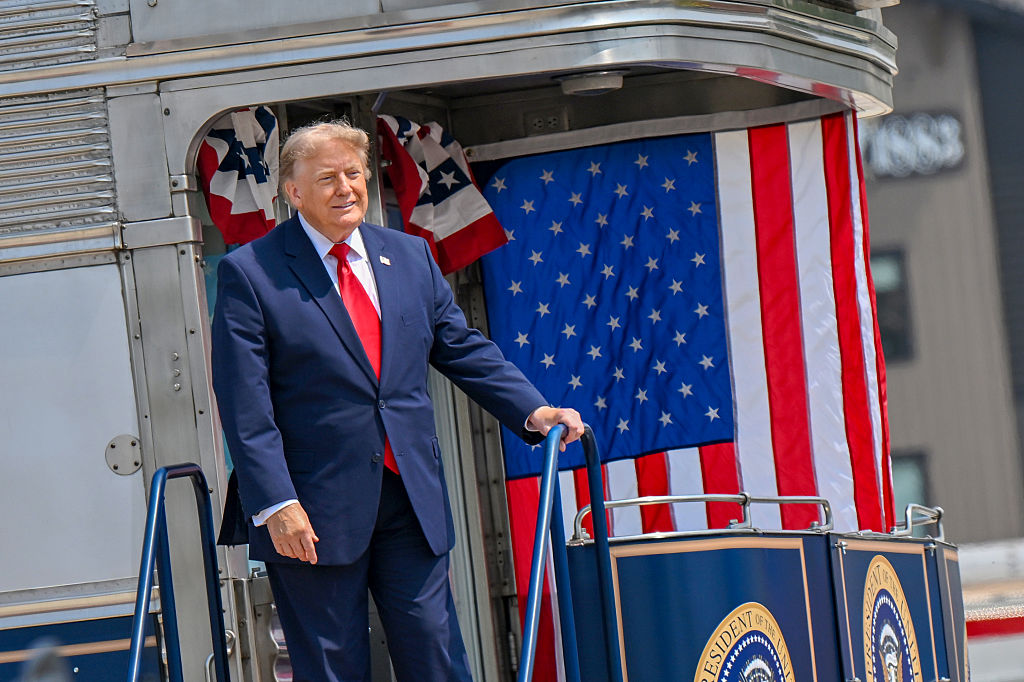
Two hundred and fifty years since the founding, with Donald Trump in his second term as president, it’s impossible to maintain the fiction of “American exceptionalism” that has proven so central to the American project. (Bryan Bedder / Getty Images for Theodore Roosevelt Presidential Library)
It is impossible to revisit the American Revolution without raising the question: Did that late eighteenth-century conflict create a truly new kind of society, an “exceptional” nation that has ameliorated class conflict and sustained capitalist hegemony for more than 250 years? With Donald Trump in the White House and MAGA in power on so many fronts, has the idea of an “American exceptionalism,” which originated even before the colonials stacked their muskets, been finally reduced and debased to little more than a belief that Christian nationalism, white supremacy, and a robust, unfettered capitalism have become definitional identities after 250 years of American history?
In his six-part documentary on the largely military history of the revolution, filmmaker Ken Burns sought to subvert such self-congratulatory chauvinism. A variegated set of scholars representing an expansive, twenty-first-century sense of what has constituted political and social history, offered a defiantly anti-Trumpian way of thinking about that 250-year-old upheaval. Multiple voices, among them those of indigenous people, enslaved African Americans, British loyalists, and “patriots” of various classes, genders, and regions gave to the Burns documentary a multisided complexity far removed from the textbook and TV tales of several decades ago or the one-dimensional revisionism coming out of the contemporary White House.
Like so many anti-colonial movements of more recent years, the American Revolution was a civil war within a global context, where each fraction and party sought advantage either by resisting or allying with more dominant forces that may or may not have served as faithful compatriots. Indigenous Americans, well organized into a set of politically sophisticated and militarily engaged tribes, were clearly the greatest losers during and after the conflict, betrayed in almost equal measure by both the patriots and their British adversaries. Likewise, the British sought to entice enslaved Americans to their side with promises of eventual freedom.