The Imperial Plunder of Cuba Has Begun
The Trump administration distressed one of Canada’s oldest mining firms, which operates a joint venture in Cuba, through blatant lawfare, apparently so a Trump-aligned oligarch could snatch up a majority stake for pennies on the dollar.
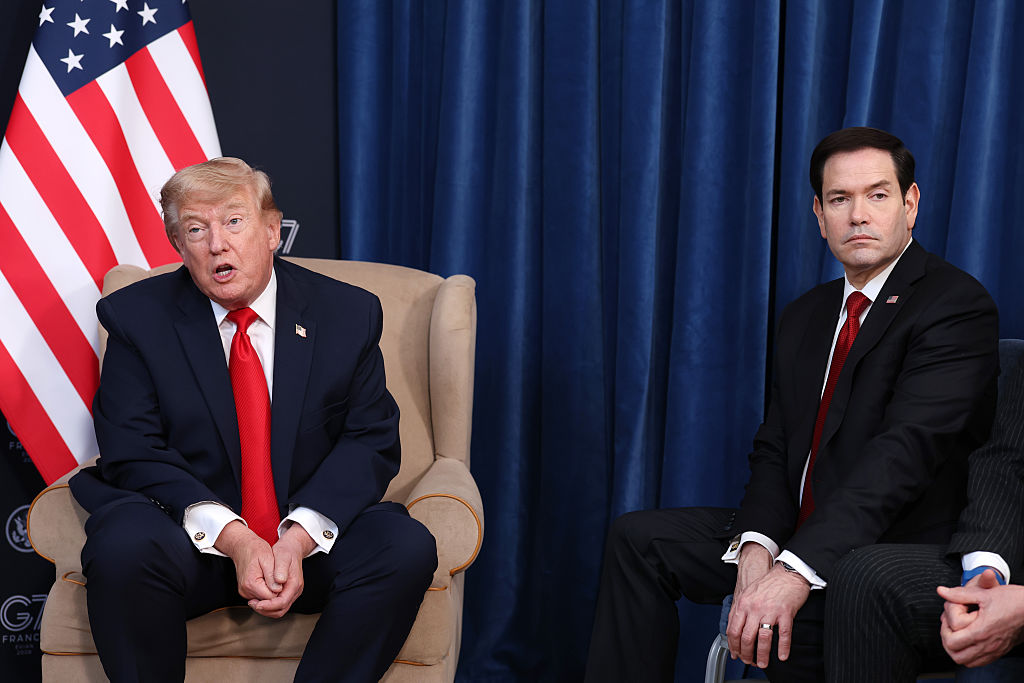
The family wealth fund of a former Trump adviser bought up a Canadian mining firm, devastated by US lawfare, that operates a joint venture in Cuba. Analysts think it could be a way of selling it back to the US owners from before the Cuban Revolution. (Anna Moneymaker / Getty Images)
In the span of one month, May 2026, one of Canada’s oldest mining firms, Sherritt International, was distressed by US regulatory lawfare and strong-armed into accepting a buy offer from Gillon Capital, a private wealth fund for a right-wing oligarchic family with close ties to Donald Trump and the Republican Party.
Here’s how it happened.
On May 1, the Trump administration expanded secondary sanctions against companies operating in Cuba. The immediate impact for Sherritt, which operates a nickel and cobalt mine in Moa, Holguín, through a joint venture with the Cuban government, was devastating. The company’s access to global banking and compliance services was severed. Less than a week later, on May 7, Sherritt was forced to halt operations, temporarily freezing the supply chain of Cuban nickel and cobalt feedstocks, which are transported to Sherritt’s refining facility in Fort Saskatchewan, Alberta.
On May 13, Cuba’s minister of energy and mines appeared on television to warn that the country had completely exhausted its oil reserves as a result of the US blockade, stating that the energy grid was in a “critical” situation. At that point, even if Sherritt desired to continue mining nickel and cobalt in Cuba, it likely wouldn’t have been able to run the equipment necessary to do so.
Then, on May 19, Sherritt abruptly backpedaled, noting that Gillon Capital — a family office based in Dallas, Texas, with primary holdings in high-end real estate, malls, and hotels — had approached them with a nonbinding term sheet for a majority buyout. Underscoring the political nature of the takeover, the US State Department and Treasury blessed the framework by telling Sherritt that they “did not object” to talks with Gillon, but that the final deal would be subject to their approval.
Finally, on May 21, the Ontario Securities Commission issued a failure-to-file cease trade order against Sherritt for missing the May 15 filing deadline for first quarter reports. This order froze trade in Sherritt’s stock, and the company has been in limbo ever since — having run afoul of regulatory authorities in both the United States and Canada.
It’s important to emphasize that these events were a direct consequence of President Donald Trump and Secretary of State Marco Rubio’s foreign policy strategy toward Cuba, which involves using the embargo, energy blockades, and regulatory lawfare to probe the Cuban governing class for defectors who are willing to open up the island to imperial plunder (thus far without luck).
“This deal happened because an actor in the United States was able to make a case to the U.S. State Department,” Peter Hancock, Sherritt’s interim CEO, recently said. He was likely alluding to Ray Washburne, the vice chairman of Gillon, former head of the Overseas Private Investment Corporation and a member of Trump’s Intelligence Advisory Board during his first term.
“We [Sherritt] were collateral damage in a larger policy objective for the United States,” Hancock said. While Hancock did not expound on this policy, the United States is using similar moves across Latin America to dispossess Chinese port infrastructure in Panama, as well as energy commodities and critical minerals in Venezuela.
John Kirk, a preeminent scholar of Canada-Cuba relations, views the events of May 2026 as unprecedented. “It’s amazing that Sherritt was closed down because of an edict by Trump, then right away one of his former advisers was given the opportunity to buy it at a fire sale,” Kirk told me. “It’s an incredible example of corruption and collusion.”
A Vital Source of Foreign Exchange for Cuba
For decades, the Moa facility, a joint venture between Sherritt and Cuba’s state-owned General Nickel Company S.A., delivered economic benefits for both Canada and Cuba. The operation extracts lateritic ore from open-pit mines, processing it into mixed sulfides containing nickel and cobalt. That raw material is then transported overseas to Halifax, Nova Scotia, and then via rail to Sherritt’s metallurgical refinery in Fort Saskatchewan, which is also co-owned with Cuba’s General Nickel Company.
This refinery is central to Canada’s critical minerals strategy and Cuba’s ability to import goods. The mixed sulfides are used to make Class 1 nickel for battery cathodes, and cobalt is used to make heat-resistant alloys for jet turbines. Following the collapse of the USSR, Sherritt stepped in to provide an industrial link that Castro’s government desperately needed. This earned then Sherritt CEO Ian Delaney the moniker “Fidel Castro’s favorite capitalist.”
Since then, the General Nickel Company has earned 50 percent of the profits from the finished product, with the caveat that it owes debts to Sherritt that it has, since 2023, paid off via “cobalt swaps.” (This means that the state enterprise’s effective dividend is much lower.) Regardless, the venture has remained a vital source of foreign exchange for Cuba for over thirty years — allowing Cuba to import goods in defiance of the brutal American embargo.
It’s easy to see how a Gillon takeover could undermine this independent Cuban and Canadian supply chain. If an American firm acquires a majority stake in Sherritt, strict compliance with the US embargo dictates that the new American ownership could not legally process Cuban-origin minerals without Office of Foreign Assets Control licenses. How these licenses are written will likely dictate how much of the final product will be destined for the United States via offtake agreements and, crucially, how Cuba’s existing debt to Sherritt will be managed.
There’s also the distinct possibility that Gillon Capital is not the ultimate intended owner of Sherritt, and that Gillon could be used as a vehicle for resolving a massive historic liability under Title III of the Helms–BurtonAct, which allows US citizens to sue private entities if they deal in assets that were expropriated during the Cuban Revolution. “This mine was owned by [US multinational] Freeport-McMoRan in pre-Cuban revolutionary times,” Kirk noted. “This could be a way of selling it back to them.”
Canada’s Intermittent Resource Nationalism
May’s events surrounding Sherritt have also exposed the gap between Canada’s nationalist rhetoric and the reality of how Prime Minister Mark Carney is governing. Immediately following the passage of the Helms–Burton Act in 1996, the Canadian government amended its Foreign Extraterritorial Measures Act (FEMA), expanding the blocking statute to protect Canadian companies from US sanctions against Cuba.
“If you pick up FEMA and look at the statute, clearly the Sherritt-Gillon deal violates it,” notes Mark Warner, a prominent Canadian and American trade lawyer. But Ottawa has not even referenced the law publicly in recent months. “Canadian law is symbolic law,” Warner told me. “American laws are written with the notion that they will actually be enforced.”
Sherritt was not slapped with a stop-trade order by the Ontario Securities Commission for lack of oversight. As Warner told me, the US sanctions made it temporarily impossible for Sherritt to retain a chief financial officer and find an accounting firm willing to audit a Canadian company operating in Cuba. American regulatory lawfare forced Sherritt out of compliance with Canadian securities law, Ottawa did nothing to intervene, and Ontario was forced to stop trades. By the time the whole sequence was over, Sherritt stock had lost 56 percent of its value.
The passivity of Carney’s administration is an anomaly. Maintaining an independent Cuba policy and normal relations has long been a hallmark of Canadian diplomacy. Fidel Castro famously served as a pallbearer for Pierre Trudeau in 2000, but as recently as 2019, when Trump implemented Title III of the Helms–Burton Act, Global Affairs Canada put out the following statement:
Canada has had measures in place since 1996 under its Foreign Extraterritorial Measures Act (FEMA) to help protect Canadians and Canadian businesses and the workers they employ. Our FEMA legislation is strong and we are prepared to apply it. . . . The Government of Canada will always defend Canadians and Canadian businesses conducting legitimate trade and investment with Cuba.
When asked for comment on FEMA implications of the Sherritt-Gillon deal, Global Affairs Canada spokesperson John Babcock told me, “Officials from the Government of Canada regularly provide advice and support to Canadian businesses navigating complex international environments and will remain in contact with the company. . . . Canada continues to call for the Cuban government to implement the reforms needed to move toward a more open, pluralistic, and democratic society for the benefit of all Cubans.”
“Canada has dealt very badly with this,” said Kirk. “I’m shocked, disappointed, and angry at the government for not protecting a Canadian company for pursuing a legal form of investment, which is essential to Cuba’s economy.”
“Right now, Mark Carney is being celebrated across the world as the middle power standing up against Trump; he’s actually not doing as much as his predecessors,” Warner told me.
The Paper Beaver
Since 2024, the Canadian government has been overhauling the Investment Canada Act (ICA) to build a legal fortress around their critical mineral supply chains. If a foreign company attempts to acquire even a minority stake in a Canadian nickel or cobalt producer, Ottawa now possesses the authority to pause the deal, dictate terms, or even block the transaction — in theory.
While Canada routinely sics the ICA on Chinese state-owned enterprises to force divestment, it turns into a cuddly little beaver when an American firm like Gillon comes around. “On its face,” notes Mark Warner, “this should trigger an ICA review for both net benefit and national security.”
The reality of how the ICA is enforced reveals quite a lot about the Carney administration. While Mélanie Joly technically leads the ministry overseeing the ICA, the true decision-making power often flows through Prime Minister’s Office insiders like Tim Hodgson — a personal friend of Mark Carney and his minister of energy and natural resources.
“Mélanie Joly is a holdover minister from Justin Trudeau’s government,” Warner explains:
Although Joly is technically the minister of ISED [Innovation, Science and Economic Development Canada], I always go with what Hodgson says. . . . There have been investments by American firms in Canadian mining companies operating in Nevada and Alaska. Both of those transactions should have triggered an ICA review for net benefit and national security; and in both of those cases, Tim Hodgson basically said, “We’re not going to do that.”
When asked whether the ministry would enforce the ICA’s critical minerals protections to block a US takeover of Sherritt, Justin Simard, spokesperson for ISED, reiterated the purpose of the ICA but declined to comment, citing confidentiality provisions.
A similar request for comment to Hodgson’s office was returned with boilerplate language.
Under Carney, Canada’s part-time lover approach to protectionism serves Trump’s interests just fine: it keeps rival global powers out of North America’s critical mineral supply chains while allowing politically connected business owners to march right in and scoop up assets that the US government has distressed.
The Donroe Doctrine Expands
While Sherritt’s stock value was in freefall, the Trump administration was escalating its ongoing campaign against Cuba. On May 14, CIA Director John Ratcliffe visited the island to meet with Raúl Castro’s grandson. Then, on May 20, the United States unsealed a formal indictment against Raúl Castro himself.
Amid these cloak-and-dagger talks and embargos and blockades, the utility of sanctions has evolved. Historically, the US has used sanctions to isolate countries like Cuba, Iran, and Venezuela. Increasingly, Trump is using them to appropriate assets from target nations and third-country investors.
“This is naked US imperialism, the likes we haven’t seen in decades,” said John Kirk. “Trump is behaving like the Spanish Empire. . . . It pains me to see all the hard work and mutual benefits of the Canada-Cuba partnership [destroyed] so that a Trump crony can make a lot of money.”
This strategy is also intertwined with domestic US politics. Gillon Capital is the single-family office of the Washburne family, connected, by former Trump adviser Ray Washburne’s marriage, to the Hill and Hunt families — oil magnates who funded far-right political and media operations, including Life Line, a syndicated radio program during the 1960s that produced anti-Castro propaganda. (The founding patriarch of the family, H. L. Hunt, who was one of the richest individuals in the world when he died in 1974, was a generous funder of anti-communist and white supremacist movements.) The Hunt family also provided financial support to the Cuban Revolutionary Council, a Miami-based group of exiles who collaborated with the CIA to destabilize Castro’s government.
Kirk noted that the Donroe Doctrine is heavily influenced by figures like Rubio, whose “entire political project is based on ideological relationships with Miami hard-liners,” and whose credibility rests on delivering regime change.
“If there is going to be a ‘deal,’” Emily Morris, an economist and expert on Cuban development, told me, “it’s going to be a deal that opens up Cuba to US businesses close to Trump, but not third-country businesses.”
“Cuba is viewed as a ‘buy opportunity,’” Morris added.
But none of this answers the most obvious question. If we take Gillon’s offer at face value, setting aside the possibility of the mining operation being returned to Freeport-McMoRan, why is an American real estate speculator interested in co-owning a mine with a Canadian firm and the Cuban government?
It may be a while before we know the true answer. But as of early June 2026, there are plenty of other ripe opportunities for the picking by American capital. The Spanish hotel chain Meliá has halted operations at fifteen of the thirty-four hotels it manages in Cuba; the Canadian hotel company Blue Diamond Resorts made similar moves. Neither company has explained their rationale, but the hospitality industry is particularly sensitive to secondary sanctions and fuel shortages.
Trump has long desired to open a resort in Cuba, hearkening back to the dark days of Fulgencio Batista’s dictatorship — when Mafia-run casinos proliferated in Havana. “The Trump administration, going back to 2016, has been interested in golfing possibilities in Cuba,” Kirk told me. “I think that Trump and his acolytes would love to dominate the tourism and recreation industry in Cuba.”
Trump Hotels & Casino Resorts famously violated America’s embargo against Cuba in 1999, paying an American consulting firm $68,000 to meet with Cuban officials to explore business opportunities. That firm later instructed Trump executives to characterize their fee as a contribution to a local Catholic charity. But as recently as March 2026, when Trump described Cuba as a “failed nation” that he would have the “honor” of taking, he simultaneously waxed poetic about the landscape: “They have good soil. They have a beautiful landscape. It is a lovely island.”