The Damage Caused by Private Equity Is No Accident
Defenders of the private equity industry cast it as a bold force driving economic dynamism. But its record of destroying public services is no accident: private equity is essentially an elite project to profit from asset-stripping.
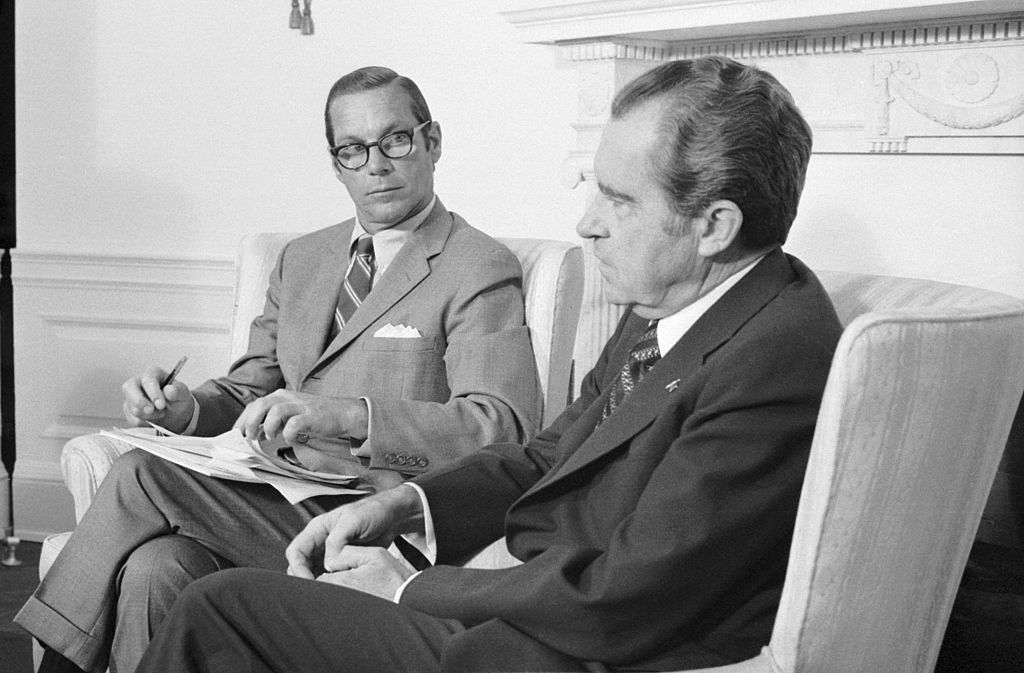
Nixon’s Treasury Secretary, William E. Simon, the “father of private equity,” saw his turn to asset-stripping and leverage buyouts as a moral crusade to restore the United States to its old vigor and dynamism. (Bettmann Archive via Getty Images)
Of all the schemes devised by the rich and powerful to rip off workers and escape democratic accountability, private equity might be the most brazen and destructive. Born out of the conservative backlash of the 1980s, it was pitched as a way to save moribund Western economies and wrestle capitalism free of the hands of a complacent postwar managerial class. Yet fast forward four decades or so, and these secretive funds hardly live up to their billing as a vanguard of risk-takers who smashed up bloated corporations in the name of creative destruction. They instead operate more like parasites that, having run out of businesses to load with debt, have ended up razing essential services regular people cannot live without, from housing to health care, education, and utilities.
The chasm between stated purpose and reality is the subject of Hettie O’Brien’s new book The Asset Class. Blending history with firsthand reporting, the book is an excellent account of how private equity emerged out of an attempt by the propertied class to escape democracy and reassert their control over capitalism. More importantly, though, it is a chronicle of the disparate ways in which private equity has become one of the main drivers of enshittification and erosion of the welfare state as we know it, using workers’ hard-earned pensions and savings to make their everyday lives worse.
Billionaire Factory
The first chapters are dedicated to the rise of private equity on the two sides of the Atlantic. O’Brien starts by discussing William Simon, a financier who had been President Richard Nixon’s treasury secretary, whom she singles out as “the father of private equity.” Simon was as much a businessman as an ideologue, who saw his turn to asset-stripping and leveraged buyouts as a moral crusade to restore the United States to its old vigor and dynamism. Together with figures such as Michael Milken, the inventor of “junk bonds,” and Michael C. Jensen, a business professor convinced of the miraculous power of debt to discipline underperforming managers, Simon provided much of the thrust behind the 1980s boom in hostile takeovers.