Tony Mazzocchi Was a Champion of Worker-Whistleblowers
Tony Mazzocchi was instrumental in reshaping workplace health and safety — a feat made possible by empowering workers themselves to expose hazardous conditions. Recent attacks on OSHA underscore the importance and continued relevance of his work.
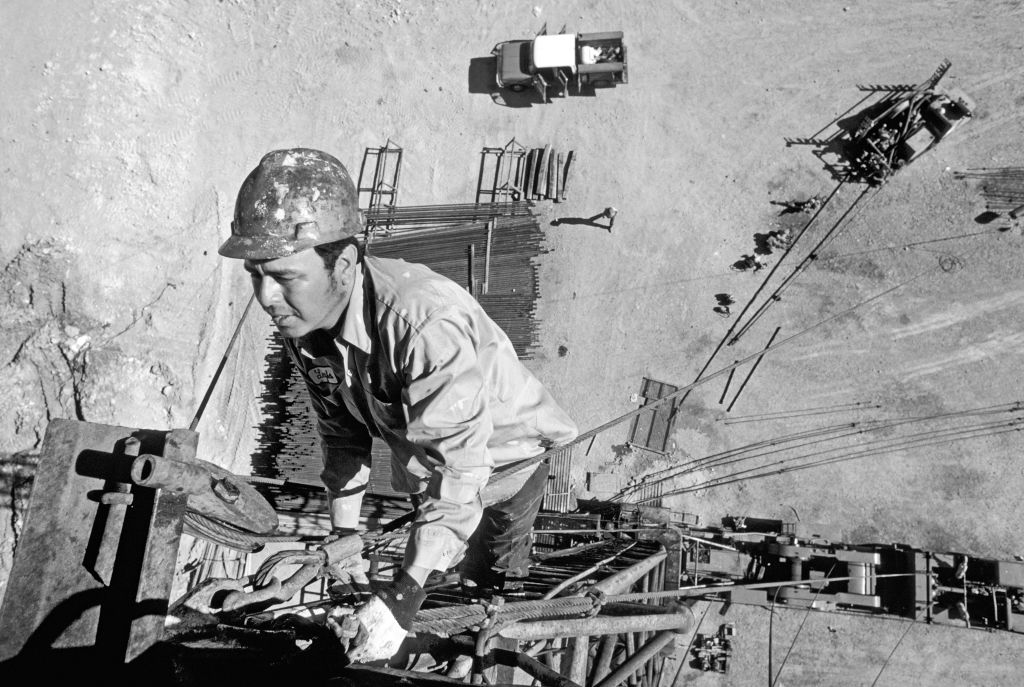
A roughneck oil worker works atop a wildcat oil drilling rig without safety equipment in the oll fields of southeast New Mexico, 1978. (Buddy Mays / Getty Images)
In early June, hundreds of labor activists gathered at the Rutgers Labor Education Center for a conference marking the creation of the Tony Mazzocchi Labor Archive. Mazzocchi died in 2002, but his name is still legendary among older labor, occupational health, and environmental activists. And as the conference revealed, he remains a source of inspiration to those who strive for a working-class alternative to the political duopoly.
Over five decades that spanned the second half of the twentieth century, Mazzocchi rose through the ranks of the Oil, Chemical and Atomic Workers Union (OCAW), waging a relentless campaign on the occupational diseases that were maiming his membership. During a period when much of the labor movement bristled at antiwar activism, environmentalism, and feminism, Mazzocchi founded an antiwar group, spoke at Earth Day, and opposed corporate policies that barred fertile women from production jobs at industrial plants.
Scores of Mazzocchi’s activist heirs — some who knew him and many who did not — spoke movingly of how Mazzocchi shaped their own careers in political education, environmental justice, medical training, and public service. But there was one philosophy that unified all speakers, from the Spanish-speaking “train the trainer” organizers of the New Jersey New Labor coalition to former longtime Occupational Safety and Health Administration (OSHA) administrator David Michaels. This was the philosophy that guided Mazzocchi’s own work: that workers themselves should be whistleblowers, testifying to the conditions that they knew best, and thus guarding the health and safety of their workplaces.