What Real American Won’t Say About Hulk Hogan
From his late-life support for Donald Trump to playing a key role in destroying Gawker, the Netflix documentary series Real American keeps its distance from substantive questions about Hulk Hogan’s legacy.
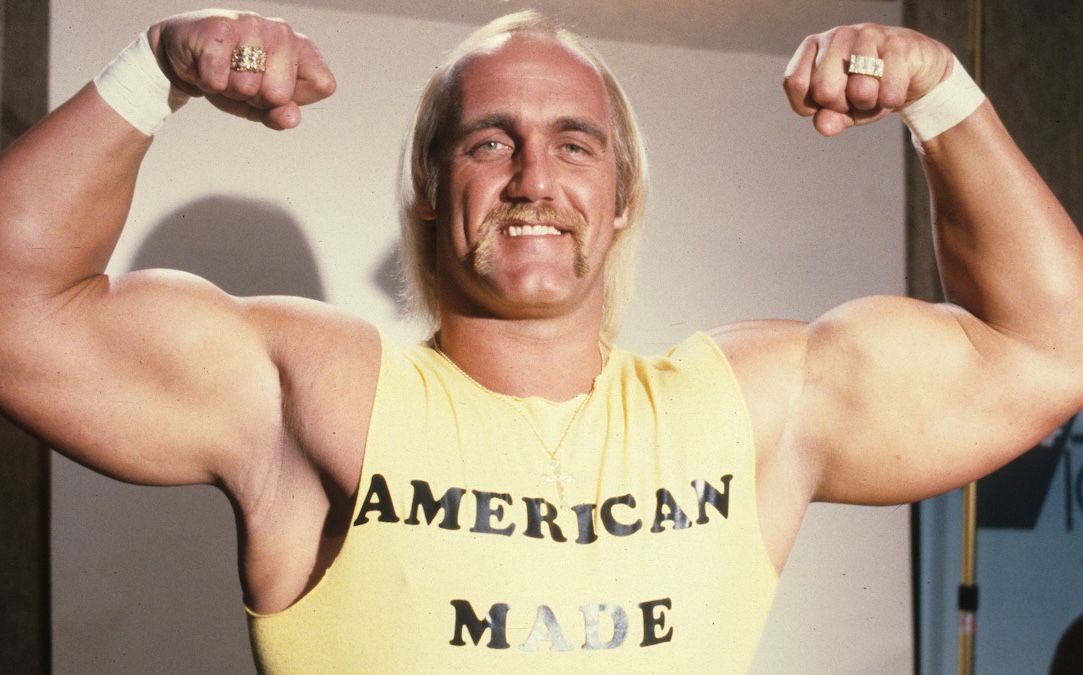
At its peak, Hulkamania captured the imaginations of millions of Americans. But Hulk Hogan’s legacy includes union busting and destroying journalistic institutions — episodes that a new Netflix documentary series barely touches. (Netflix)
In 1991, I sat in front of the television and wept as Sgt Slaughter beat Hulk Hogan with a chair. My brother and I had watched in horror for months as Slaughter and his cronies brutalized Hogan in the lead-up to WrestleMania VII, unwilling to accept my dad’s attempts at consolation. We were kids, and like millions of other Americans, Hulkamaniacs.
Thirty-four years later, my son Sebastian, who had just turned seven, stood beside me at WWE SmackDown in Cleveland on July 25, 2025. We watched grown men and women weep as the bell tolled ten times to commemorate Hogan, a day after his death. The moment was surreal. I was grieving the figure who had defined a piece of my childhood, and I was thinking, even then, about what I had spent the better part of a decade trying not to think about: the man behind the character, and what that man had done.
Netflix’s new four-part documentary, Real American, takes a partial accounting. But like most documentaries produced in association with World Wrestling Entertainment (WWE), it ducks the questions that matter most. Watching it didn’t resolve my dissonance.
The Performer and the Man
The legendary film director Werner Herzog, a longtime aficionado of professional wrestling, appears in the final episode to offer some philosophical opining on performance.
“All of us in a way have a performative life,” he says. “As a father, I am performative. It’s part of human nature, of the human experience.”
Symbolic interactionists like George Herbert Mead and Erving Goffman troubled the idea of a “true” self decades ago, arguing that social life is essentially theatrical. We all manage impressions and perform versions of ourselves for different audiences. Hogan just did it at a scale most people can’t imagine, and he eventually lost the distance between performer and performance. He didn’t just play Hulk Hogan. He convinced himself he was Hulk Hogan. Terry Bollea more or less disappeared into what some in the wrestling business call “becoming a mark for your own character.”
In his final interview, Hogan tells the camera that his happiest years were when he was married to Linda Bollea and his two kids were still young. This was before the reality TV show, the affairs, the divorces, the lawsuits. It is hard to watch a man in his final days look back and admit, more or less, that despite everything he was given and all the second chances he received, he destroyed his own family and set them on a path forever marked by his own mistakes.
But the documentary stops there. The dissolved family becomes the lens through which we are invited to see Bollea. The film treats this as the central tragedy of his life. There were others, and they were not his alone.
Hogan’s fellow wrestler Bret Hart says early in the documentary that Hogan knew almost nothing about wrestling. He’s not entirely wrong. Hogan had a predictable formula, and it wasn’t a technical one. He was all presence. He didn’t fly off the top rope, because he didn’t need to. He didn’t attempt technical maneuvers, because his sheer appearance was enough. He was enormous. He had twenty-four-inch pythons for biceps and a cartoonishly expressive face. The crowd didn’t come to see him wrestle. They came for the broader set of feelings they experienced and for the relationship they had built with the character.
That’s why they went along for the ride. They believed in him. He was the last of a bygone era of “good guys” in wrestling.
By the mid-1990s, the era of Jerry Springer and MTV, the kids who had gone along for the Hulkamania ride were now teenagers more interested in raunch than the good-guy image Hogan had crafted at his wrestling career’s peak. After a lackluster turn in Hollywood, Hogan finally caught up to the culture, returned to wrestling for billionaire Ted Turner’s new league, World Championship Wrestling, and turned heel in 1996, reinventing himself as “Hollywood Hogan,” a narcissist who referred to the audience in derogatory terms and often cheated to win against his opponents. Hogan had the power to pull off this transformation. The harder question, and the one Real American never takes up, is what he did with it everywhere else.
The Labor Question
The biggest omissions in the documentary are also the most important about Hogan’s life. In the second episode, Hogan claims that his drawing power lifted all boats in the World Wrestling Federation (WWF), and that all wrestlers made more money because of him. Most wrestlers, however, never worked with Hogan. They worked the mid-card and the lower card, jeopardizing their bodies, their home lives, and their marriages for paydays that were a fraction of his. WWF wrestlers were classified as independent contractors despite working a schedule that left no time for and in fact prohibited outside employment. They had no health insurance, no pensions, no collective bargaining rights, no retirement.
The toll was not abstract. The WWF rosters of the 1980s and 1990s are populated with men who died in their forties and fifties from heart attacks, overdoses, and suicides, and the through line is almost always the same: bodies broken on the road, then medicated to keep them on it.
By the time of WrestleMania 2 in 1986, Jesse Ventura and Jim Brunzell had begun pushing for a union within the WWF. As Brunzell told me for a piece for Jacobin in 2022, he approached Hogan personally and asked him to support the effort. Hogan not only refused but went straight to WWF CEO Vince McMahon and ratted on his coworkers. Ventura was fired, and the other WWF wrestlers got the message. Forty years later, professional wrestlers are still classified as independent contractors. There has never been a successful organizing drive in what in 2002 became WWE.
Hogan was the only one who could have changed that. He was the irreplaceable star of pro wrestling. McMahon could absorb the loss of almost any other wrestler in 1986; he could not absorb the loss of Hulk Hogan. That made Hogan, and only Hogan, immune to the reprisal that fell on Ventura. He alone had the leverage. He chose not to use it. The wrestlers who years later couldn’t pay for the surgeries to fix the broken bodies that their working lives had left them with were paying interest on a decision Hogan made before some of them were old enough to drive. This was the pattern of his career. He was always the protagonist. Everyone else was an extra to be managed.
This is the part I can’t get around. The goodness of the character was the entire premise of Hulk Hogan. He told children to say their prayers, take their vitamins, and believe in themselves. He sold them on a moral universe in which the good guys helped each other. Yet the man playing Hogan sold out the workers in his own locker room and lived with that decision for the rest of his life without ever revisiting it.
The Racism
The documentary broaches the controversies over Hogan’s racist comments in private and public, but it never engages them seriously. The slurs themselves were caught on a sex tape leaked in 2015 and published by Gawker. In it, Hogan, ranting about his daughter Brooke’s dating life and using the n-word, described himself as a racist. WWE fired him. When WWE reinstated him, his apology to other wrestlers was widely described as less an expression of remorse than a warning to others to be careful about getting caught on tape in an age of endless surveillance.
It didn’t end there. After campaigning for Donald Trump and ripping his shirt off at the 2024 Republican National Convention (RNC), Hogan barnstormed the country promoting his Real American Beer. At a stop in Medina, Ohio, he was caught on tape mocking Kamala Harris’s Indian heritage and reaching, for good measure, for racist tropes about Native Americans. He caught himself and blamed a buzz from his beer.
At one point in the documentary, Natalya Neidhart, a current WWE roster member, says she knows why Hogan was booed out of the building during one of his final appearances. The documentarians never let her finish the thought and actually explain the reason why.
While the documentary briefly broaches Hogan’s sex tape controversy, it doesn’t at all examine the ramifications of what came later. After Hogan sued Gawker, one of the most prominent independent media outlets at the time, for publishing the tape, he was awarded a $140 million payout that bankrupted the outlet. Gawker’s publishing the tape was, to say the least, ill-advised. Yet it wasn’t just Hogan who held a grudge against the media outlet. Peter Thiel, a billionaire Trump and J. D. Vance donor and ally, also wanted revenge after Gawker outed him as gay in 2007. When Thiel learned of the Hogan sex tape, he bankrolled the lawsuit and aligned with Hogan to exact revenge by destroying Gawker. Thiel got his wish, in one of the most successful assaults on freedom of the press in the United States in years. Yet the documentary, once again, mentions none of this.
Appreciation as Addiction
Herzog’s observation about performance connects to something the documentary nearly catches but doesn’t quite hold. Hogan was addicted to approval. He was a working-class kid, self-conscious about his weight, raised in a family that was never outwardly warm and by parents who in many ways seemed disappointed with his occupational choices. He stumbled into a world that could deliver the adoration he had never received, at a level few human beings have ever been given. He found the crowd’s love and spent the rest of his life chasing the high.
The documentary almost names this. The figure on screen is a man who needed love so badly he would do anything to keep it. He would betray his coworkers to keep his boss happy. He would say whatever the room wanted to hear, and he would eventually find a new room at Trump rallies, RNC stages, and crowds overjoyed to buy his beer in Medina to say those things.
This is the part that makes the reconciliation so difficult, and it is the part Real American will not press on. Because if you press on it, you have to ask whether the love Hulkamaniacs like me gave him as kids was ever really for a person at all, or only for an act we mistook for one. And if it was only for an act, what does it mean that so many cried when the memorial bell rang ten times?