The Bangladeshi Left Won’t Survive If It Doesn’t Change Gear

Left-wing movements and ideas have had a major impact on the history of Bangladesh since independence. But the country’s left has failed to adapt to new circumstances and now faces a choice between wholesale renovation and a slide into irrelevance.
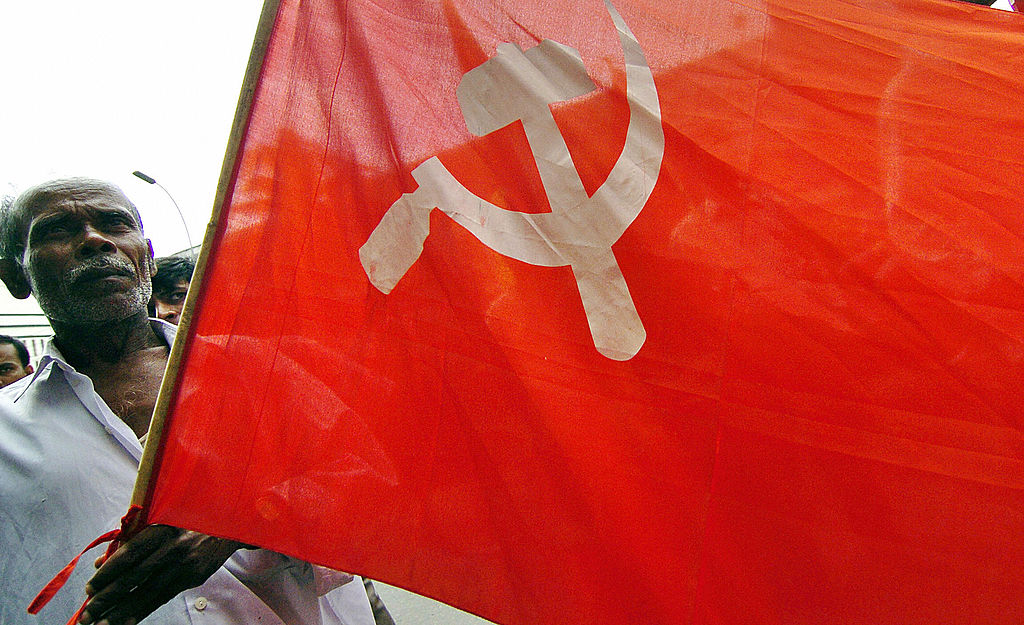
An activist from a Bangladesh leftist party carries the Communist flag during a general strike in Dhaka, on August 20, 2005.

The Left helped shape the founding vision of Bangladesh as it became an independent state. But the country’s left parties now exist on the margins of a political landscape dominated by competing forms of nationalism and pragmatic power blocs. (Farjana K. Godhuly / AFP via Getty Images)


There is a peculiar silence that surrounds the otherwise very vociferous left in Bangladesh. It is not exactly the silence of repression alone — though that has been real and often brutal — but a deeper, more existential quiet. It is the silence of irrelevance.

Once animated by revolutionary promise, shaped by anti-colonial struggle and global ideological currents, Bangladesh’s left parties now exist on the margins of a political landscape that is dominated by competing forms of nationalism and pragmatic power blocs.

Their slogans remain familiar and even omnipresent, and their critiques are often incisive. But their political presence has withered into something spectral, as though history moved on and they did not notice.

Vision and Values

To understand this failure is to confront a paradox. Bangladesh itself was born out of a profoundly progressive nationalist movement, one that fused linguistic identity, secular aspiration, nationalistic vision, and social justice into a single emancipatory project. The founding vision of the state, articulated in the aftermath of 1971, bore unmistakable traces of left-wing thought, including commitments to redistribution, cultural pluralism, and the dignity of labor.

However, this intellectual influence was not always reflected in terms of organized political expression. The Bangladeshi left emerged from a rich and complex political lineage tied to the broader South Asian communist movement.

During the period of British colonial rule, organizations linked to the Communist Party of India (CPI) played a central role in mobilizing peasants and workers in Bengal. Movements such as the Tebhaga peasant uprising of 1946–47 demanded a fairer share of agricultural produce and became a defining moment of agrarian resistance in the region.

After the partition of India in 1947, leftist politics continued in what was now East Pakistan under difficult conditions. The Communist Party of East Pakistan operated semi-clandestinely, often facing repression from the Pakistani state. Nevertheless, left activists were deeply involved in the Bengali Language Movement and later in mass uprisings that culminated in Bangladesh’s independence in 1971.

Indeed, the Liberation War itself drew heavily on socialist and progressive ideals. Many leftist guerrilla groups and student organizations contributed to the war effort alongside nationalist forces. The founding constitution of 1972 enshrined principles of socialism, secularism, nationalism, and democracy.

Over subsequent decades, unfortunately, it was not the organized left that carried forward these values into mainstream politics. Instead, the country’s dominant parties (Awami League, Bangladesh Nationalist Party, and even Jamaat-e-Islami) absorbed and instrumentalized them, however inconsistently, while the Left retreated into doctrinal rigidity and political marginality.

Fragmented Ecosystem

Since independence, the Bangladeshi left has never constituted a single coherent bloc but rather a fragmented ecosystem of parties, unions, student groups, and issue-based organizations. Its principal parliamentary and extra-parliamentary forces have included the Communist Party of Bangladesh, various factions of the National Awami Party, the Workers Party of Bangladesh, Jatiya Samajtantrik Dal (JSD) and its splinters, as well as a range of smaller Marxist-Leninist groupings.

Beyond party structures, the Left historically exercised influence through trade union federations in jute mills, ports, railways, transport, tea gardens, and state-owned industries, while student politics was shaped in part by organizations such as Bangladesh Chhatra Union and left-leaning campus alliances. In rural areas, peasant associations and land rights campaigns periodically gave the Left a social base disproportionate to its electoral strength.

However, that infrastructure has weakened sharply over the past five decades. Deindustrialization of older state sectors, the decline of organized labor in the jute sector and heavy industry, repression of union activity, and the rise of the export garment economy under far more restrictive labor conditions all narrowed the traditional space of left politics.

Relevance and Context

Today left parties retain pockets of relevance in professional associations, university campuses, NGO-linked advocacy networks, labor rights campaigns, and occasional urban protest coalitions on issues such as wages, the defense of secularism, opposition to gender violence, and environmental protection.

Some groups have intermittently entered alliances with larger parties, particularly the Awami League, gaining visibility but often at the cost of independent identity. Their street presence still exceeds their vote share, yet neither institutionally nor electorally do they command the mass working-class base that once made them consequential.

A regional comparison probably helps clarify Bangladesh’s position. In India, offshoots of the twentieth-century communist movement have remained politically relevant well into the twenty-first century, even if their support base has diminished from their Cold War–era peak.

Parliamentary communist parties such as the Communist Party of India (Marxist) and the CPI have governed major states like West Bengal, Kerala, and Tripura, shaped labor law and land reform debates, and retained durable cadres, especially in parts of southern and eastern India. At the same time, Maoist and Naxalite insurgencies, though militarily weakened, continued for years to command enough of a territorial and political presence for the Indian state to treat them as a major internal security challenge. In other words, the Indian left lost hegemony but not salience.

In Pakistan, on the other hand, the trajectory has been much less favorable. Communist and socialist currents were repeatedly broken by the experience of military rule, Islamization, trade union suppression, and the dominance of security-centered nationalism. While labor organizers, student groups, and progressive lawyers remain active, the organized left has long struggled to convert intellectual influence into mass electoral or institutional power.

Bangladesh sits somewhere between these two poles but closer to Pakistan than India in terms of the Left’s contemporary political weight. In contrast with Pakistan, secular and socialist currents deeply marked Bangladesh’s founding ideology and constitutional history, and left organizations retain greater symbolic legitimacy in public discourse.

Yet unlike their Indian counterparts, they have failed to preserve a durable electoral base, govern substantial territories, or build mass organizations capable of shaping national politics. The Bangladeshi left therefore occupies an intermediate position: historically influential, socially visible, but politically marginal.

Thinking Globally

We cannot tell the story of this divergence without also looking outward to the transformations that reshaped the global order in the late twentieth century. The collapse of the Soviet Union, the liberalization of economies across Asia, and the consolidation of what was once called the liberal world order fundamentally altered the terrain on which left-wing politics operated.

For many left parties around the world, this moment demanded reinvention. This would involve a rethinking of economic policy, a recalibration of ideological commitments, and an engagement with globalization that went beyond reflexive opposition.

Across the world, movements responded in varied ways. In Western Europe, social democratic parties changed their view of capitalist markets. In Latin America, countries such as Bolivia and Venezuela experimented with new forms of socialist governance in the early twenty-first century. Even in Asia, parties like the Communist Party of China reoriented their economic strategies toward state-led capitalism.

In Bangladesh, however, much of the Left remained anchored in an earlier era, clinging to frameworks that had lost both their geopolitical relevance and their practical applicability. This stagnation is especially visible in the economic thinking of Bangladeshi left parties. While the country itself underwent a dramatic transformation — from a war-torn, aid-dependent state to one of the fastest-growing economies in the Global South — the Left’s critique of capitalism remained largely static.

It continued to emphasize protectionism and resistance to global markets, even as millions of Bangladeshis found employment and upward mobility through export-oriented industries. The garment sector, for all its well-documented injustices, became the backbone of the national economy, integrating Bangladesh into global supply chains in ways that were both exploitative and transformative. The Left, rather than grappling with this complexity, often defaulted to a language of denunciation that failed to resonate with workers whose livelihoods depended on the very system being critiqued.

Events such as the Rana Plaza collapse, which resulted in the deaths of more than 1,100 workers, exposed severe labor exploitation and unsafe working conditions. This should have been fertile ground for left-wing mobilization. While leftist groups did participate in labor movements, they struggled to convert these forms of activity into sustained political influence.

Universal Horizons

There is an irony here that has not gone unnoticed. In recent years, the United States, hardly a traditional ally of labor radicalism, has exerted significant pressure on Bangladesh to improve workers’ rights, including the right to unionize in Export Processing Zones. This pressure has occasionally succeeded where domestic left-wing movements have struggled to make an impact, forcing concessions from a state closely aligned with industrial capital.

This is a contradiction that exposes a deeper problem: the Bangladeshi left’s inability to translate its moral commitment to labor into effective political leverage. When external actors can achieve incremental gains for workers more efficiently than local left parties, the credibility of those parties inevitably erodes.

Part of the difficulty lies in the Left’s uneasy relationship with globalization itself. The slogan “Workers of the world, unite!” once gestured toward a universalist horizon, a recognition that labor struggles transcended national boundaries. But in practice, as neoliberal globalization advanced, it was unfortunately capital rather than labor that achieved transnational integration.

Supply chains stretched across continents and investment flowed with unprecedented speed. As a result, free trade agreements reconfigured the global economy. Faced with this reality, many left-wing movements retreated into forms of economic nationalism that, while rhetorically anti-imperialist, often mirrored the protectionist instincts of the very forces they opposed. In Bangladesh, this retreat has taken on a particularly insular character.

Left critiques of global trade frequently emphasize exploitation and dependency, but they rarely engage with the ways in which integration into the global economy has also created opportunities for development. Nor do they offer a coherent alternative that addresses the aspirations of a population increasingly attuned to the possibilities of economic mobility. The result is a form of politics that cannot articulate a forward-looking vision or compete with the pragmatic developmentalism of the mainstream parties.

Varieties of Nationalism

The Left in Bangladesh has also failed to adapt its message to the changing contours of national identity. Nationalism as it emerged in the post-colonial world was not inherently reactionary. It was, in its original form, a vehicle for liberation — a way of asserting political existence in the face of imperial domination.

The Left in Bangladesh has also failed to adapt its message to the changing contours of national identity.

The nationalism that animated Bangladesh’s independence was inclusive, secular, and oriented toward social justice. It sought to create a civic identity that could accommodate diversity rather than suppress it, and it embraced many of the same values that left parties claimed to champion.

Over time, however, the relationship between nationalism and the Left became increasingly strained. As nationalism was institutionalized within the state, it evolved in ways that were not always aligned with its original ideals. Political competition, economic pressures, and global influences all contributed to this transformation.

Even as nationalism shifted, it retained its capacity to mobilize large segments of the population, offering a sense of belonging and purpose that the Left struggled to match. One of the reasons for this mismatch lies in the Left’s tendency to view nationalism through borrowed spectacles. Influenced by critiques of Western right-wing nationalism, where it is often associated with exclusion and cultural anxiety, Bangladeshi leftists have sometimes treated all forms of nationalism with suspicion.

This misreading has had practical consequences. By distancing themselves from nationalist narratives, leftist parties have ceded a powerful political language to their rivals. Meanwhile, those rivals have selectively incorporated left-wing themes of social welfare, economic justice, and cultural inclusivity into their own platforms, often in diluted or instrumentalized forms.

There is also an institutional dimension to this decline. Many left-wing parties in Bangladesh have been plagued by internal fragmentation and a reluctance to engage in coalition-building. Leadership structures have often remained static, dominated by figures whose political sensibilities were shaped in a very different era.

Younger activists, while sometimes drawn to the moral clarity of left-wing arguments, frequently find themselves alienated by organizational cultures that resist change. In a political environment that rewards adaptability and strategic flexibility, these weaknesses have proven costly.

A Path Forward

However, it would be a mistake to attribute the Left’s marginalization solely to its own shortcomings. The broader political context in Bangladesh has been inhospitable to opposition movements of all kinds, with constraints on political expression and organization that have affected left parties alongside others.

The main problem is that the Bangladeshi left finds itself out of sync with the realities of the present, its intellectual frameworks shaped by a world that no longer exists. It continues to rail against a liberal world order that has itself been eroded, even as new forms of power — more overtly transactional, more openly coercive — are taking its place.

If there is a path forward for the Left, it will require more than a revival of past slogans. It will demand a willingness to engage with the contradictions of the present, to recognize that economic integration and social justice are not mutually exclusive, and to articulate a vision that speaks to both the material aspirations and the moral concerns of a changing society. It will also require a rethinking of attitudes to nationalism as a terrain on which progressive values can be contested and redefined.

Whether such a transformation is possible remains an open question. What is clear, however, is that the conditions that once sustained the Left in Bangladesh have fundamentally changed. To remain relevant, it must change with them. Otherwise, it risks becoming what it already, in many ways, appears to be: a repository of ideas without a constituency, a voice that speaks eloquently but is no longer heard.