Class Dealignment Hasn’t Gone Away
Working-class voters may be having second thoughts about MAGA, but they’re still abandoning the Democratic Party. Democrats’ reliance on college-educated suburbanites is arithmetically insufficient and politically unsustainable.
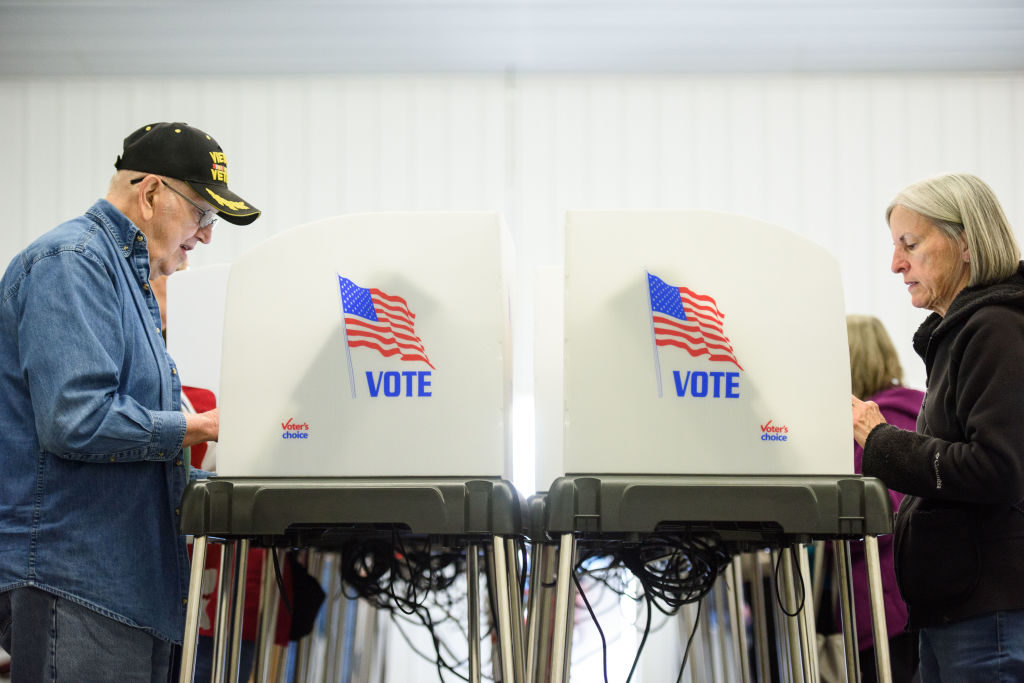
If progressives want to build a durable political coalition, they need to break their reliance on college-educated suburbanites before it’s too late. (Melissa Sue Gerrits / Getty Images)
Recent polling suggests that working-class voters have soured on the Trump administration over the past year. The president's approval ratings have cratered, war and tariff-induced inflation is on the rise, and some commentators have begun to wonder whether the much-touted exodus of working-class voters from the Democratic toward the Republican Party might be reversing itself. It is tempting, after months of watching Trump flail from one disaster to another, to declare the crisis over.
But it isn't. Whatever short-term movement we see in the polls, the structural trend that has defined American politics for decades remains firmly in place: working-class voters continue to abandon the Democratic Party. The 2024 election confirmed and accelerated this pattern among non-white working-class voters, and the fact that the Democrats aren’t reaping the rewards we’d expect from Donald Trump’s disastrous poll numbers (at least not yet) is a clear sign of the party’s continued working-class woes.
The Long Decline in Democratic Party Identification
The most basic measure of partisan alignment is party identification, or whether voters think of themselves as Democrats, Republicans, or Independents. On this measure, the trend toward dealignment is unambiguous. Data from the American National Election Studies (ANES), stretching back to the early 1970s, show that working-class Americans, defined as those without a college degree and in the bottom two-thirds of the income distribution, identified as Democrats at rates as high as 65%. That share stayed well above 50% until 2016. By 2024, however, that figure had fallen to 42%, dropping an alarming 9 percentage points between 2020 and 2024. Over the same period, college-educated, upper-income voters moved in the opposite direction, with their Democratic identification rising to a whopping 68% by 2024.

The General Social Survey (GSS), using an entirely different measure of class based on occupation, confirms the same pattern. Whether you define the working class as manual, service, and clerical workers (the “traditional” definition) or expand it to include more highly credentialed workers like teachers and nurses, the downward trend is the same. No matter how you define the term, working-class identification with the Democratic Party has fallen to historic lows.
The Presidential Vote Gap
Party identification is one thing, but actual votes are another: just because people don’t want to call themselves Democrats anymore doesn’t necessarily mean they will stop voting for Democratic candidates if they think the Republicans are a worse alternative. Yet here, too, the picture is stark. ANES data show a steady decline — with the exception of Barak Obama’s first election in 2008 — in working-class support for Democratic presidential candidates from a high of 65.5% for Bill Clinton in 1992 to 52.1% for Hillary Clinton in 2016.
By 2024, that figure had dropped even further to just 45%, while middle- and upper-class support jumped from 47.8% to an overwhelming 68% during the same period, producing the largest class gap in the modern era. The occupation-based GSS tells much the same story, indicating that working-class support for Democratic presidential candidates took a nosedive from over 65% in 1996 to just over 40% in 2024.

These trends are further confirmed by the highest-quality voter data available: Catalist's validated voter file. Validated files match individuals to administrative records of who actually voted, avoiding inflated voter turnout figures that are common to even the highest-quality surveys. That said, education is the only available class proxy, and Catalist's validated vote series extends back only to 2012. But even this limited portrait is informative: the class gap in the Democratic presidential two-party vote share grew from just 3 percentage points in 2012 to 11 points in 2024. Noncollege voters gave Democrats 51% of the two-party vote in 2012 but just 45% in 2024.
Cross-Racial Dealignment
And it is also clear that that class dealignment is not a white-voter story. Every noncollege racial group moved away from Democrats between 2012 and 2024. Latino noncollege voters saw the steepest drop, falling from 69% to 53%, a 16-point decline in just twelve years, and the fastest-moving dealignment of any major demographic group in the data. Asian American and Pacific Islander (AAPI) noncollege voters fell 15 points, from 72% to 57%. Black noncollege voters, long the most reliable Democratic constituency, dropped 11 points, from 97% to 86%. White noncollege voters, already low, declined a further 3 percentage points.

The Short-Term and the Long-Term
Trump's current unpopularity is real, and it may produce short-term gains for Democrats in 2026 and beyond. But we have seen this movie before. Working-class Democratic identification briefly recovered during the Clinton years and the early Obama period, only to resume its downward slide each time. The structural forces driving dealignment have not changed.
Class dealignment is real, it is accelerating, and it spans every racial group. Democrats' current strategy of relying on college-educated suburbanites is arithmetically insufficient and politically unsustainable. If progressives want to build a durable governing majority capable of enacting the thoroughgoing economic policies that working-class voters consistently say they want, reversing dealignment remains the central political challenge of our time.