Workers Are Leaving the Trump Coalition

New survey data show that many of Donald Trump’s 2024 working-class voters are already wavering. But most aren’t turning to Democrats — they’re dropping out of politics altogether.
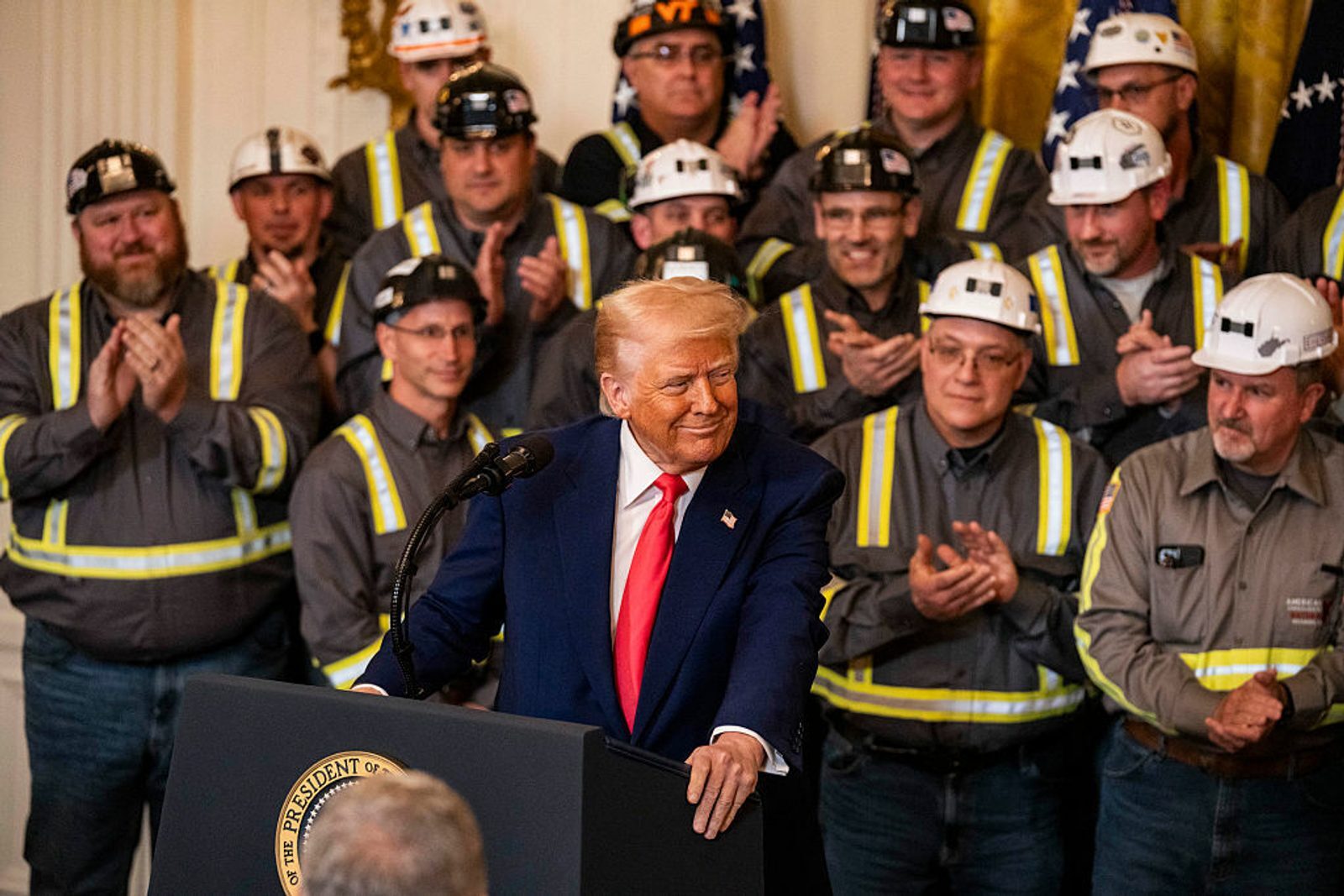
The “multiracial working-class realignment” behind Donald Trump’s victory is already unraveling — especially among the low-income voters who gave him a chance. (Andrew Thomas / Middle East Images / AFP via Getty Images)

Many commentators have repeatedly sounded the alarm about declining working-class support for the Democratic Party in 2024, particularly among non-white working-class voters. Those concerns remain real and are part of a decades-long dealignment of working-class voters from the party once seen as their natural home. But Donald Trump’s erratic, vindictive, and economically damaging first year in office has already given many of those same voters buyer’s remorse.

Trump’s 2024 victory was built on a narrative of building a multiracial working-class coalition — particularly by attracting new black and Latino working-class voters — united by frustration with the Biden administration’s perceived failures on inflation, the cost of living, and immigration. That narrative is already falling apart.

A recent survey we conducted of 1,940 2024 Trump voters (oversampling working-class black and Latino voters) shows the 2024 Republican coalition fracturing: 20.1 percent of Trump voters — more than one in five — are not currently planning to vote Republican in 2028. We define these “waverers” as Trump 2024 voters who (at least right now) do not plan to vote Republican in 2028. And they are disproportionately poor, non-white, and working class. These are the very groups whose support was supposed to signal that Republicans had successfully consolidated a working-class majority.

The “Switchers” Are Switching Back

Our most dramatic finding concerns voters who moved from Joe Biden in 2020 to Trump in 2024. These were the crown jewels of the Republican election night story, supposed final proof that Republicans had achieved their decade-long dream of a multiracial working-class realignment. But 57 percent of these Biden-to-Trump switchers say they do not plan to vote for the Republican presidential nominee in 2028.

Many Biden-to-Trump switchers were never MAGA converts. They were cross-pressured moderates and independents who gave Trump a shot out of frustration with the Democrats. Seventy percent do not identify as Republican (compared to just 16 percent of respondents who remain loyal to Trump), and 44 percent call themselves moderate (compared to just 15 percent of Trump loyalists). These voters were not signing up for MAGA, they were registering their frustration with Biden and the Democrats.

The class dynamics of wavering Trump voters are particularly telling. Trump’s support has eroded most sharply at the bottom of the income ladder: 31.3 percent of Trump voters earning less than $15,000 a year are wavering, compared to just 12.7 percent of those earning over $200,000. The same pattern holds for education: Trump voters without a high school diploma waver at 31.8 percent, while just 17.6 percent of those with a four-year college degree reported that they don’t plan to vote Republican in 2028.

In other words, Trump’s wealthiest and most educated supporters are his most reliable. His poorest supporters are the most likely to leave. The “working-class realignment” starts to look less like a durable shift and more like a fleeting transaction — one that delivered little in return.

Race, Class, and the Fragility of Trump’s New Coalition

Trump’s 2024 gains among working-class black and Latino voters were widely seen as the key to his victory, but our data reveal that these are precisely the voters now wavering at the highest rates.

Among working-class (noncollege) black and Latino 2024 Trump voters, 44.8 and 27.8 percent are wavering, respectively, compared to just 19.3 percent of working-class whites. The income divide tells a similar story: 49.8 percent of black Trump voters and 34.6 percent of Latino Trump voters earning under $50,000 a year say they do not plan to vote Republican in 2028, compared to 25 percent of whites in the same income bracket.

And within each of the three racial/ethnic groups, waverers were less common among more highly educated and higher-income respondents. Black Trump voters earning under $50,000 were 26 points more likely to be wavering than those earning over $100,000; the equivalent gap was 18 points among Latinos and 11 points among whites.

The story here is not simply racial — it is about working-class voters across racial lines who gave Trump a chance and are finding his presidency has not delivered for them. Wavering rates are highest where race and class intersect: low-income, noncollege black and Latino voters — the very people whose shift toward Trump was most celebrated by Republicans — are the most likely to leave.

Immigration also appears to be driving some of the defection. Just 59 percent of Trump 2024 waverers say they preferred Trump’s immigration policies over Biden’s, compared to 92 percent of Trump loyalists, and waverers were nearly three times as likely as loyalists to believe Trump has gone too far on immigration. The administration’s aggressive posturing, mass deportation rhetoric, Immigration and Customs Enforcement (ICE) raids, attacks on legal immigration, may be consolidating its base, but it is actively repelling the working-class voters of color who put Trump over the top in 2024.

Disengagement, Not Conversion

Democrats should resist the temptation to read this data as good news. Most wavering Trump voters are not becoming Democrats — they are disengaging from politics entirely. Of the 20.1 percent who are wavering, only 3.4 percent plan to vote Democrat. The remaining 16.7 percent say they will vote for neither party or are unsure.

This is the pattern that should alarm anyone who assumes that defection from Trump automatically signals support for Democrats: a large bloc of young, low-income, non-white working-class voters who tried the political system, found it wanting on both sides, and are now preparing to check out. These are not people moving left. They are people losing faith that politics can deliver for them at all.

The strategic implications are clear. There is a constituency of working-class, lower-income, disproportionately non-white voters who voted for Trump but are not loyal Republicans. They are gettable — but not with the standard Democratic playbook of appeals to norms, institutions, and preserving a democracy that many of them feel has given them little reason to defend.

These voters responded to Trump’s promise of material improvement. They are now wavering because that promise has gone unfulfilled or because the administration’s cruelty on immigration has become impossible to ignore.

What would reach them is straightforward: a politics that takes their economic grievances seriously and offers concrete material programs — lower prices, better and more stable jobs, cheaper and higher quality health care, and affordable housing. The fact that they are disengaging rather than switching parties is an indictment of the Democratic Party’s failure to offer a credible alternative.

Trump’s coalition was always more brittle than it looked. The question is whether anyone will organize the people it is leaving behind.

Share this article

Contributors

Jared Abbott is a researcher at the Center for Working-Class Politics and a contributor to Jacobin and Catalyst: A Journal of Theory and Strategy.

Joan C. Williams is the author of Outclassed: How the Left Lost the Working Class and How to Win them Back and has published on class dynamics in the New York Times, the Washington Post, the Atlantic, the New Republic, and more. She is Distinguished Professor of Law and Hastings Foundation Chair (emerita) at University of California College of the Law San Francisco.

Filed Under