Victor Serge Was One of the Great Revolutionary Writers
Victor Serge lived through a remarkable sequence of revolutionary upheavals before dying in Mexican exile at the age of 56. Serge’s life and work, caught between hope and despair, can help us understand Europe’s turbulent 20th century.
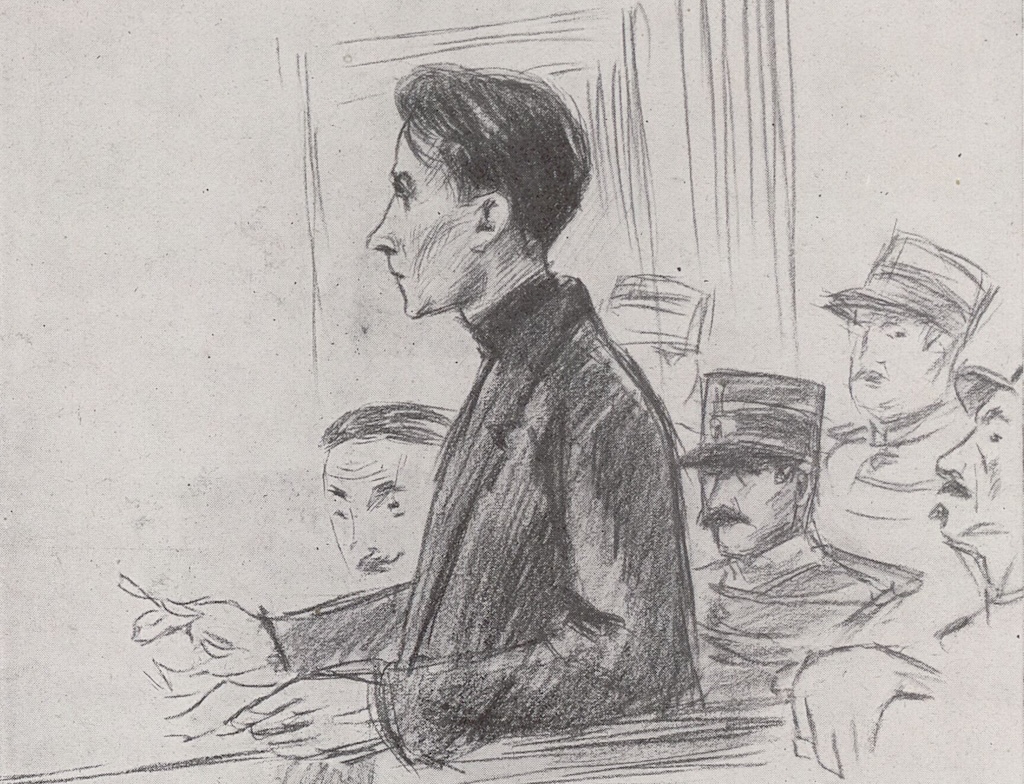
A 1913 courtroom sketch of Victor Serge by Paul Charles Delaroche. (Bibliothèque Nationale de France)
Many readers will be familiar with Victor Serge’s literary work: his novels, notably The Case of Comrade Tulayev, and his fascinating autobiography Memoirs of a Revolutionary. All his work centers around the great historical events of the first half of the twentieth century, the hopes aroused by the Russian Revolution of 1917, and its subsequent disastrous outcome.
Now Mitchell Abidor has written a biography of Serge, based on extensive research and using documentation collected by the great Serge scholar and translator, Richard Greeman. While Abidor does not fundamentally challenge the account Serge himself presented in the Memoirs, he does add much fascinating detail that places Serge’s political evolution in context.
Anarchism and Bolshevism
Born to a Russian family in Belgium with the name Viktor Lvovich Kibalchich, Serge went through a remarkable process of intellectual development while still a teenager (he never went to school). He moved to Paris and became active as a writer and editor in the anarchist milieu, ending up in jail for five years.