Serbia’s Israel Problem

When UN Special Rapporteur Francesca Albanese visited Serbia in March, the government cast her as an interfering foreigner. Yet it was happy to back the Israeli embassy’s campaign to silence pro-Palestinian speech in Serbia.
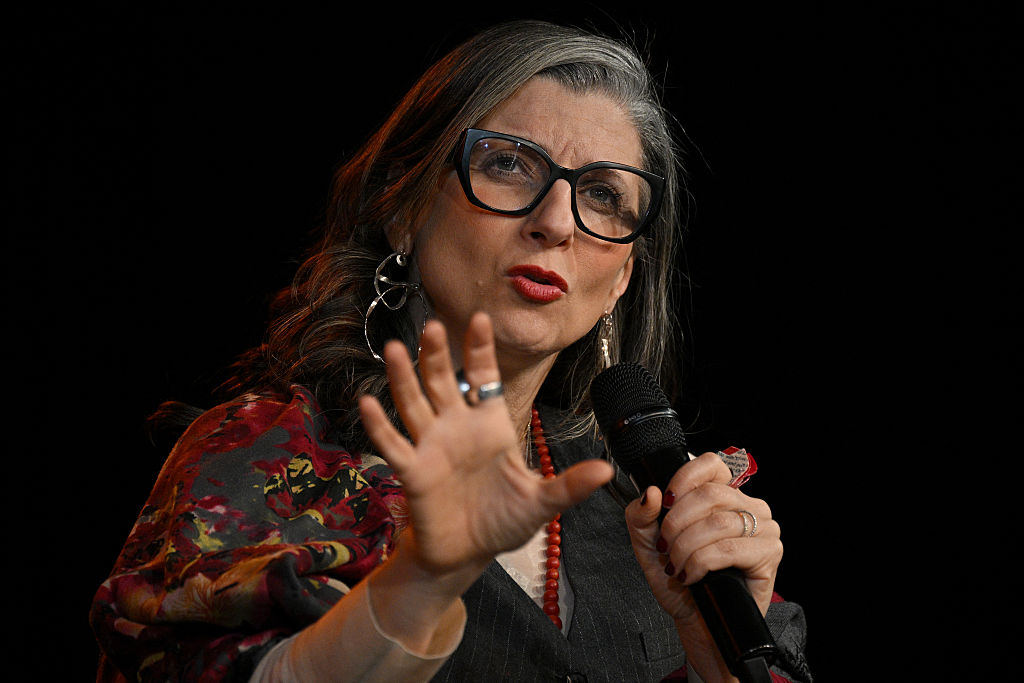
Serbia’s government is a proud Israeli ally, ramping up its weapons sales in recent years. No wonder that when Francesca Albanese visited Serbia in March, the government and the Israeli embassy tried to silence her. (Andrej Isakovic / AFP via Getty Images)

My first visit to the United States was in summer 2016. Through Darko Suvin, the legendary critic and literary historian of science fiction, I had the chance to meet another legendary thinker, Fredric Jameson. I remember the trip vividly. I traveled from New York City to New Haven, where Professor Jameson picked me up and drove me to his house somewhere in the Connecticut countryside. We spoke for hours. One of his remarks stayed with me ever since. The presidential election was coming that November, and already the possibility that Donald Trump might win hung heavily in the air. I asked Jameson how things looked to him.

“People are saying this is a new fascism,” he told me. “My answer is: not yet”.

A decade later, that cautious “not yet” echoes very differently. Trump is in his second term as president, the international order as we knew it is unraveling, and the horizon appears darker by the day. We have witnessed a genocide in Palestine, with more than seventy thousand people killed since October 7, 2023. We have seen unprecedented escalations: the US kidnapping of Nicolás Maduro on Venezuelan soil; the joint Israeli-American aggression against Iran; and even rising on-the-edge-of-war tensions over Greenland. This transformation marks the emergence of what can be described as a (global) war regime: a political condition in which coercion, necessity, and force displace democratic justification, and where the suspension of rights is no longer exceptional but structural.

It’s a logic that Alberto Toscano encapsulates in his book Late Fascism — the notion of “the right to do what one must,” articulated by the Italian Prime Minister Giorgia Meloni, citing Pope John Paul II. As politics is increasingly framed in terms of naked force, this may well slide into a right to do whatever one wants. The latest manifestation of this logic comes, unsurprisingly, from Israel, whose parliament (the Knesset) passed a law handing the death penalty to Palestinians, but not Israelis, convicted of lethal attacks.

Under such circumstances, one figure stands out: Francesca Albanese, the United Nations’ Special Rapporteur on the Palestinian territories occupied since 1967. She has carried out her mandate openly and with remarkable professional integrity. After a series of reports in which she presented evidence of Israel’s genocidal intention to physically exterminate Palestinians — as well as the network of economic and geopolitical interests that have conspicuously supported this process — Albanese recently presented the UN Human Rights Council her latest report on torture against Palestinians. Just a week earlier, we hosted her in Belgrade, where we witnessed two things firsthand: her unbreakable integrity, both as a person and as an expert, and the pressure and hostility of those who seek to silence her.

Isak Asiel, who is chief rabbi in Serbia, as well as a broader network of Zionist and right-wing figures, tried to prevent Albanese’s visit going ahead. Yet this proved insufficient to stop the series of events in Belgrade and Novi Pazar — a city with a Muslim majority whose students have played a significant role in the student uprising in Serbia over the past year and a half. In one of her first interviews with Serbian media, Albanese reminded the domestic public of something it already knew but had not fully confronted: Serbia is one of Israel’s closest allies. Its weapons exports to Israel have increased dramatically from $3.1 million in 2023 to $131.1 million in 2025 — a rise the Serbian government has openly celebrated. “They sell weapons to us, we sell weapons to them, and that will continue,” President Aleksandar Vučić said only a few days before Francesca Albanese landed in Belgrade.

In other words, during the years of genocide, Serbia, along with many other European countries, violated international law by supplying weapons to a state currently facing proceedings before both the International Court of Justice and the International Criminal Court. During her visit, Albanese warned several times that the close ties between Serbia and Israel throughout this genocidal campaign could themselves become the subject of future investigations. Promptly, both the Israeli embassy in Belgrade and the Serbian foreign ministry reacted. The latter stated that her comments directly encroach upon Serbia’s internal political affairs, whereas Israel’s ambassador expressed concern over Albanese even being invited to Serbia. Interestingly, the letter issued by the Serbian foreign ministry strikingly resembled — in style and even in entire passages — a statement released by the Israeli embassy. Yet the ministry never suggested that this Middle Eastern diplomatic mission had itself blatantly interfered in Serbia’s domestic affairs by declaring who should, and who should not, be hosted there.

Amid this chorus of denunciations — coming from figures such as the chief rabbi, the foreign ministry itself, the Israeli embassy, or the tabloid press loyal to President Vučić — Albanese’s visit has resonated beyond both this moment and this country. There are clear indications of deeper political and technological entanglements. For instance, the sonic cannon reportedly used during the largest protest against Vučić’s government a little over a year ago appears possibly to have been imported from, or at least mediated through, Israel-based companies. In any case, the idea of the sonic weapon, so rarely seen in Europe, almost certainly comes from the “Palestinian laboratory,” where “Israel’s military-industrial complex uses the occupied Palestinian territories as a testing ground for weaponry and surveillance technology that it then exports around the world to despots and democracies.”

The Serbian president is undoubtedly among those effectively copy-pasting the political regime built by Benjamin Netanyahu. It is well known that he also counted among his close advisers Srulik Einhorn, cofounder of Allenby Concept House, one of Israel’s leading digital branding firms. Einhorn was a key strategist in Netanyahu’s campaigns between 2009 and 2022. According to Israeli journalist Yossi Melman, Einhorn is known in Israel as an “agent of chaos,” associated with spreading disinformation and cultivating a toxic political climate that produces deep polarization: a political atmosphere strikingly similar to the one that has defined Vučić’s rule for nearly fourteen years. Political chaos has long been his modus operandi, ever since the 1990s, when he himself operated as a war propagandist and, in many ways, an “agent of chaos.”

Other countries in the former Yugoslav region also deserve scrutiny under international law. Apart from Slovenia, most Balkan governments practice either silent or openly declared complicity with Israel’s crimes. In Bosnia and Herzegovina, the most powerful Bosnian Serb politician, Milorad Dodik, openly supports Israel while invoking the rhetoric of a supposed “clash of civilizations” between Muslims and Judeo-Christians. But even among those who themselves survived genocide, there are voices urging distance. Asked about Gaza in late 2023, Emir Suljagić, director of the Srebrenica Memorial Center, told Haaretz: “This is not our battle.” Croatia’s government has also shown little hesitation in maintaining trade with Israel. Yet President Zoran Milanović and the green-left movement Možemo! — which governs the capital Zagreb and is a sister party to Green-Left Front in Serbia, the only political actor there calling for the suspension of trade with Israel — have been among the few vocal challengers of this complicity. Kosovo’s leadership has gone even further, shamefully joining Trump’s so-called Board of Peace.

Even Slovenia — the only former Yugoslav republic that has largely resisted the pro-Israeli domino effect coming from Europe and North America — has recently faced its own controversy in relation to Israel. A private intelligence agency from Israel, Black Cube, was reportedly involved in interference surrounding the Slovenian parliamentary elections held on March 22. Representatives of the Israeli firm, often described as a “private Mossad,” visited the capital Ljubljana three times since this past November. During one such visit in late December, they allegedly met with the far-right former prime minister, Janez Janša, the main challenger to Prime Minister Robert Golob. But Slovenia resisted, unlike many of its neighbors.

As the UN Special Rapporteur has repeatedly argued, the complicity of various state and non-state actors has helped make the genocide in Palestine possible. In her report on the “economy of genocide,” as well as during her recent visit to Serbia, Albanese placed particular emphasis on the global network of companies that unhesitatingly assist Israel, supplying arms, surveillance technologies, and a wide range of goods and services. By continuing with business as usual, states and entire industries — from tourism to the information technology sector — contribute to normalizing and legitimizing Israel’s genocidal and colonial policies. It was Fredric Jameson, in fact, who wrote that Palestine, as an eternal “open wound” of the global situation — or, as Edward Said once described it, “an endless calvary” — “is in fact exemplary and offers something like a pure laboratory experiment in which theoretically to observe the dynamics of the latest stage in world capitalism.”

Both historically and in our present moment, the genocide perpetrated by Israel has been made possible by many others. Serbia is openly complicit, as is additionally shown by its most recent plans to produce drones with Elbit Systems, an Israeli arms firm involved in Gaza. Others remain conspicuously silent in the face of Netanyahu’s government that has carried out genocide, then allegedly agreed to a ceasefire, only to prolong killings in Gaza and the West Bank, as well as in neighboring countries such as Lebanon and Iran. No one has been held accountable for the mass killings or for the “abuses of unimaginable brutality” since October 7, 2023. Not a single person has been prosecuted in Israel this decade for the killing of Palestinian civilians in the West Bank, the most recent case being the murder of ten people — including a mother, father, and two children aged five and seven — who were shot in the head while returning from a Ramadan shopping trip in mid-March.

Unlike in 2016, we are evidently no longer in a “not yet” situation. We are now in a “yet too late” one, in a “collective nightmare,” as Albanese observed in Belgrade. Amid that darkness, she nonetheless stands among the few holding a torch, resisting the machinery of genocide. She is illuminating both the monsters of our time and the path toward confronting them.