Phil Ochs Wrote the Soundtrack to the New Left
The 1960s saw a stampede of lefty folk musicians, but none as politically engaged as Phil Ochs. A true activist-musician who thought of himself as a “singing journalist,” Ochs was as comfortable playing at a demonstration as at a concert hall.
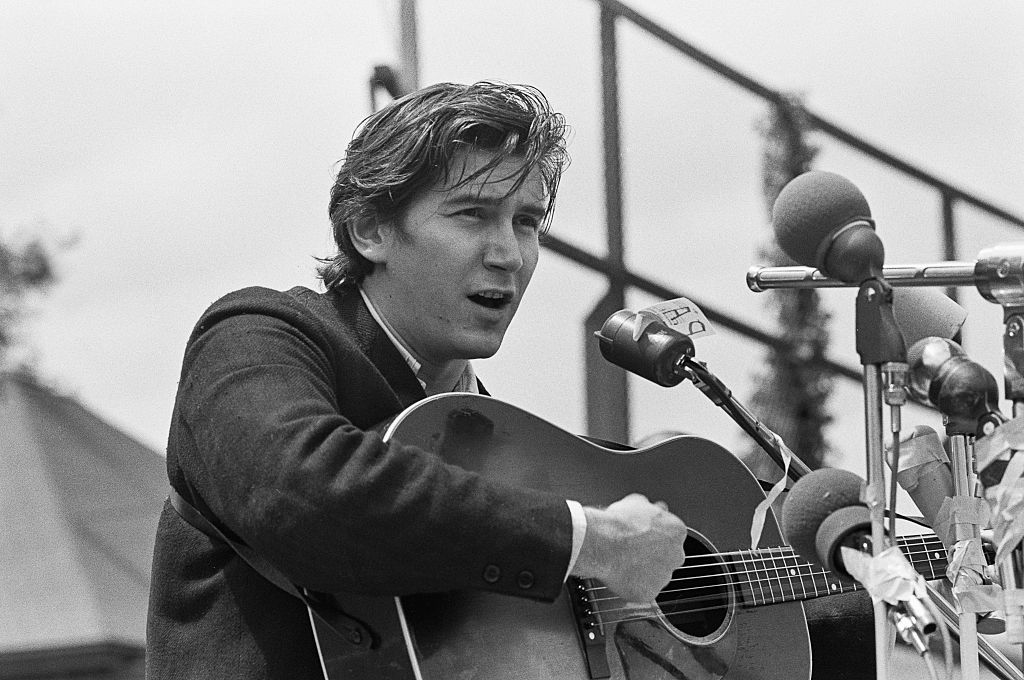
Phil Ochs died fifty years ago today. He never enjoyed the wide and lasting popularity of Bob Dylan or Joan Baez, but he was the most politically engaged among the folk singers who came of age in the 1960s. (Graphic House / Archive Photos / Getty Images)
The title of Phil Ochs’s 1965 song “I Ain’t Marching Anymore” can be misleading. Rather than encouraging Americans to stop marching in protest of the Vietnam War, Ochs was reflecting his generation’s anger at being asked — as many previous generations had been — to march as soldiers and sacrifice their lives for an immoral war. The song goes through the litany of American military history from the perspective of a weary soldier who has been present at every war since the War of 1812. “It’s always the old who lead us to the war, always the young to fall,” goes the chorus. To Ochs, Americans had paid too high a price for the country’s militarism. “Call it peace or call it treason. Call it love or call it reason, but I ain’t a-marching anymore.”
Ochs wrote in the album’s liner notes that the song “borders between pacifism and treason, combining the best qualities of both.” He observed that “the fact that you won’t be hearing this song on the radio is more than enough justification for the writing of it.” “I Ain’t Marching Anymore” quickly became an anthem of the antiwar movement.
Ochs never enjoyed the wide and lasting popularity of Bob Dylan or Joan Baez, but he was the most politically engaged among the folk singers who came of age in the 1960s. Like many of his generation, Ochs believed in the ideals he learned in school — equality, democracy, justice, and America’s role of promoting freedom around the world. But by his late teens, Ochs joined his peers in recognizing the harsher realities of American imperialism, deep-rooted racism, and class struggle. He devoted his short life to music and radical protest.