The FBI’s War on Folk Music
The anti-communist campaigns of the late 1940s attacked the Left on every front. As beacons of a broad-based cultural radicalism and messengers for change, American folk singers quickly found themselves in the FBI’s crosshairs.
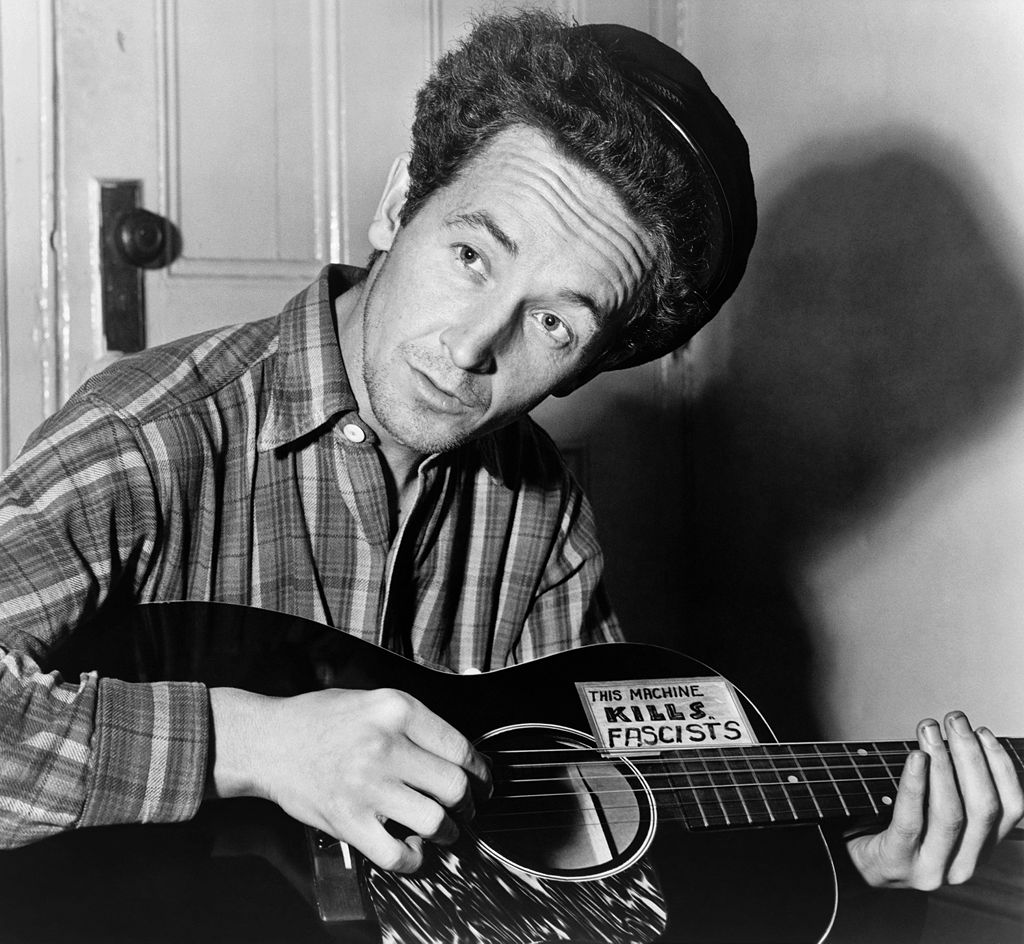
Woody Guthrie. (Wikimedia Commons)
Two stories in Aaron J. Leonard’s The Folk Singers and the Bureau capture the importance of the book. They both, appropriately, involve Woody Guthrie. One of the best-known folk singer-songwriters in modern American history, he was also unlucky enough to have genetically inherited Huntington’s disease. The debilitating condition was not correctly diagnosed until 1952 when Guthrie was forty. By 1950, Guthrie had already begun to lose motor functions, his mood became depressed and anxious, his behavior erratic, and his mind slipped progressively into dementia.
In 1955, an FBI agent tasked with keeping tabs on Guthrie and his affiliation to the Communist Party recommended that, given the folksinger’s rapid deterioration, he be taken off the bureau’s “Security Index.” After all, he would soon be incapacitated, and therefore no longer pose any credible threat. The bureau obliged by removing him from the Security Index, but they kept tabs on him in the Communist Index. “Guthrie, in other words, remained an active candidate for detention as a communist,” writes Leonard, “despite being afflicted with a fatal neurological disease.”
The second story, also relevant to Guthrie’s struggle with Huntington’s disease took place just before his diagnosis. While a patient at Greystone Park Psychiatric Hospital in New Jersey, Guthrie was visited by friends Lee Hayes and Fred Hellerman. When his friends asked how he was faring, Guthrie replied: