What Mexico Can Teach New York About Public Groceries
Zohran Mamdani’s proposal for government-run grocery stores echoes a long-running system in Mexico — one that delivers affordability, but not without trade-offs.
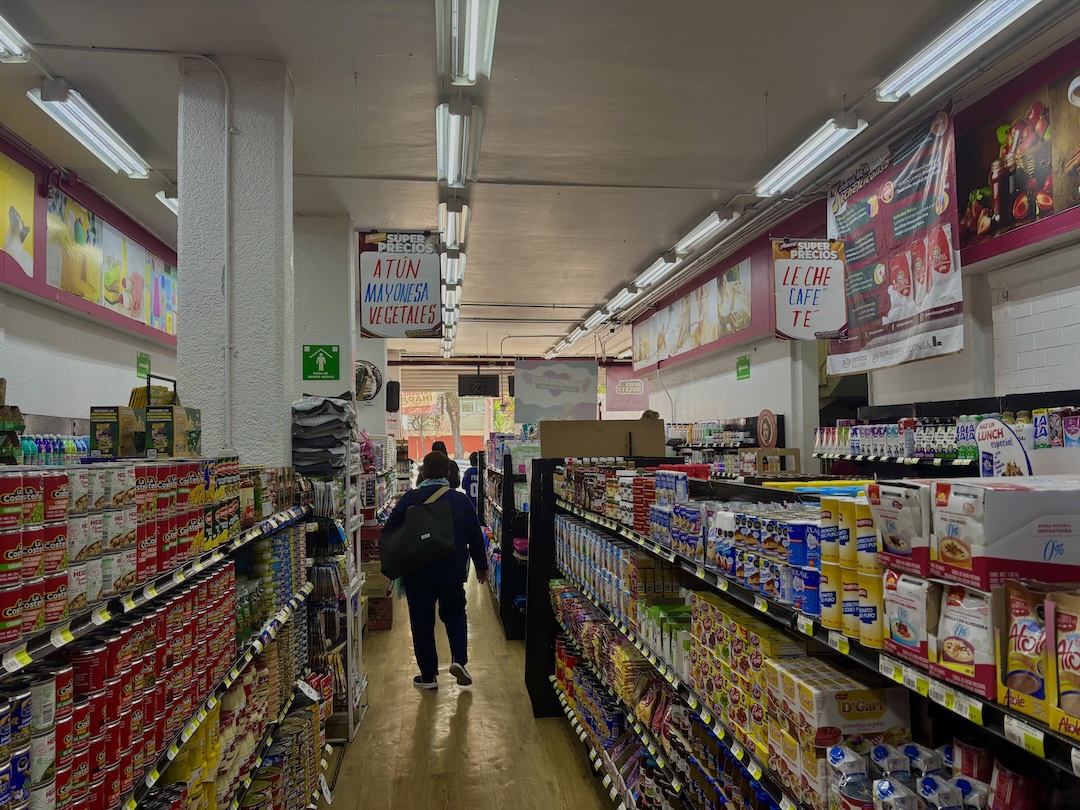
NYC’s grocery plan isn’t a “socialist fantasy.” It’s already a reality in Mexico. (Lara Nour-Walton / Jacobin)
On a bright mid-February morning, the SuperISSSTE in Mexico City’s working-class Tacubaya district was already busy. The store sits along a major thoroughfare across from Parque Lira station, where passengers alight from crowded buses onto an already teeming sidewalk.
Its interior is closer to the size of a large New York City bodega than a Whole Foods. Handwritten signs dangle from steel wire above the aisles. Two employees stand on tiptoe arranging a row of sliced white bread. Nothing about the store screams that it is owned by the Mexican government.
But if you look closely, there are clues. Outside the entrance, two women in maroon vests from the Secretaría de Bienestar sit behind a folding table validating benefit cards for older shoppers (people over sixty receive a 10 percent discount at SuperISSSTEs). Inside, a shelf of dairy products from the state-owned company, Liconsa, offers the lowest milk prices you can find on the Mexican market.