Jean-Paul Marat Was the Prophet of the French Revolution
When historians of the French Revolution discuss Jean-Paul Marat, they usually focus on his bloodthirsty rhetoric. But Marat also had an uncanny ability to anticipate major events thanks to his grasp of the social forces the Revolution had set loose.
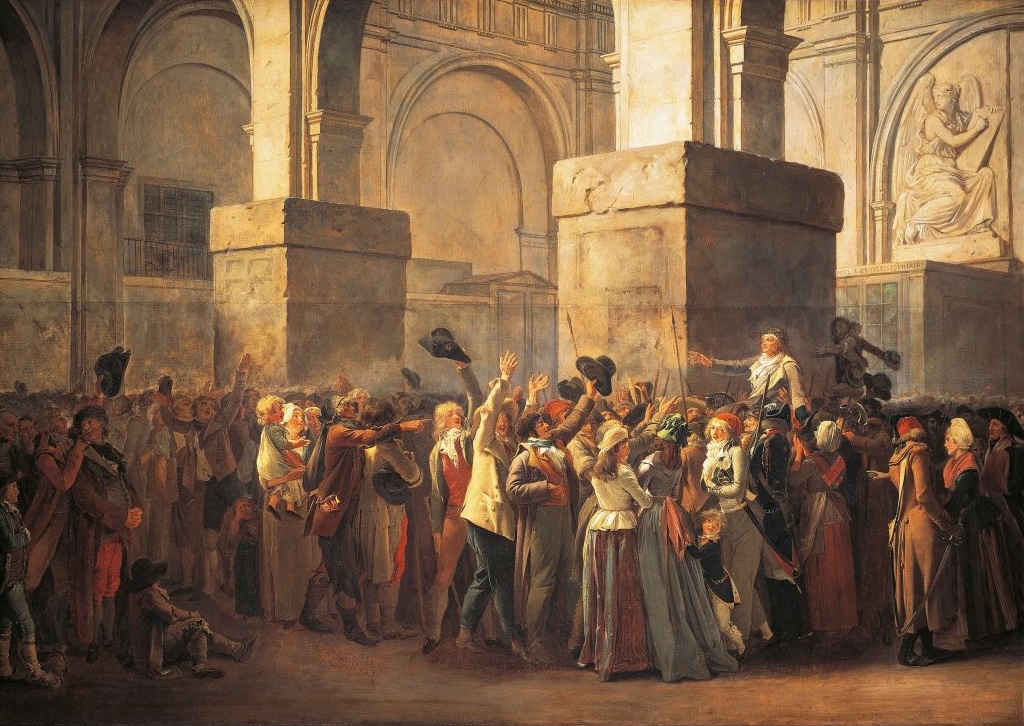
UNSPECIFIED - CIRCA 1989: Louis-Leopold Boilly (1761-1845), The Triumph of Marat, 1794. (Photo By DEA / G. DAGLI ORTI/De Agostini via Getty Images)
Until this book by Keith Michael Baker appeared in late 2025, there had been only two English-language biographies of Jean-Paul Marat published in the previous ninety-nine years. As it happens, I am the author of the other two.
I find Baker’s work to be an invaluable contribution to the anglophone literature on the history of the French Revolution and a scrupulously honest account of by far its most controversial character. Baker’s specialty as a historian of ideas adds a great deal of value by situating Marat’s ideological writings in the context of the Late Enlightenment, and his earlier intellectual biography of Nicolas de Condorcet provides a perfect basis of comparison with Marat, ideologically, politically, and axiologically.
However, my positive appreciation of this biography requires one essential qualification. It is still a product of the Anglo-American academic historical establishment, one that perpetuates a Cold War bias and distorts almost all anglophone accounts of the French Revolution, and especially Marat’s role in it.