The Rich Promised to Flee Mamdani’s New York. They Haven’t.

When Zohran Mamdani won the mayor's race, his critics predicted a mass exodus of wealth and business from New York City, cratering its tax base. It’s been nearly six months since he won, and market indicators suggest so far that the rich are staying put.
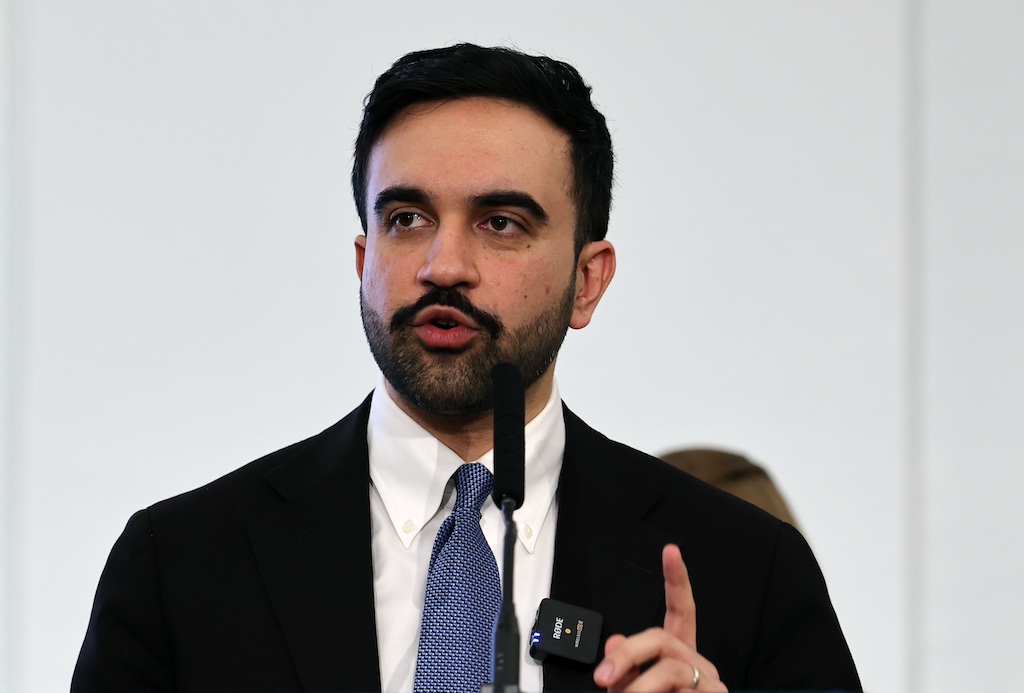
Zohran Mamdani speaking at a podium.

Despite ample evidence to the contrary, warnings of a mass exodus have persisted and even intensified in the first months of Mayor Zohran Mamdani's term. (Spencer Platt / Getty Images)


Last year, Zohran Mamdani’s campaign for mayor of New York gave rise to numerous predictions of an inevitable mass exodus of wealthy residents and businesses following his election. These predictions grew increasingly dramatic and dire after his victory in November, with business elites and their allies in the press frantically reporting on the coming out-migration to low-tax states like Florida and Texas. They termed it the “Mamdani effect.”

Nearly six months after Mamdani’s election, however, there’s enough distance to judge how those warnings have held up so far. Though only four months into the new mayor’s term, most of the evidence points to the same conclusion: the widely anticipated exodus has failed to materialize.

One of the strongest indicators of whether people or businesses are actually fleeing from a city is the housing and real estate market. During the COVID-19 pandemic, when many residents really did leave New York for the surrounding suburbs and other states, the city’s vacancy rates soared and rents dropped with demand, leading to “COVID discounts” at the height of the pandemic. This trend was even more extreme for the city’s commercial real estate, where vacancy rates doubled as more companies adopted remote work and shed office space.

Today nearly every indicator points to the opposite problem: demand is running hot and supply is lagging badly, especially when it comes to housing. One of the clearest signs that New York is nowhere near an exodus is that median rents have hit an all-time high while apartment vacancies remain at historic lows. (The administration, for its part, has separate plans to address these issues, including a rent freeze on stabilized apartments along with a push to build two hundred thousand affordable units.)

The city’s commercial real estate market tells a similar story. According to real estate firm JLL, first-quarter data for commercial real estate in Manhattan shows that leasing activity has climbed for top-tier buildings in the first months of 2026, leading to a decline in vacancies as finance and tech companies compete to snatch up office space.

In a white paper shared with Fortune earlier this month, JLL further disputed the “myth of the mass exodus” after analyzing LinkedIn migration data and finding that New York remains a greater magnet for young talent and skilled professionals than Florida, which has frequently been sold in the press (along with Texas) as the “Wall Street of the South.”

“The most sophisticated talent continues to gravitate toward major markets like Manhattan despite the headlines,” wrote the paper’s authors, “and any slow-down in this growth is far more likely to stem from limited space supply on the island than from a lack of demand.”

If businesses are planning to escape from New York in the near future, they certainly have a funny way of showing it. Last month, the giant developer RXR Realty filed a permit to build what will be one of the city’s largest skyscrapers at the current location of the Trump-developed Grand Hyatt Hotel. Originally planned as an eighty-three-floor office tower, the latest plan is now a dozen stories higher, indicating a strong demand for office space. According to RXR CEO Scott Rechler, who spoke with the City, brokers who work with financial companies say “their clients are growing so fast that when their leases are nearing an end they always need more space than they currently occupy.”

Several other major midtown developments are in the works, including the Citadel-backed megaproject on 350 Park Avenue and American Express’s planned global headquarters at 2 World Trade Center in Lower Manhattan.

The Big Bluff

Despite ample evidence to the contrary, warnings of a mass exodus have persisted and even intensified in the first months of Mamdani's term, as billionaires and business groups work hard to keep the narrative alive. Leading the way in this effort has been the influential corporate advocacy group Partnership for New York City, whose membership includes many of the city’s biggest companies and CEOs.

Over the last several months, Partnership CEO Steve Fulop (the former mayor of Jersey City) has become a fixture in New York’s media landscape, repeatedly sounding the alarm about corporate flight and pushing dubious claims about major New York companies “exploring options in Florida and Texas” (Fulop has declined to identify those companies).

In February, Partnership published a widely circulated report detailing how Texas has developed a “competitive edge” over New York due to its “tax advantages” and “multipronged approach” to “economic development” (that is, its generous tax abatements and subsidies for corporations like Texas Instruments and ExxonMobil). Listing two dozen companies that have relocated their headquarters from New York to Texas over the last decade as well as the Southern state’s expanding financial sector, the report warned of a “growing competitive pressure that cannot be ignored.” (While Texas does now have more financial jobs than New York, the latter’s finance sector generates about 71 percent more in gross regional product.)

Released just a few days after Mamdani made his “Tin Cup” pilgrimage up to Albany to argue for tax hikes in front of state lawmakers, the report’s political aims were clearly articulated by Fulop in the press release: “The choice before city and state lawmakers is not simply whether to raise or not raise taxes,” he said. “It is whether New York is prepared to compete in a landscape where other states are making coordinated moves to attract growth.” In other words, raise taxes on corporations and the rich and they will flee to the low-tax and “business-friendly” havens down south.

Greg LeRoy, who founded the economic development watchdog group Good Jobs First, was skeptical of Partnership's core claims and likened the report to an “infomercial for Texas,” noting that its headquarters relocation comes directly from the state’s own government. The state’s vaunted financial sector growth is also less impressive on closer inspection. “The fact that Texas has more financial services now than NYS (New York State) is also facially meaningless,” said LeRoy. “The industry has been dispersing geographically for decades and Texas now has 60 percent more residents than NYS. More people to serve!”

Despite the bad-faith framing of New York’s economic decline, warnings from business groups and corporate leaders carry remarkable political force, particularly with centrist Democrats like Gov. Kathy Hochul, who has repeated similar claims as the reason for her continued opposition to raising income taxes on the wealthy. “I have to look at the fact that we are in competition with other states who have less of a tax burden on their corporations and their individuals,” said Hochul last month, remarking that the state has already experienced significant erosion of the tax base.

The governor’s opposition to raising income and corporate taxes has predictably won plaudits from the financial and business elites who worked so hard to stop Mamdani’s ascent last year.

A Threat as Old as Time

While Mamdani’s election has sparked a fresh round of predictions about New York’s impending economic decline, anxieties about corporate flight and a shrinking tax base are hardly new for the city. In his 2005 book, The Great American Jobs Scam, LeRoy memorably described New York as the “job blackmail capital” of America due to the frequent practice of companies threatening to leave the city in order to extract tax breaks from politicians. “The game of creating an appearance that you are interested in leaving Manhattan is simple and cheap,” he explained. “Go to one or two cities in neighboring Jersey City or Connecticut. Talk to local officials, look at some space, let the mayor pitch a deal, and don’t make a secret of it. Then go back to threaten New York.”

Though most companies had no real intention of following through on their threats, they often convinced New York’s deferential politicians to open up the Treasury. Throughout the 1980s and 1990s, dozens of major corporations cashed in on generous retention deals with the city that included long-term tax breaks and other subsidies.

Early on in his term, billionaire Mayor Michael Bloomberg rightly criticized this practice as an ineffective form of corporate welfare, declaring that “any company that makes a decision as to where they are going to be based on the tax rate is a company that won’t be around very long.” Despite this, the practice continued well into his tenure as mayor. According to Kim Moody, the city’s Economic Development Corporation and Industrial Development Agency cut sixty-three “job-retention deals” in Bloomberg’s first eighteen months in office. Major recipients included Merrill Lynch, American Airlines, Met Life, and the New York Post.

While these kinds of retention deals have since fallen out of favor due to fierce public opposition, New York remains one of the nation’s most profligate spenders on tax abatements. According to the city’s annual report on tax expenditures, the city will spend roughly $8.4 billion on its various tax abatement programs in the 2026 fiscal year, much of which goes to subsidizing developers of luxury and commercial real estate (the projected budget deficit for FY 2027, by comparison, is $5.4 billion).

If “job blackmail” was employed by major companies at the turn of the century to secure tax breaks and pad profits, today’s threats are mostly aimed at thwarting Mamdani’s proposed tax hikes and appear little more credible than they were two decades ago.

“The literature shows that high-income individuals simply do not choose where to live, on net, based on marginal differences in their top tax rate,” Alex Jacquez, the chief of policy and advocacy at Groundwork Collaborative, told Jacobin. This is demonstrated in case after case, where marginal tax hikes on top earners result in minor outflow and major increases in revenue.

Research from the Fiscal Policy Institute (FPI) has shown that the top 1 percent of earners in New York have been the least likely of all income groups to move out of the state and there was no significant increase in out-migration after the state raised top rates in 2021. Even when millionaires do move out, they often leave for other high-tax states like New Jersey and California.

Businesses are, if anything, even less likely to make major relocation decisions based on taxes, particularly in a state like New York, which determines a company’s tax burden based solely on the sales it makes within the state. “Contrary to the common belief that corporations are taxed based on the location of their headquarters, the location of a corporation’s offices or employees has no direct effect on its [corporate tax] liability,” note authors at FPI. Thus, in order to reduce corporate tax liability, a company would have to “decrease its sales in New York State and therefore reduce its profits by more than it would save on taxes.”

Beyond the Trickle-Down City

Despite the oft-repeated prediction of an exodus over the last half-century, New York remains home to more billionaires and millionaires than any other city on the planet and hosts the greatest number of Fortune 500 companies in the United States by a wide margin. Not surprisingly, New York is also the most unequal city in the country, with the highest concentration of wealth and vast levels of income inequality. While about one in twenty-two New York residents are millionaires, more than a quarter of the city’s residents live in poverty (double the national average) and a majority struggle to cover the cost of living.

New York’s transformation into a gilded metropolis was the direct result of policy choices stretching back to the fiscal crisis of the 1970s. In the wake of the city’s near‑default in 1975, politicians like Ed Koch and Rudy Giuliani focused relentlessly on wooing big developers and corporations with incentives, particularly to Manhattan’s business core. While the city imposed harsh austerity on its poor and working-class residents, developers like Donald Trump were showered with tax breaks to underwrite commercial and luxury real estate booms.

The promise of this model of “economic development” was that it would drive up property values and bring more high-paying jobs to the city, ostensibly shoring up the city’s tax base and boosting its overall economy. With the economy expanding and wealth growing, the benefits would “trickle down” to working and middle-class residents. In practice, this kind of business-first model of economic development has exacerbated the city’s inequalities and undermined working-class New Yorkers' ability to live in the city.

Mamdani and his administration have begun outlining a different approach, prompting a predictable chorus of complaints from business leaders and groups like Partnership, who allege the administration is neglecting “development” and “growth” in favor of “economic justice.” The deputy mayor for economic justice, Julie Su, has explicitly rejected the neoliberal vision of development that prioritizes big companies and developers over workers, consumers, and local businesses.

“[For] so long, economic development has been about what’s good for business, and measured by aggregate profits to the private sector,” Su said in a February interview with Robert Reich. “We believe you should think about workers not as a need but what happens to workers within that economic development — how well are they doing, are we creating good union jobs, are workers better off, have we closed the poverty gap, all of those are the ways that we’re going to measure economic development.”

The best thing Mamdani and his team can do right now is ignore the howls from billionaires and corporate elites and focus on implementing the program that he was elected on, including his popular proposal to tax the rich. Earlier this month, the mayor scored his first real victory on the tax front when Governor Hochul agreed to a pied-à-terre surtax on second homes in the city valued above $5 million (many of them owned by out-of-state plutocrats), which could generate up to $500 million in additional annual revenue. It wasn’t long before the usual suspects started proclaiming New York’s imminent demise. Yet if the past is anything to go by, New York will be just fine.