The Student Intifada
A little over two years ago, the student movement for Palestine transformed American college campuses seemingly overnight. But the passion and energy that built those encampments wasn’t enough to sustain the fight.
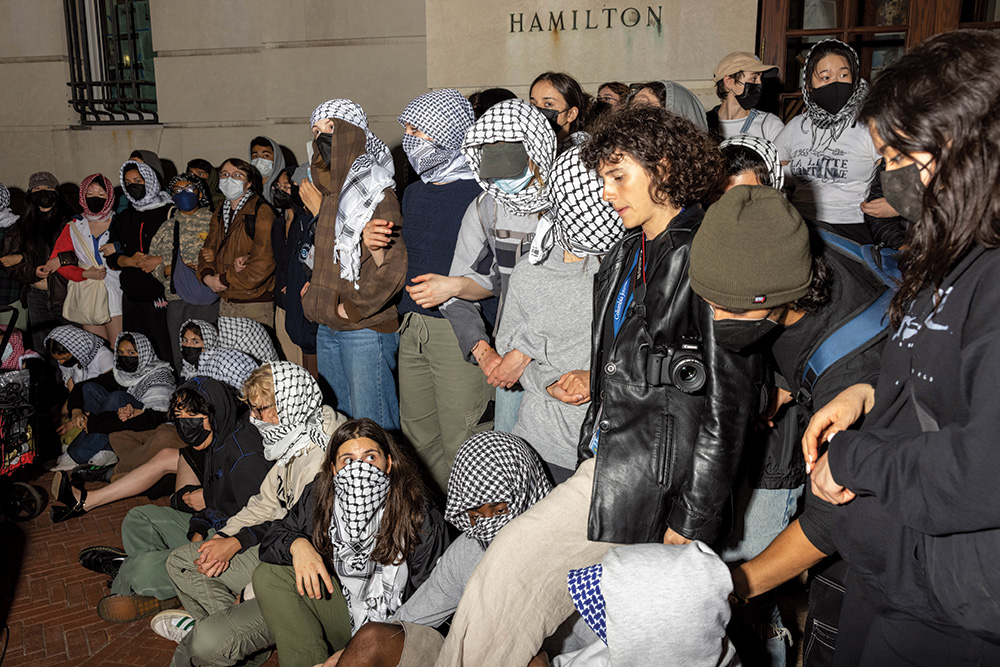
Student demonstrators at Columbia University lock arms to prevent law enforcement from entering the barricaded Hamilton Hall, which 44 students, alumni, and university affiliates occupied in late April 2024. (Alex Kent / Getty Images)
In the spring of 2024, student encampments sprang up throughout the country, demanding not just an end to the war but divestment from companies tied to Israel’s brutal occupation of Palestine and its genocidal assault on Gaza.
It was unprecedented in recent US student politics. Tens of thousands of young people participated, and dozens of major universities hosted weeks-long encampments. And yet despite attempts by national coalitions and local organizers to sustain the momentum, what some called the “student intifada” seemed to recede just as quickly as it had risen — even as Israel’s assault continued.
Pro-Palestinian organizing has been an important part of campus politics for decades. But October 7 and the escalation that followed changed the scale of engagement. Students who had never attended a meeting showed up. Demands for boycott and divestment that had once circulated among small groups suddenly felt urgent to a much broader layer of people as they watched Gaza get flattened in real time.