Why the Fight for Cultural Recognition Is Not Enough
Capitalism is only too happy to accommodate and absorb cultural challenges that don’t alter its foundations. Without economic transformations, the gains of identity-based politics are narrow — and reversible.
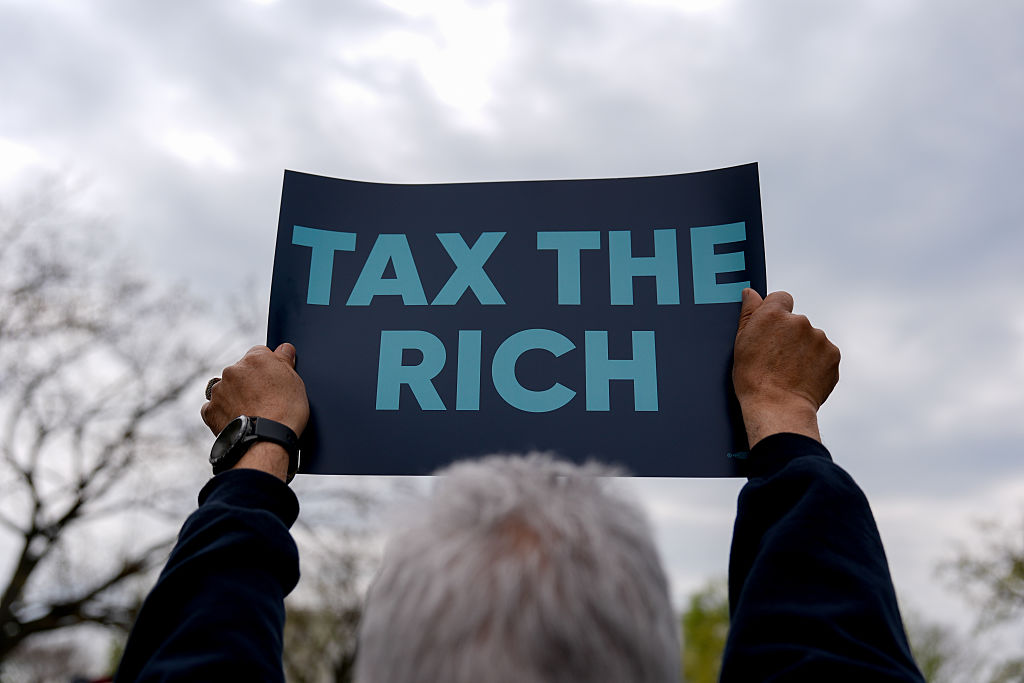
A political order that celebrates diversity can abandon it when profits are at stake and turn conservative overnight because its alliance with capital is conditional. Only economic transformation makes equality durable and universal. (Kent Nishimura / Bloomberg via Getty Images)
Discussions of inequality in contemporary societies often revolve around a familiar distinction between injustices rooted in status and those rooted in class. On one side stand struggles for recognition, aimed at securing respect and social standing for particular groups. On the other stand struggles over material distribution, aimed at transforming the economic structures that produce class divisions in the first place. The contrast is often framed as a strategic one. Recognition politics is seen as more flexible, more achievable, and less threatening to the system. Class politics, by contrast, appears rigid, confrontational, and rarely victorious.
This perception is widespread. In the Swedish trade union report Right-Wing Populism and Equality — An Essay, Anders Nilsson and Örjan Nyström describe contemporary inequality in terms of vertical and horizontal dimensions. Vertical inequality concerns class and economic distribution. Horizontal inequality concerns status, identity, and recognition. According to their account, vertical inequality has deepened in recent decades, while important gains, despite backlash, have been made along the horizontal axis. Women have entered elite professions, LGBTQ rights have expanded, and anti-racist norms have gained ground. These advances, however partial, have unfolded alongside rising economic polarization.
The result, they argue, is a volatile political landscape. Progressive neoliberalism has opened the doors of power to selected individuals from historically excluded groups, allowing them to “break the glass ceiling,” while leaving the underlying economic order intact. For those whose material conditions continue to deteriorate, this produces resentment. Feminism, anti-racism, and LGBTQ politics come to be seen not as emancipatory movements but as vehicles for the upward mobility of a few. The perception takes hold that women, queer people, and racialized minorities are climbing the social ladder together, while others are left behind.
This picture is both accurate and deeply misleading. It is true that status politics has been more readily absorbed into mainstream institutions than class politics. But it is false that its victories have been widely shared. Only a narrow layer has benefited from the forms of recognition compatible with neoliberal capitalism. For the majority, economic constraints continue to limit the possibility of living a free and dignified life, regardless of whether the injustice they face is cultural or material in origin.
In other words, status politics today is widely (though less and less) accepted at the level of discourse but unevenly distributed in reality. Its gains are fragile, reversible, and constantly subordinated to economic imperatives. The same political order that celebrates diversity can just as easily abandon it when profitability is at stake. Progressive neoliberalism can turn conservative overnight, because the alliance between recognition and capital is always conditional.
These tensions were already visible in the famous exchange between Nancy Fraser and Judith Butler in Social Text in the late 1990s. That debate remains one of the clearest attempts to think through the relation between class and status in contemporary politics. But Fraser’s own position has shifted in important ways since then. The shift does not mean abandoning the distinction between class and status. On the contrary, that distinction remains central to her work. What has changed is her assessment of how far status politics can go within capitalism. Where she once suggested that struggles for recognition could make significant gains without directly confronting property relations, she now insists that their limits are far tighter than they appear.
If status politics is to become a project for the many rather than the few, it cannot avoid the question of economic power.
Class, Status, and the Redistribution-Recognition Debate
In her debate with Butler, Fraser defended the importance of analytically separating class injustice from status injustice. Class inequality, she argued, is built into the structure of capitalism itself. Status hierarchies are not. They may be widespread, and they may have severe material consequences, but capitalism does not depend on any particular cultural hierarchy in order to function. Because of this, movements oriented toward recognition can often win reforms without challenging the system as a whole.
Butler rejected this claim. Capitalism, she argued, is not neutral with respect to social norms. The heterosexual nuclear family, Butler argued, plays a crucial role in reproducing labor power, and sexual minorities often suffer not only cultural stigma but economic disadvantage as well. What appears to be “merely cultural” is in fact deeply material.
Fraser responded by insisting on a distinction between the material and the economic. Cultural injustice can produce real, tangible suffering without being structurally necessary to capitalism. To treat every form of oppression as economically grounded, she argued, risks reducing political analysis to a single dimension.
Yet the debate was never only about theory. It was also about strategy. Fraser’s broader project was to address what she called the redistribution-recognition dilemma within progressive politics. Many oppressed groups, she argued, are “bivalent.” They suffer both economic exploitation and cultural devaluation. To overcome their situation, they must demand both recognition as a group and the transformation of the social structures that make such groups unequal.
To clarify the strategic options, Fraser introduced the distinction between affirmative and transformative politics. Affirmative strategies seek to correct injustices without altering the basic framework of society. Redistribution within capitalism and diversity policies within existing institutions fall into this category. Transformative strategies, by contrast, aim at structural change. Economically, this points toward socialism. Culturally, it involves confronting entrenched status hierarchies rather than simply affirming them.
This framework allowed Fraser to argue that cultural and economic struggles need not be opposed. Both could be either reformist or transformative. But it also made clear that the deepest forms of justice require confronting the underlying order itself. Already in this early work, Fraser distinguished between struggles over distribution and struggles over property relations. In her later writing, however, this distinction becomes more decisive. The focus shifts away from the internal strategy of movements and toward the structural limits imposed by capitalism itself.
Why Recognition Alone Is Not Enough
This shift is especially clear in Feminism for the 99%, written with Cinzia Arruzza and Tithi Bhattacharya. The manifesto calls for a feminism rooted not in elite advancement but in the lives of the majority: poor and working-class women, migrant women, racialized women, LGBTQ people, and others — those encouraged to think of themselves as middle class while living under conditions of exploitation.
At first glance, this language resembles the familiar vocabulary of intersectionality. But its logic is different. The point is not simply to list multiple forms of oppression, but to show how they are sustained within a common economic order. Rights that exist only on paper mean little without the material conditions required to exercise them. The legal right to abortion is meaningless for those who cannot afford the procedure. Formal equality before the law does not protect those who lack housing, health care, or economic security.
As Anatole France famously observed, the law in its majestic equality forbids both rich and poor alike from sleeping under bridges. The same holds for the rights celebrated by contemporary liberalism. Without economic transformation, they remain unevenly distributed and easily revoked.
In this sense, the apparent success of status politics under neoliberalism is largely superficial. Cultural hierarchies can be challenged without threatening the system, but the benefits of those victories remain confined to a minority. Oppression that does not originate in the economy is still shaped by it. As long as capitalist property relations remain intact, both economic and cultural justice are limited.
For this reason, the authors of Feminism for the 99% insist that redistribution within capitalism is not enough. Periods of relative equality have always depended on exceptional historical conditions, and they have always rested on exploitation elsewhere — of global labor, of social reproduction, of nature itself. A durable expansion of freedom requires breaking with that exploitative logic.
From Identity to Property Relations
This later emphasis also changes the role of Fraser’s earlier distinction between affirmation and transformation. That framework emerged in a theoretical moment shaped by post-structuralism, when identity itself was often treated as suspect and its destabilization as inherently radical — a tendency that has, if anything, intensified. Fraser never fully accepted this view, but her formulations sometimes reflected the debates of the time, foregrounding the question of identity in debates over political strategy.
In her later work, the focus shifts. The decisive issue is no longer whether movements affirm or dissolve identities but whether people have the material power to make use of the rights they win. Recognition politics without economic change risks becoming a politics for a minority, leaving the majority behind.
This does not mean that status-based movements must abandon their identities. It means that their victories remain limited unless they are linked to a broader struggle over the structure of the economy. As the sociologist Hampus Andersson puts it in his reading of Fraser, struggles for recognition need “support from a wider project — the struggle for equality and socialism” if they are to benefit the whole of the groups they claim to represent.
Such a perspective also makes possible a different kind of solidarity. Most people share a common position in not belonging to the ruling class, and that shared condition provides a real basis for collective politics. This is not a matter of constructing purely discursive alliances but of recognizing material interests that genuinely converge.
None of this reduces every injustice to class. Status hierarchies have their own logic and their own history. But without transforming property relations, struggles against those hierarchies risk being absorbed into capitalism’s hollow version of equality — an equality that leaves the structure of domination untouched.