Gavin Newsom’s Closely Curated Vulnerability Isn’t Convincing
In Young Man in a Hurry, Gavin Newsom tries to get in front of the critiques he knows are coming. But reading the book, you can’t escape what he himself establishes: Newsom is a product of one of the most gilded patronage networks in modern US politics.
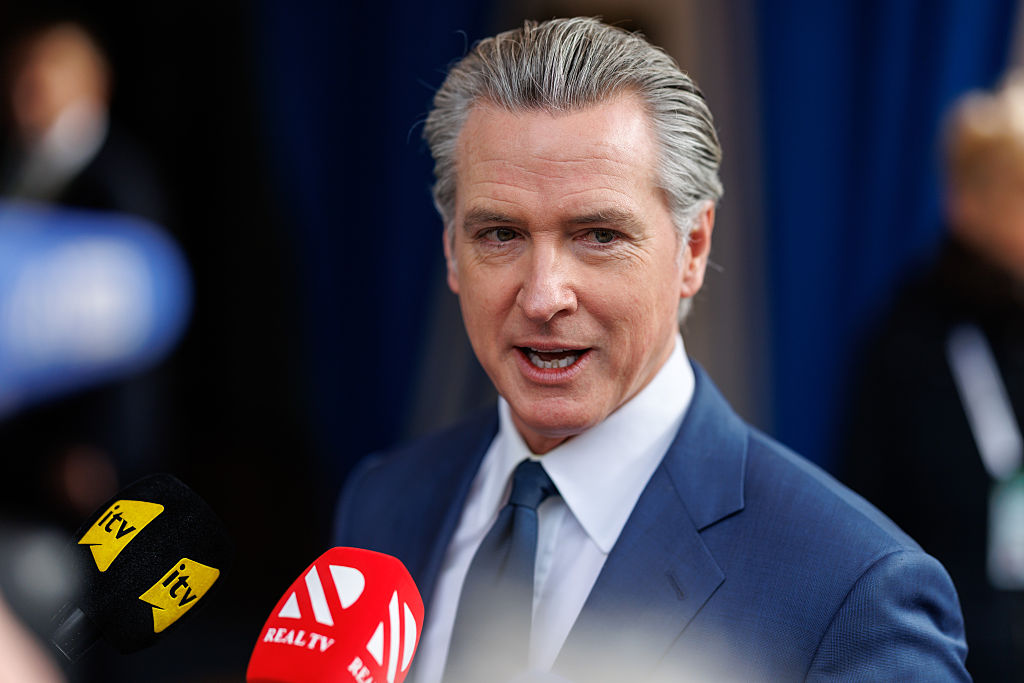
If Gavin Newsom’s new memoir’s purpose is to prove that he made himself, it ends up proving the opposite. (Matthias Balk / picture alliance via Getty Images)
“I’m not better than you. I’m a 960 SAT guy. You’ve never seen me read a speech because I cannot read a speech. Maybe the wrong business to be in.” This is California governor and presidential aspirant Gavin Newsom, speaking to a packed auditorium in Atlanta recently on a book tour that has also routed him through South Carolina, New Hampshire, and Tennessee before finishing in his home state of California.
The memoir, Young Man in a Hurry, is supposed to kill a caricature. Newsom knows exactly how most of America perceives him: as the New Yorker recently put it, “The Tom Cruise of politics, more successful than beloved,” a privileged California politician with a knack for political theater and little else beneath it. The book, which traces his difficult childhood alongside his political career, is his bid to change that — and, not incidentally, to defuse the opposition research before anyone else can use it.
His grievances come early. In the eyes of the press, Newsom was “forever the ‘golden boy’ whose daddy had prospered because of his ties to the Gettys and now the son was simply following suit.” Newsom’s father, Bill, was a well-connected judge who met members of the dynastic Getty family at their Catholic high school, became the family’s lawyer, and was once sent to Italy with the ransom to secure the release of the kidnapped John Paul Getty III.