The Toxic Finance Behind Europe’s Plans for Ukraine
EU foreign policy chief Kaja Kallas has revived plans to draw on frozen Russian assets to make loans to Ukraine. Yanis Varoufakis writes for Jacobin that the idea is unworkable and incompatible with efforts to move toward a ceasefire.
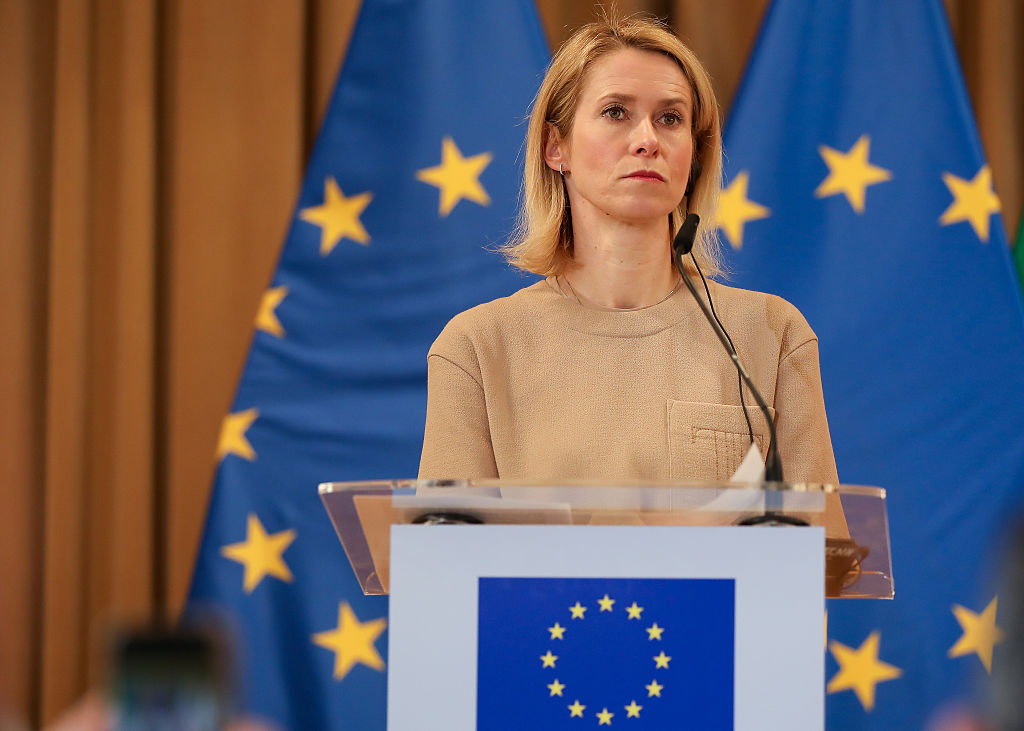
During the euro crisis, the EU repeatedly announced bailout loans to Greece, yet did nothing to help Greeks. Today EU efforts to fund Ukraine’s war effort are again less about aiding the supposed recipients than about giving the bloc a business plan. (Klaudia Radecka / NurPhoto via Getty Images)
When the euro crisis hit in early 2010, with Greece the first domino to fall, all it took to surmise that Europe had no intention of resolving the euro crisis was one good look at the toxic finance the EU concocted in response. Today one good look at the toxic finance the EU is deploying to fund Ukraine offers similar evidence that Europe has no interest in helping that country — and indeed, that quite the opposite is in play.
Back in 2010, the eurozone economies were buffeted by a tsunami of bankruptcies that began on Wall Street before toppling the French and German banks and, soon after, the treasuries of Greece, Ireland, Portugal, Spain, etc. Europe’s response to a crisis that was triggered by the bonfire of Lehman Brothers’ house of cards was a classic case of panicking firefighters deferring to the arsonists who had started the inferno.
Europe’s conundrum was that the EU treaties banned Brussels from lending money to the Greek government to pass it on to Deutsche Bank, Société Générale, BNP Paribas, Finanz Bank, and so on. Alas, if the EU did not lend these monies to Athens, the German and French ruling classes would have to bail out their banks directly — not something they were prepared to do.