Chicago City Council Just Stabbed Tipped Workers in the Back
After a blitz by restaurant industry lobbyists, Chicago’s city council voted last week to maintain the subminimum wage for service workers, keeping them stuck in precarity and poverty wages.
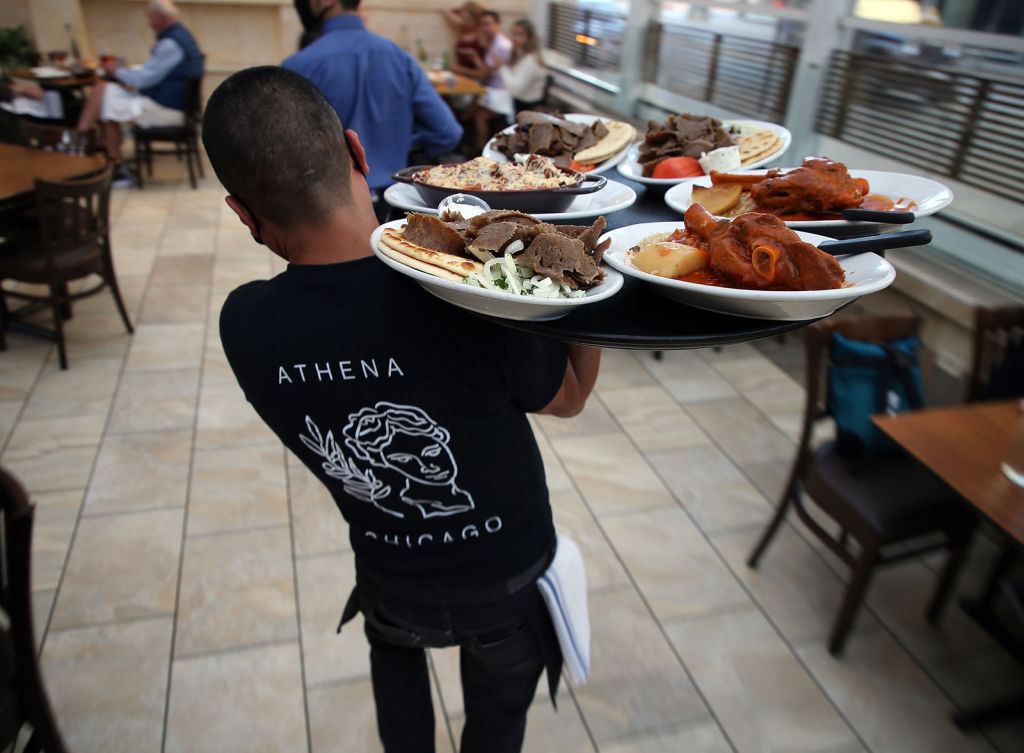
The subminimum wage for service workers creates a two-tiered labor system that intensifies the exploitation of precarious workers — and the Chicago city council voted last week to block an attempt to change that. (Terrence Antonio James / Chicago Tribune / Tribune News Service via Getty Images)
Last Wednesday, the Chicago City Council voted 30–18 to freeze the city’s scheduled phaseout of the tipped subminimum wage — a measure that restaurant workers and their allies spent years fighting to win, and that the council itself passed by a 36–10 margin less than three years ago. The ordinance, introduced by Ald. Samantha Nugent, through a parliamentary maneuver and backed by the Illinois Restaurant Association, locks in the tipped wage floor at 24 percent of Chicago’s $16.60 minimum hourly wage indefinitely, stripping workers of raises they had already been promised.
Mayor Brandon Johnson has pledged to veto it, in just the third use of veto power by a Chicago mayor since 2006. “If I’ve got to veto something to make sure that black and brown women are protected, then veto it is,” he said after the vote, referring to the workers most affected by the subminimum wage. Because the freeze passed four votes short of the supermajority needed to override a mayoral veto, the veto will hold — for now. The workers of this city are counting on it.
I say “for now,” because the past week has underlined that no labor gain at city hall is ever fully secure. Political power that is not continuously organized can be dismantled by a well-funded lobbying blitz in a matter of days. That is exactly what happened here. And with the anti-worker Illinois Restaurant Association emboldened by its ability to compel a majority of Chicago City Council members to do its bidding, there is no doubt they will soon try it again — just as the National Restaurant Association has all over the country, most recently in Washington, DC.