The Authoritarian Feelings Machine
From Trump to Orbán, Meloni to Modi, leaders around the world have turned fear, grievance, and national pride into political instruments. Their appeal does not rest on charisma alone but also on the deep insecurity produced by neoliberalism’s long crisis.
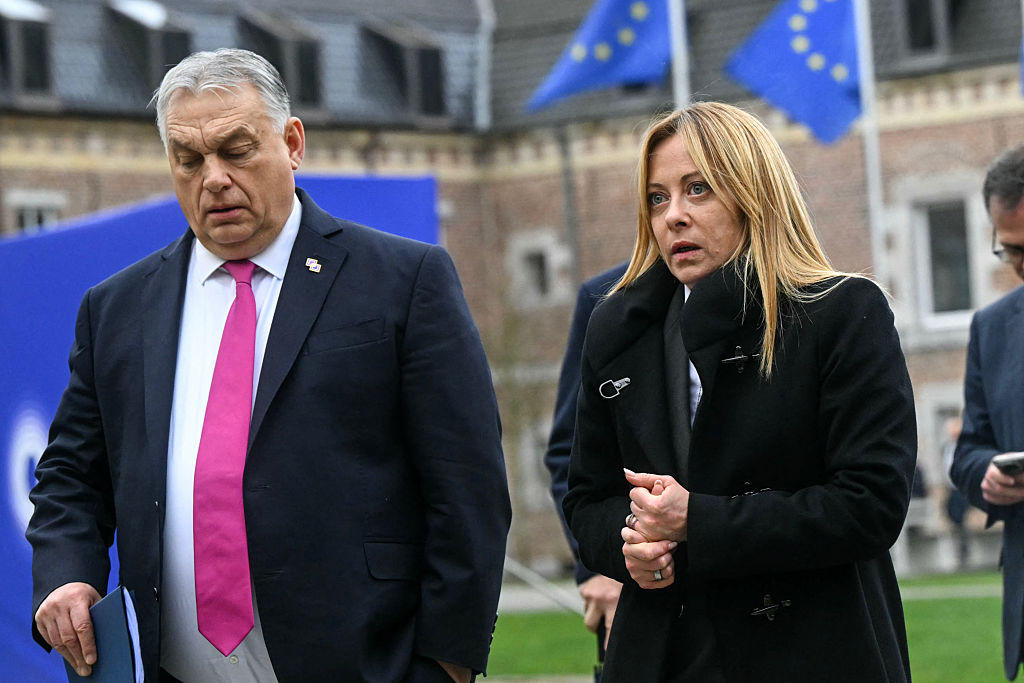
National pride, resentment, and fear undergird the rhetoric of national populist leaders across the globe. (Nicolas Tucat / AFP via Getty Images)
Over the past several decades, neoliberalism has hollowed out the social and emotional foundations of political life. As welfare states eroded, precarious labor expanded, and public protections disappeared while a new atmosphere of insecurity emerged — one in which anger, fear, resentment, wounded pride, and a longing for belonging became powerful political currencies.
This emotional terrain is not theoretical. It is inscribed in the rhetoric of today’s most influential leaders. Donald Trump vows to speak for “the forgotten.” Viktor Orbán warns that Europe is “under siege.” Narendra Modi frames political transformation as a “national rebirth.” Giorgia Meloni claims identity — “a woman, a mother, an Italian, a Christian” — as a fortress under threat. Javier Milei shouts that “everything will collapse” without radical rupture. Benjamin Netanyahu casts each crisis as a battle for national survival.
Their vocabularies differ, but they share the same emotional grammar: mobilizing fear, pride, humiliation, and existential anxiety in societies fractured by neoliberal restructuring. The rise of today’s authoritarian-populist formations cannot be understood through charisma alone; they are rooted in a deeper landscape of economic precarity, social fragmentation, and collapsing institutional trust.