Reading C. Wright Mills in the Age of Trump
Seventy years ago, C. Wright Mills published The Power Elite, a scathing indictment of corporate executives, state officials, and their academic apologists. His analysis has lost none of its bite as we confront an increasingly degenerate US power elite.
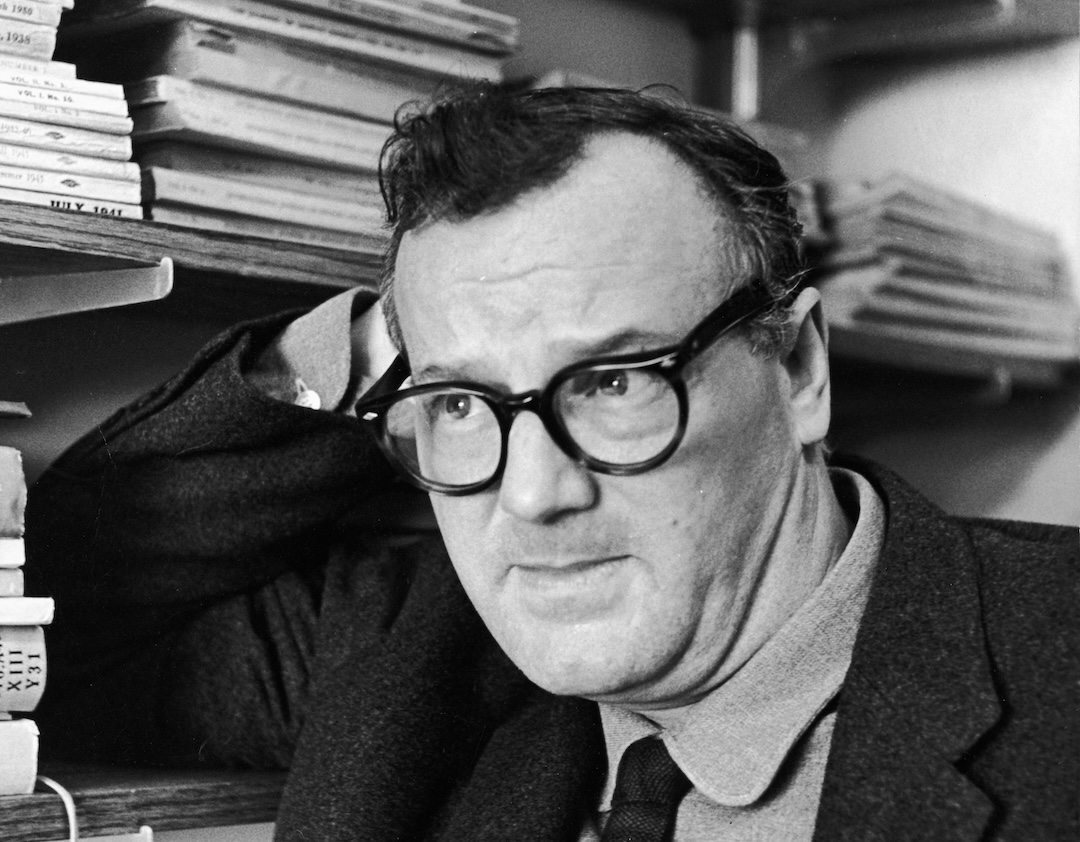
C. Wright Mills exposed the reality that members of the US “power elite” were not geniuses, nor even exceptionally talented. They were often incompetent and engaged in reckless, self-aggrandizing behavior that led them to make monumental mistakes. (Hulton Archive / Getty Images)
C. Wright Mills published his book The Power Elite in 1956, at a time when pluralist theory dominated political science, and equilibrium theories such as systems analysis and structural functionalism had captured the field of sociology in the United States.
Mainstream scholars, as well as liberal and conservative politicians, confidently asserted that Keynesian economics and the expansion of the welfare state had brought universal prosperity to the West and an end to class conflict in the advanced capitalist societies. Political scientists proclaimed that interest group pluralism, while less than perfect, was the best of all possible political systems, and the best approximation to political democracy that could be achieved in a complex modern society.
Everyone recognized that there was still economic, social, and political inequality in the United States, but scholars, corporate executives, and government officials insisted that any remaining inequality was the result of a competitive meritocracy, where men of skill, self-discipline, and intelligence rose to leadership positions, where they wisely managed corporations and the state in the public interest.
Wright Mills was almost alone in challenging these sanguine assumptions. He was branded the enfant terrible of US social science and ostracized by most of his academic colleagues. Mills pricked the sensibilities of the stable geniuses who managed corporations and the state, while questioning the most cherished illusions of their academic acolytes.
Organized Irresponsibility
As he put it in The Power Elite:
The men of the higher circles are not representative men; their high position is not a result of moral virtue; their fabulous success is not firmly connected with meritorious ability. Those who sit in the seats of the high and the mighty are selected and formed by the means of power, the sources of wealth, the mechanics of celebrity, which prevail in their society. . . . Commanders of power unequaled in human history, they have succeeded within the American system of organized irresponsibility.
Mills brilliantly exposed to the public the reality that members of the US “power elite” were not geniuses, nor even exceptionally talented individuals. They were often incompetent and regularly engaged in reckless and self-aggrandizing behavior that led them to make monumental mistakes. Those mistakes resulted in catastrophic consequences for ordinary people, who seemed helpless in the face of the enormous and irresponsible power wielded by the power elite, while those who committed crimes in the name of the people typically walked away with more money and celebrity.
Mills wrote many other books during his short life, but a common thread running through his work was the effort to identify a revolutionary agent that was capable of spearheading a structural transformation of the capitalist system, which he warned was spiraling out of control toward a global catastrophe. Toward the end of his life, Mills published a “Letter to the New Left,” where he posed the question in plain terms:
Who is it that is getting fed up? Who is it that is getting disgusted with what Marx called “all the old crap”? Who is it that is thinking and acting in radical ways?
This is still the question that confronts the Left. At a time when pundits are warning us about a possible World War III, and with universities, the media, law, and science all under attack by the power elite, it is worth revisiting Mills’s answer to that question, because he saw these two developments as the systemic outcome of a decadent power elite that had become as debauched and degenerate as the eighteenth-century French aristocracy.
A Different Kind of Texan
C. Wright Mills was born in Waco, Texas, in 1916. He grew up in a different kind of Texas than the one we know today. Many of the state’s residents — small farmers, railroad workers, oil field workers, dockworkers, and lumberjacks — were still under the spell of 1890s Populism. This progressive strain of politics resurfaced in the Great Depression when many of the state’s congressmen became critical players in the so-called Boston–Austin axis that pushed Franklin D. Roosevelt’s New Deal through Congress.
While Mills grew up in the Texas Bible Belt and his stay-at-home mother was a devout Catholic, at an early age he embraced the scientific atheism of Clarence Darrow and rejected the Protestant fundamentalism of William Jennings Bryan. Mills graduated from Dallas Technical High School in 1934 and spent one miserable year at Texas A&M University, where the all-male student body was required to wear World War I uniforms and obey strict military discipline. Mills was hazed mercilessly, and the experience imprinted on him a lifelong distaste for the US military.
Mills transferred to the University of Texas after one year, and he became enthralled with sociology, which at that time was not a separate department but a field of study closely attached to economics and political science. Mills graduated in 1939 with a bachelor’s degree in sociology and a master’s degree in philosophy, and with the notable distinction that he had already published two articles in the American Journal of Sociology and the American Sociological Review.
Mills left Texas for the University of Wisconsin–Madison, where one of the first freestanding sociology departments had been founded by progressive luminaries, such as Edward A. Ross, Richard T. Ely, and John R. Commons. While at Wisconsin, Mills met Hans H. Gerth, a German refugee, who collaborated with Mills to produce the first English-language translation of selected works by Max Weber, a collection that is still a standard textbook in sociology and political science courses.
Mills received his PhD in 1942 and was appointed professor of sociology at the University of Maryland, College Park, where he remained until 1945. He moved to New York City to work at Columbia University’s Bureau of Applied Social Research, and in 1946 he was appointed assistant professor of sociology at Columbia University.
Man on a Motorcycle
Profiles of Mills often portrayed him as an angry and rebellious lone wolf, cast in the 1950s image of an intellectual James Dean or Marlon Brando. Mills played to this image as he rode to his office each day on a BMW motorcycle dressed in a black leather jacket and work boots, rather than the suit, bow tie, and Oxford shoes customary among his Columbia University colleagues.
Mills was physically a big and imposing man, who resembled his grandfather more than his father. While his father was a diminutive insurance salesman, his grandfather had been a brawling rancher and Texas cattle driver whose life was ended in a gunfight. Mills brawled with his pen, and he used words rather than fists to fight against a US power elite he considered so shortsighted and reckless that it was willing to risk the destruction of the entire world in pursuit of its self-aggrandizing passions.
However, speaking the plain and simple truth is not a quality appreciated by most academics, and consequently, Mills was not well-liked by his university colleagues, although he was wildly popular with students, the media, and the lay public. While recovering from a heart attack in a New York City hospital, Mills received only one “get well” card from his university colleagues. The latter complained that he was combative and uncollegial, mainly because he mentioned them by name when criticizing their work in books, journals, and magazine articles.
Mills castigated mainstream sociology and political science for having devolved into “a set of bureaucratic techniques,” “methodological pretensions,” and “obscurantist conceptions,” which disguised the fact that contemporary social scientists were obsessively preoccupied “with minor problems unconnected with publicly relevant issues.” Mills dismissed most social science as either jargon-laden grand theory with no practical applicability to real political and social problems or, conversely, a field obsessed with trivial hypothesis testing, which was equally irrelevant to a world on the verge of nuclear annihilation.
Mainstream academics generally dismissed Mills’s scholarship precisely because he wrote in plain English that could be easily understood by nonacademic readers. The same obscurantists and pseudoscientific pretenders trivialized Mills’s work by labeling it “journalistic sociology” in contrast to their own “scientific” sociology.
To their chagrin, Mills also regularly published articles in popular outlets such as Dissent, the New Republic, and the New Leader, which won him a wide popular following among liberals and the Left. As a result, Mills became a public intellectual with influence outside the university, and he is widely credited with being a major intellectual figure in the emergence of a New Left in the United States and Europe.
Tragically, Mills died at the age of forty-six in 1952, having suffered from heart problems his entire life. His premature death came just as he self-identified as “a plain Marxist” and optimistically embraced nascent insurgent political movements that were emerging both inside and outside the United States in the early 1960s.
The Concept of the Power Elite
While Mills is most renowned for The Power Elite, even liberals such as the economist Robert Lekachman criticized the book, because it contained too many “Marxist and Hobsonite echoes.” Lekachman was not alone in wondering how Mills’s conception of the power elite differed from the earlier declaration of the Marxist Paul Sweezy’s that the state is “an instrument in the hands of the ruling class for enforcing and guaranteeing the stability of the class structure itself.”
Mills, who was well-versed in Marxist theory, responded to such criticism in the following terms:
I happen never to have been what is called “a Marxist,” but I believe Karl Marx is one of the most astute students of society modern civilization has produced; his work is now essential equipment of any adequately trained social scientist as well as of any properly educated person. Those who say they hear “echoes” of Marx in my work are saying that I have trained myself well.
Mills had no qualms about calling himself a socialist, but methodologically, he utilized a type of power-structure research that was influenced more by Max Weber and the Italian elite theorists than by Karl Marx. Mills started from the Weberian position that societies consist of analytically distinct economic, political, social, and cultural orders. Instead of assuming that an inherent theoretical relationship existed between any of these orders, Mills argued that any such claim would have to remain a hypothesis until (and to whatever extent) it could be demonstrated as the conclusion of empirical and historical research.
Mills argued that institutions organize and deploy “power” in society by vesting the individuals who occupy leadership positions in those institutions with the authority to make decisions about how to deploy the power resources at their disposal. Power resources could include wealth, income, force and coercion, knowledge and information, prestige, and celebrity.
For instance, as an economic institution, the modern corporation vests its board of directors and executive officers with the authority to determine the use of any economic resources which the corporation owns or controls. Government vests specific public offices with the authority to employ administrative coercion or police force against anyone who fails to comply with the law. As cultural institutions, schools and universities certify that specific individuals possess scientific expertise in particular fields of knowledge. Institutions organize power resources and thus confer power and influence on those people who occupy the commanding positions that authorize them to allocate such resources for definite purposes.
The individuals who occupy positions of institutional authority control different types of power: economic, political, and intellectual. The authority to make institutionally binding decisions is what makes an individual, or a group of individuals, powerful. Thus, Mills argued that one can impute power to particular groups of individuals to the extent that they occupy the commanding heights of the societal organizations that control wealth, force, status, and knowledge in a particular society.
These are the individuals that Mills identifies as “elites,” and there were many types of elites in society: corporate elites, political elites, military elites, professional elites, social elites, celebrity elites, intellectual elites, and cultural elites. A power structure is an identifiable distribution of power resources organized by the relationships forged between the major institutions and elites of a particular society. Following in the tradition of Italian elite theory, as pioneered by Vilfredo Pareto and Gaetano Mosca, Mills conceived of revolutions as a “circulation of elites” — a process whereby an aging and decadent elite is displaced by a new and more vigorous elite.
Alliance of Power
However, Mills departed from Pareto and Mosca by arguing that not all institutional resources are equal and, therefore, not all elites are equal in capitalist societies. He argued that three institutions stand above all others in the enormity of the power resources they control in modern society: the corporation, the state (executive bureaucracy), and the military.
Thus, Mills’s “power elite” was a loose alliance of the chief executives of large corporations, the Pentagon’s top military warlords, and the state’s executive directorate. Hollywood celebrities routinely mingled with the power elite to confer a veil of glitz and glamor on otherwise morbid personalities, and to effectively distract the disorganized, struggling, and fearful “masses” from their ordinary and precarious existence.
Mills defined the power elite as being “composed of men” who are “in positions to make decisions having major consequences”:
They are in command of the major hierarchies and organizations of modern society. They rule the big corporations. They run the machinery of the state and claim its prerogatives. They direct the military establishment. They occupy the strategic command posts of the social structure, in which are now centered the effective means of the power and the wealth and the celebrity which they enjoy.
These three elites jockeyed with each other for power and influence, but they also cooperated in a loose alliance to form what Mills called the power elite. The main interest of the power elite was to retain and expand its power through economic self-aggrandizement, political corruption, and continuous war.
This required its members to create and maintain a state of perpetual fear and precarity in the masses, while promising safety and security from the many internal and external enemies of the state that threatened the well-being of US citizens. Even though different elements of the power elite competed with each other for influence, they quickly closed ranks to defend the existing order that sustained them in power when challenged from below or from the outside. Such challenges resulted in frequent states of emergency that were used to justify the exercise of secrecy and lawless power.
On the other hand, the interest of the masses was to survive — to get by one more day without losing their jobs, suffering a catastrophic illness, being conscripted into a foreign war, or dying in a nuclear holocaust. In this respect, Mills’s concept of “power” was much closer to that of the Italian elite theorists than to Marx, because his theory of the power elite tended to render “the masses” powerless by fiat. If power is a function of the decision-making that comes with occupying the command posts of the major institutions in capitalist society, then the masses are by definition virtually excluded from exercising power, and they are powerless.
Search for Revolutionary Agency
Although Marxists were critical of The Power Elite from a theoretical perspective, his book was also widely admired on the US left. It opened an ideological space for Marxists and socialists to reenter US political and intellectual debates that had marginalized them since the end of the Great Depression. In his discussion of the “Mass Society,” Mills dismissed the pluralist theory of mainstream political science “as a set of images out of a fairy tale.” He claimed instead that “the Marxian doctrine of’ class struggle” was “now closer to reality than any assumed harmony of interests.”
Early in his career, Mills had been hopeful that a new elite of labor union leaders, who he called the “new men of power,” would emerge as a progressive counterelite to the power elite, and he held out the possibility that the United States was on the verge of a revolutionary circulation of elites. In 1948, Mills argued that labor leaders were strategic political actors, who occupied the commanding heights of large industrial unions. They could mobilize millions of members and millions of dollars for political campaigns, and they had the capacity to paralyze the capitalist economy with industrial strikes. Industrial and social unions were emerging as the centers of a counterculture — a new society in the womb of the old — with labor banks, labor newspapers, labor colleges, labor songs, and labor theaters.
By the mid-1950s, however, Mills was backing away from this position. He lamented that, instead of engaging in economic and political struggles, organized labor had become “deeply entangled in administrative routines with corporations and the state.” In a new political arrangement that came to be known as “corporatism,” union officials had been integrated into the capitalist power structure as subordinate nongoverning elites, who reaped personal benefits from that power structure by helping to maintain class peace and political equilibrium.
At the same time, contemporary scholars often overstated Mills’s rejection of the working class as an agent of social transformation. There is no question that Mills rejected the “labor metaphysic” inherited from what he called “Victorian Marxism.” In his “Letter to the New Left,” Mills urged socialists to “Forget Victorian Marxism except whenever you need it; and read Lenin again (be careful) — Rosa Luxemburg, too.” At the same time, he wrote: “Of course we can’t ‘write off the working cłass.’ But we must study all that, and freshly. Where labor exists as an agency, of course we must work with it, but we must not treat it as The Necessary Lever.”
Mills observed that for the time being, the “proletariat” as Marx conceived it was now most active as a revolutionary agent in the so-called developing societies of the Third World. While he suggested that the working class might again emerge as a revolutionary agent in the advanced capitalist societies at some point in the future, he saw no reason to wait for a future moment that might or might not happen in our lifetime. Consequently, Mills increasingly turned his attention toward the insurgent political movements of industrial workers and peasants in Latin America, Africa, and Asia.
Moreover, after publishing The Power Elite, Mills began moving in Marxist intellectual circles. In 1957, he traveled outside the United States for the first time in his life, where he visited the London School of Economics and met the Marxist political scientist Ralph Miliband. He taught in Denmark and traveled to Poland, where he met Adam Schaff and Leszek Kołakowski. He made two trips to the Soviet Union in 1960 and 1961, and he visited Cuba in 1960 to gather materials for his book Listen Yankee!
Mills was increasingly optimistic about the prospects for democratic political reform in Eastern Europe. He was convinced, albeit incorrectly, that dissident and liberal intellectuals in Hungary, Poland, Czechoslovakia, and the USSR would eventually triumph in leading the way toward a genuinely democratic socialism. During his trip to Cuba, he interviewed Fidel Castro, who claimed to have read The Power Elite and to have been influenced by it during the Cuban Revolution. As bleak as things looked at the end of the 1950s, there were at least stirrings of hope on the horizon.
The New Middle Class
When Mills’s hopes for organized labor disappointed him, he wondered if there were other sources of popular power that might challenge the power elite in advanced capitalist societies. If not the working class, then what about the middle class, which mainstream political scientists had always portrayed as the backbone of US democracy?
In his 1951 book, White Collar: The American Middle Classes, Mills analyzed the politics and culture of the new white-collar middle classes, which included everyone from secretaries and schoolteachers to salesmen, engineers, and accountants. He concluded that the emergence of the new middle classes belied Marx’s prediction that capitalist society would become increasingly polarized between an ever-burgeoning proletariat and an increasingly small capitalist class. Mills argued that the emergence of the white-collar middle classes also put an end to the Jeffersonian myth of the independent farmer and small businessman, who were increasingly being displaced by the rise of the modern corporation and the state.
Mills argued that in contrast to the independence and individualism of the old middle class of small property owners, the white-collar employee was an organization man. The white-collar employee was “always somebody’s man, the corporation’s, the government’s, the army’s.” Mills scoffed at the white-collar middle classes, who as a group were
distracted from and inattentive to political concerns of any kind. They are strangers to politics. They are not radical, not liberal, not conservative, not reactionary; they are “inactionary”; they are out of it. If we accept the Greeks’ definition of the idiot as a privatized man, then we must conclude that the US citizenry is now largely composed of idiots.
The Young Intelligentsia
There is no question that Mills was pessimistic about the prospects for structural change in the advanced capitalist societies. But in 1960, after a torturous decade of “the conservative mood,” he declared that “we are beginning to move again.” Mills suggested that a “young intelligentsia” was emerging as the new agent of structural change in both capitalist and communist societies. These were the people who were tired of the same old crap foisted on them by a feckless and reckless power elite.
The young intelligentsia, as Mills conceived it, included students, young professors, radical schoolteachers, journalists, artists and actors, and independent authors. In his “Letter to the New Left,” Mills identified this cohort as a potential source of change:
It is with this problem of agency in mind that I have been studying, for several years now, the cultural apparatus, the intellectuals — as a possible, immediate, radical agency of change. For a long time, I was not much happier with this idea than were many of you; but it turns out now, in the spring of 1960, that it may be a very relevant idea indeed. . . . All over the world — in the bloc, outside the bloc and in between — the answer’s the same: it is the young intelligentsia. . . . Now we must learn from their practice and work out with them new forms of action.
On the cusp of “the ’60s,” Mills was prescient in identifying the young intelligentsia as new agents of social revolution, although he did not understand why the locus of revolutionary agency had seemed to shift from the working class to the intelligentsia. This lacuna in his thinking was partly due to the fact that Mills never articulated a theory of the state or a theory of capitalist development.
It was not until a decade later that Nicos Poulantzas provided the explanation that eluded Mills. Poulantzas argued that in advanced capitalist societies, it is the ideological state apparatuses — schools, universities, the media, and cultural institutions — that have the greatest level of relative autonomy within the overall structure of the capitalist state apparatus. In liberal democracies especially, these institutions are only loosely connected to the repressive state apparatuses, because they enjoy the legal and constitutional protections of professional autonomy, academic freedom, and free speech. Thus, they are more easily penetrated by noncapitalist interests than the state bureaucracy, judiciary, police, and army.
Poulantzas argued that “the ideological State apparatuses display a degree and form of relative autonomy which the branches of the repressive State apparatus do not possess.” Thus, the ideological state apparatuses are the most porous and the easiest for nondominant classes and fractions to penetrate for purposes of delegitimating and challenging the capitalist State.
As Poulantzas pointed out, the ideological state apparatuses
are in fact the apparatuses best able to concentrate in themselves the power of non-hegemonic classes and fractions. They are therefore both the favoured “refuge” of such classes and fractions, and their favoured spoils. The classes and fractions in these apparatuses may not even be allies of the hegemonic class, but in bitter struggle against it.
This is why in a transition from authoritarian populism to authoritarian statism and then to full-blown fascism, the ideological state apparatuses come under increasing scrutiny by the power elite. It becomes increasingly necessary for the latter to subordinate those ideological apparatuses to the repressive state apparatus.
Mills recognized that as the power elite becomes increasingly degenerate, it is increasingly difficult for their intellectual acolytes to formulate reasonable ideological justifications for their corrupt and irresponsible actions. In these circumstances, the power elite resorts to intellectual repression against those who call attention to their declining political capacities; that is, the intelligentsia who work in universities, museums, the arts, scientific institutes, entertainment, and the mass media.
The US intelligentsia can hardly be considered the vanguard of revolutionary agency today — it is very much on the defensive — but there is no question that the power elite has declared class war on the intelligentsia. In 1962, Mills admonished the intelligentsia that it was on the front lines of the class war in advanced capitalist societies. In 2026, it is no longer just a war of words, because bureaucratic coercion and police violence are the immediate tools of choice for those elements of the power elite who occupy the commanding heights of our intellectual, educational, and cultural institutions.