Your Party Can Realign the British Left
Britain’s new left-wing force Your Party has got off to a troubled start. But faced with the historic decline of working-class organization, it’s vital that it makes good on its promise to rebuild grassroots power.
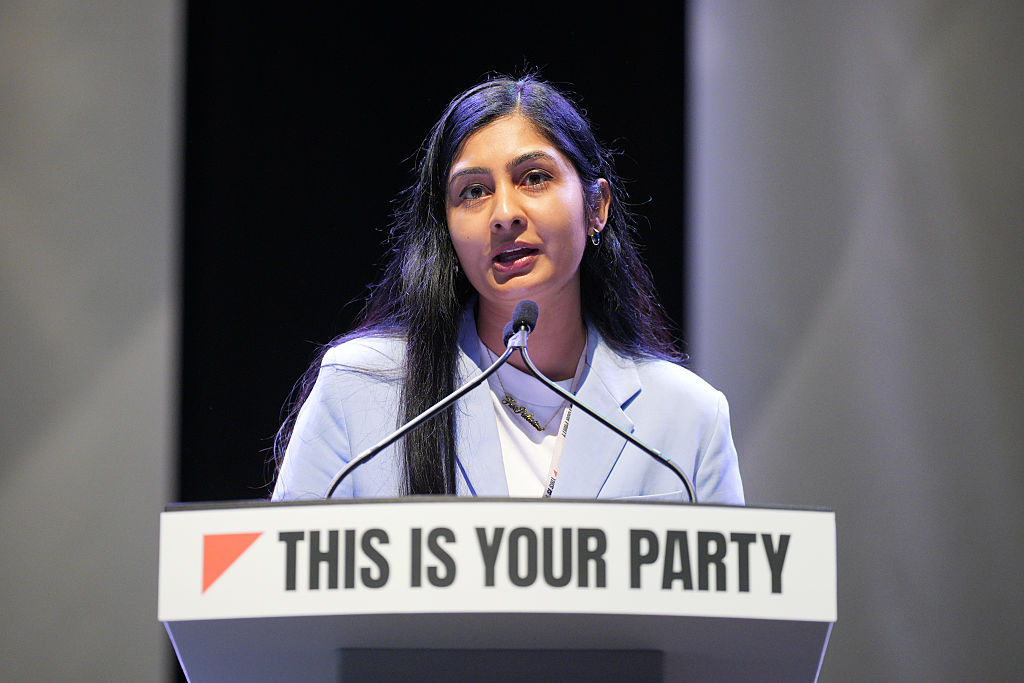
Last summer, MPs Jeremy Corbyn and Zarah Sultana announced the creation of a new left-wing project, Your Party. While it has fallen short of its early promise, its tens of thousands of members could still play a key role in rebuilding the Left. (Christopher Furlong / Getty Images)
After a decade of highs and lows, the British left has entered into a period of realignment. We have for some time been confident of the potency of our ideas: a socialism broadly underpinned by working-class economic power, social liberation, anti-imperialism, and environmental justice. But we’ve long faced a challenge in expressing this politics organizationally. More recently, socialists have come close to a consensus that we need a mass party to provide the unity, direction, and endurance we have desperately lacked.
This is obvious from the focus of debate among comrades from a range of traditions at events like The World Transformed or in left publications. The convergence on the need for a party of our own is a far cry from both the horizontalism that predominated before 2015 and the subsequent participation in the Labour Party under Jeremy Corbyn’s leadership. However, this has not yet translated into agreement on the correct vehicle. Socialists remain divided between three main party-political projects — the Labour left, the Greens, and Your Party — if they have been inspired by any at all.
Labour in Decline
The socialists remaining in the Labour Party follow what critics call a “wait and hope” strategy. Even the Socialist Campaign Group (SCG), which gathers a couple dozen relatively left-wing MPs, has split, with its less radical members gravitating towards the Labour soft-left’s new formation, “Mainstream.” After years in which leader Keir Starmer has purged socialists, they put their faith in Andy Burnham — mayor of Greater Manchester, previously minister in the Tony Blair and Gordon Brown governments, and twice-failed Labour leadership candidate — gloriously returning to Westminster and challenging the prime minister from the left.
Burnham-mania only underlines the exhaustion of the Labour Party as a vehicle for socialist politics. He recently put himself forward to stand in the upcoming Gorton and Denton by-election, in a bid to return to Parliament. This was seen as a national platform, from where Burnham could bid for the party leadership — and for that reason, his proposed candidacy was decisively rebuffed by Starmer’s bureaucratic apparatus. For all the media intrigue, the demand for a Burnham ascendancy is limited to several dozen dissatisfied Labour MPs (just fifty signed a letter objecting). Burnham’s candidacy (for this by-election and, by extension, for prime minister) is an expression of elite machinations and not a reflection of popular political sentiment.
Burnham is surely a very popular politician, having used his mayoral independence to criticize both Tory and Labour governments while narrating his region’s economic success. However, the substance of his political project is an uninspiring combination of electoral reform and a “social” version of developmental capitalism characterized by public investment and limited public ownership. The elephant in the room is that, while the region’s buses may have improved, Burnham’s Greater Manchester experiences the same enduring social problems as the rest of Britain. The genuine socio-ecological transformations needed to address the extortionate cost of everyday life and rapidly decarbonize the economy are simply not on the agenda for any wing of Labour amid its terminal decline.
Greens Surging
The Green Party, by contrast, is currently enjoying a surge in support following the election of “eco-populist” Zack Polanski as leader in September 2025. In continuity with recent decades of Green Party strategy, Polanski’s is a primarily electoral project. As such, the main left argument for participation is that the Greens can be an electoral weapon against the Labour government and as a bulwark against the rise of Nigel Farage’s Reform UK. While they are polling as high as 17 percent (though closer to 14 percent on average), we should not rush to crown Polanski’s Greens as the Left’s most expedient electoral vehicle. They are yet to decisively overtake either Labour or the Tories in the polls and remain unproven in a significant electoral battle. The Gorton and Denton by-election will be such a test, indicating their potential in northern England more particularly.
Polanski’s novel appeal is his supposed ability to respond to the urgent crises in British politics: the rise of the far right, the cost-of-living crisis, and the climate crisis. His bid for support is based on his strong communications strategy, bringing competence to the party’s operation and shifting away from the Greens’ traditionally consensual approach toward antagonism with the ruling class. The party’s political program remains almost entirely unchanged, though. As ever, the Greens offer a generally anti-capitalist suite of broadly popular policies but without foregrounding socialism as the cohering ideology. This is a politics led by social media virality rather than class struggle.
There is, therefore, a necessary precarity to the personalistic nature of the project, dependent on Polanski’s charisma and communicative skill. Right now, the party has no high-profile figures to buttress Polanski’s efforts. Greens Organise are a potential antidote to this, as a new group working within the party for more radical politics, to forge links with movements, and refine organizing strategy. It remains to be seen, though, whether they can effectively develop a new generation of leaders in a similar mold. It today has one hundred ninety thousand members — the majority of them signed up since Polanski’s election — but most remain inactive. Many activists are treating it as a short-term intervention in upcoming elections, until a viable socialist alternative comes along.
Your Party, an Opportunity
This is a point of live debate. Your Party, cofounded by Corbyn and Zarah Sultana MP, has the most promise on this front. It is the only vehicle of the three foundationally committed to building a mass socialist party based in the working class, not just concerned with electoral appeal but prioritizing rebuilding class power and organization. This is surely a difficult task, but a profoundly necessary one to reshape the terms of British politics by realigning the Left into a coherent force. And yet, its founding has so far been mired by incompetence and feuds that have, understandably, discouraged many from participating.
Of the eight hundred thousand people who registered interest upon the first announcement of the party’s founding process last summer, only around fifty-five thousand have since joined as members. In isolation, this number is a strong start — but in the context of the earlier wave of attention, reflects widespread disaffection. For all the failures of leadership, though, a mass socialist working-class party was founded in November, and we should treat this as the historic opportunity it is.
While Your Party’s founding conference was a frustrating experience (with delegates selected by sortition and votes conducted online), its main positive was members voting for a model of collective leadership. The election of the party’s inaugural Central Executive Committee (CEC) is now underway and is primarily contested by two slates of candidates. The Many is backed by Corbyn and organized by his allies, while Grassroots Left was formed by a coalition of new and preexisting socialist organizations and backed by Sultana. The former envisions a party built around the personal leadership of Corbyn and run by the bureaucrats in his orbit. The latter promotes a greater ambition for a deeply democratic mass party, handing leadership to members not just on the CEC but, crucially, in local branches.
Although many are currently disengaged, including with local branch formation stifled by the denial of members’ access to data and resources, Your Party’s eight hundred thousand initial supporters represent a much higher ceiling than the Greens (if they are currently approximating their peak). The challenge now is to give these supporters a good reason to join by building a party of a new type that inspires a commitment to class struggle and socialism, rather than treating members as downtrodden foot soldiers or passive supporters. This is why the current CEC elections are of such existential importance for Your Party. The story so far suggests that Grassroots Left would seek to unleash the creativity and innovations of members whereas The Many would seek to quash it. The very possibility of an organization capable of advancing socialist and anti-imperialist struggle to a new stage is on the line.
Your Party should not be judged on its birthing problems or election results in the short term. Its criteria for success should be constructing a vibrant party life that inspires every socialist in Britain to join as an active participant in struggling for our shared politics. This would be a party developing educated and skilled comrades through political education; democratically determining strategy through collective analysis of our conditions; being active in communities to respond with solidarity to social and ecological crises as they’re experienced in daily life; and creating hubs of socialist culture to transcend capitalist alienation by liberating engagement in literature, film, theater, music, and sport in every community. This is the party we need. We now have an urgent and historic opportunity to bring it into existence.