The Epstein Files Are the Horror That Keeps on Giving
The Epstein files show that while private equity giant Apollo Global Management allegedly stripped companies, wiped out small investors, and misled customers about fees, founder and Jeffrey Epstein confidant Leon Black spent millions on art and parties.
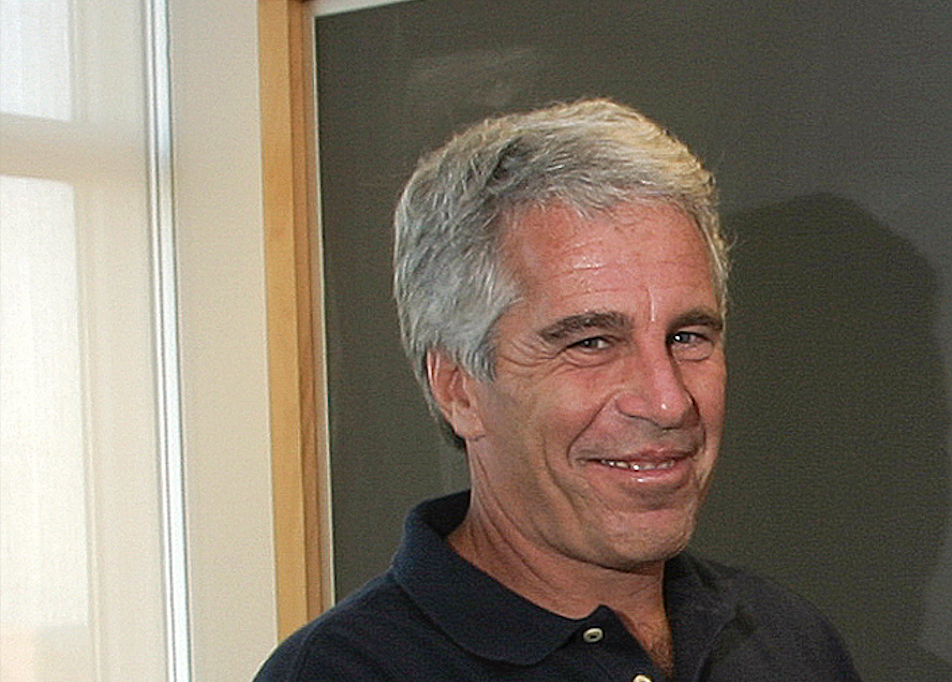
Files on sexual predator Jeffrey Epstein reveal how Wall Street moguls like Leon Black spend the obscene wealth they’ve made. (Rick Friedman / Corbis via Getty Images)
In 2011, as the Wall Street firm he founded went public amid allegedly stripping companies for parts, wiping out small-time investors, and misleading its own customers about fees, Leon Black threw himself a sixthieth birthday party. The two-hundred-plus guests dined on steak, crab cakes, and foie gras; Black’s wife was dressed by fashion designer Vera Wang, and Elton John gave a private performance.
Total price tag? Nearly $3 million.
As founder of the massive private equity firm Apollo Global Management, Black has long been a public face of the industry, which is known for buying up companies in health care and far beyond, running them into the ground while milking them for profits and delivering questionable returns, alongside high fees, to investors and pension fund owners.
But newly released government files on financier and sexual predator Jeffrey Epstein — a close confidant of Black’s — reveal the other half of the private equity playbook: how Wall Street moguls at the helm of these firms spend the obscene wealth they’ve made from allegedly exploiting companies, workers, consumers, and pensioners.
In the case of Black, one of the world’s richest men, that apparently means throwing multimillion-dollar parties, amassing a trove of world-renowned art, and spending more than a billion dollars on personal expenses in five years, according to previously unreported documents from the Epstein files reviewed by the Lever.
“You have a private equity billionaire who’s buying Picasso while the firm that he founded is running companies into the ground,” said Matt Parr, communications director for the Private Equity Stakeholder Project, a watchdog organization that has closely tracked Apollo’s work. “While Black was getting rich, his private equity firm was poorly running hospitals and health care facilities and poorly running companies that have affected people all over the country.”
Black was a longtime associate of Epstein, paying the sex trafficker $158 million for tax and estate planning advice, according to a Senate investigation. (Multiple women have also accused Black of rape, though several suits were later dropped, and Black has denied the allegations.)
Black’s relationship with Epstein led to his resignation as Apollo’s CEO in 2021. That year, an investigation by Apollo’s board of directors found that Epstein “regularly advised” Black on tax and estate planning but that there was no evidence to suggest Black was involved in Epstein’s criminal activity.
The investigation also found that “Apollo never retained Epstein for any services and Epstein never invested in any Apollo-managed funds,” but new Epstein documents released by the Justice Department have raised doubts about that claim. Apollo’s current CEO, Marc Rowan, reportedly communicated with Epstein multiple times after the financier’s 2008 conviction for soliciting a minor, including email exchanges in which the two discussed Apollo’s business.
In a February 18 press release, Apollo wrote that there is “nothing new” in the Justice Department documents and that “despite the flurry of coverage and certain constituents pushing their own agendas, the facts remain the same.”
But Black’s past activities have continued to haunt Apollo, one of the largest private equity firms in the world.
Two of the country’s biggest teachers unions, which have pension investments in and other financial ties to the firm, are now urging the Securities and Exchange Commission to investigate previous “misleading” statements by the investment fund regarding its relationship with Epstein. Apollo’s ownership of the school-picture photography company Lifetouch has led multiple school districts to cancel their contracts with the company, although there is no evidence that Lifetouch shared children’s photos with Apollo or Epstein. Lifetouch has called claims linking it to Epstein “completely false.”
Black has used his riches to influence politics by personally donating more than $1.8 million to candidates from both major parties since 1991, federal data shows. In 2025, President Donald Trump appointed Black’s son Ben Black to lead the US International Development Finance Corporation, an obscure investment arm of the US government that finances various projects worldwide.
A representative for the Debra and Leon Black Family Foundation declined to comment on the document or the Black family’s spending. A law firm representing Black did not respond to a request for comment.
A $1.2 Billion Spending Spree
One document included in the Justice Department’s release of its Epstein investigative files titled “LDB 2011 Financial Summary” appears to show summaries of the Black family’s assets, cash flows, tax estimates, art purchases, charitable gifts, and household expenses for 2011, along with a five-year spending estimate.
In 2011, Apollo raised more than $565 million in its initial public offering. The company was valued at roughly $7 billion that year, with Black owning 26 percent.
The Justice Department records indicate that Black was worth an estimated $3.37 billion in 2011, with $10 million in personal cash. The Black family apparently spent more than $115 million on art that year, including $53.1 million on a Matisse and $13 million on a Picasso. They also purchased more than $644,000 worth of “rare books,” spent more than $810,000 on jewelry, and bought nearly $400,000 worth of clothes.
That same year, according to the records, Black spent more than $1.2 million on domestic staff expenses for his residences in three New York locations, nearly $200,000 on vacations, $73,000 on alcohol, and nearly $3 million on three parties — including $2.8 million alone for his sixtieth birthday bash.
The Justice Department documents also indicate that Black and his family made more than $18 million in charitable donations, including nearly $10 million to Dartmouth University, Black’s alma mater. After donating an additional $48 million the following year, the school named a visual arts center after Black.
In total, according to the document, from 2007 through 2011, the Black family spent an estimated $1.2 billion and paid $377 million in taxes.
It is unclear how the document relates to broader Epstein investigations. The Justice Department has released millions of documents with little to no context, and many prominent figures have been listed in the documents without any indication that they have committed crimes.
Additional documents from the Epstein files unearthed by Forbes indicate that Black, who is a trustee at the Museum of Modern Art in New York, used his fine art collection, worth $1.4 billion in 2017, as collateral for loans from Bank of America. The Forbes documents also highlight the unrealized gains — the amount an investment has increased without being sold — for each piece of art. One document indicates that Black’s artwork earned him more than $700 million in unrealized gains.
While such unrealized gains aren’t taxed, doing so has been a cornerstone of many progressive tax proposals, including California’s new billionaires’ tax, which would require billionaires to pay a one-time tax equal to 5 percent of their net worth.
The ultrawealthy often finance their lifestyles by utilizing a strategy known as “buy, borrow, die,” in which they buy investments like property, fine art, or stocks, take out loans using the investments as collateral, and then bequeath the investments to their heirs when they die, eliminating capital gains taxes that would have come with selling the assets.
A study by Yale University’s Budget Lab, a nonpartisan economic research center, found that closing the legal loophole allowing such schemes could generate an average of $102 billion to $147 billion in annual tax revenue over a ten-year period.
“There’s a lot of tax breaks for these private equity executives,” Parr said, “and so they’ve been able, through the carried-interest loophole and other loopholes, to really amass a great amount of wealth, while these private equity companies that they founded run businesses into the ground or really affect patients and consumers.”
“Cost-Cutting and Risky Behaviors”
Black rose through the financial industry’s ranks in the 1980s by working for a now-defunct company called Drexel Burnham Lambert, one of the most prolific players in the 1980s junk bond industry, which traded in risky loans to distressed companies. Black was eventually named head of mergers and acquisitions at the company.
But Drexel Burnham Lambert went bankrupt in 1990 after it faced multiple federal investigations for insider trading and fraud, with at least one of its executives pleading guilty to multiple felonies.
That same year, Black and several coworkers founded Apollo. Since then, the firm has become one of the largest private equity firms in the world, with investments in health care, manufactured homes, shipping, movie theaters, and many other sectors.
Apollo’s health care companies came under scrutiny in 2025 when Sens. Chuck Grassley (R-IA) and Sheldon Whitehouse (D-RI) investigated “the harmful effects of private equity on the U.S. health care system.”
The report found that Apollo was the country’s largest owner of private equity–owned hospitals, with a portfolio of 220 mostly rural hospitals nationwide. The senators noted that while patients at such hospitals face longer wait times, poor quality care, insufficient staffing, and other problems, “Apollo, the firm, has received benefits to the tune of millions of dollars annually.”
In a statement to the Lever, Apollo said it has “invested billions of dollars” into its hospitals, which it says “has been used to improve facilities, expand local healthcare services, recruit care providers, build new centers of care, and upgrade technology.”
The Senate investigation wasn’t the only time Apollo has been criticized for cost-cutting in critical industries like health care.
“[Apollo] has been very much acquiring health care chains, acquiring hospitals, acquiring psychiatric hospitals, and there is a litany of patient problems, worker issues, service and job cuts like at these hospitals that we’ve documented over the past decade,” said Parr. In 2024, the organization found that private equity–owned hospitals can jeopardize patient care by reducing staff and pushing costly procedures, among other questionable activities.
Black likely never had to worry that such hospital cutbacks would impact his own health.
Based in the New York City area, Black and his family allegedly spent more than $190,000 on medical expenses in 2011, according to the Justice Department document. That involved only $500 or so on hospitals, but more than $60,000 on doctors and dentists, and $66,000 alone on “psych therapy.”