Survivor Has Become a Bleak Mirror of Modern Capitalism
When Survivor debuted in 2000, its appeal stemmed from the tension of clashing values, with some contestants taking a nakedly transactional approach and others appealing to the common good. In recent years, market logics have won.
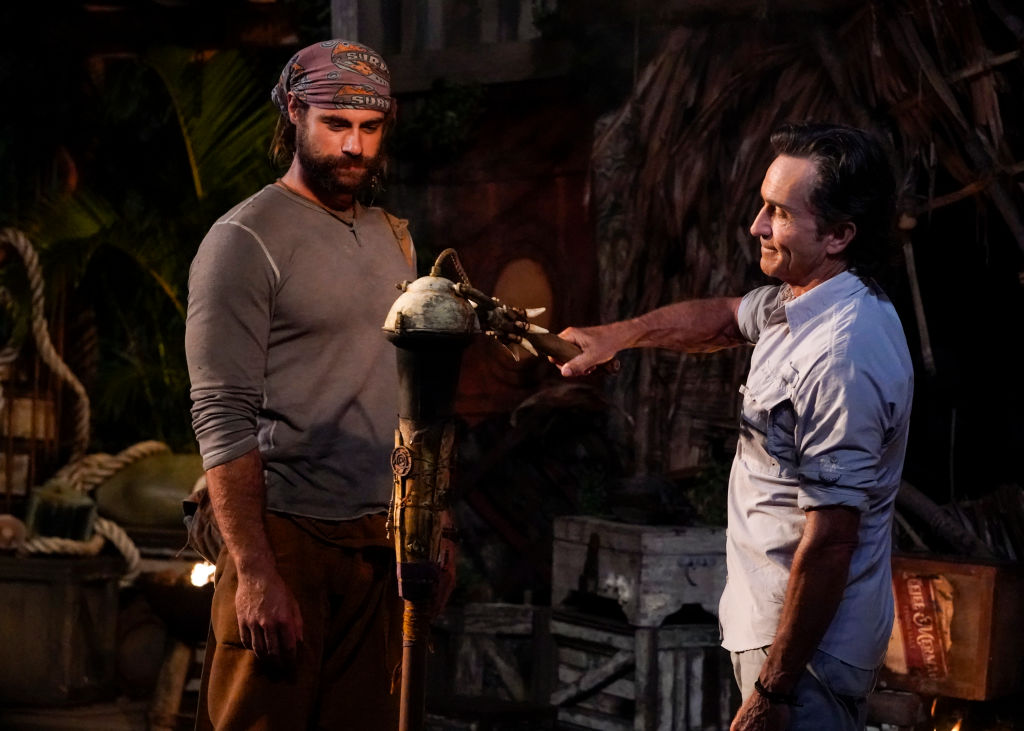
In the newer seasons of Survivor, contestants must build out their résumés, rapidly accumulate assets, and tolerate speculative risk. No wonder the show is losing viewers. We deal with capitalism every day and don’t need a simulation. (Robert Voets / CBS via Getty Images)
For twenty-six years, CBS’s Survivor has positioned itself as a grand experiment in traditional American meritocracy. Any individual who was smart, hardworking, and resilient enough could win the day. But in recent years, the game has evolved into something far more unjust. Indeed, Survivor has become a simulation of the economic system we experience every day.
The fundamental premise of Survivor has remained consistent since the turn of the millennium. A group of sixteen to twenty-four castaways is dropped into a remote tropical location where they must endure the elements, navigate physically and mentally demanding challenges, and face elimination at the hands of their peers. Each episode culminates at “Tribal Council,” an open-air forum where host Jeff Probst interrogates the tribe’s dynamics before the players cast secret ballots to evict one of their own. The final two or three remaining players make their case to a jury composed of previously eliminated players. These jurors vote not on who survived the longest, but on who best navigated the game’s social and strategic hurdles, awarding the winner the title of “Sole Survivor” and a $1 million prize.
When Survivor began filming its first season in the spring of 2000, the participants were unsure if they were in a hardcore adventure documentary or The Real World set in the jungle. Whatever it was, the American public was hooked: 51.7 million people tuned in for the finale to watch thirty-nine-year-old corporate consultant Richard Hatch defeat twenty-two-year-old river guide Kelly Wiglesworth. A cultural phenomenon that would redefine reality television was born. Throughout the show’s early years, Survivor’s cast was a genuine cross section of the country. Players fell in love, suffered medical evacuations, and launched careers in entertainment and media. They failed and triumphed, bonded and betrayed, and did it all with authentic, relatable, messy human emotion.