Meet Diana Moreno, Zohran Mamdani’s Successor in Queens
With Zohran Mamdani now mayor, Diana Moreno’s run for his old assembly seat in Queens tests how durable democratic socialist organizing has become in New York.
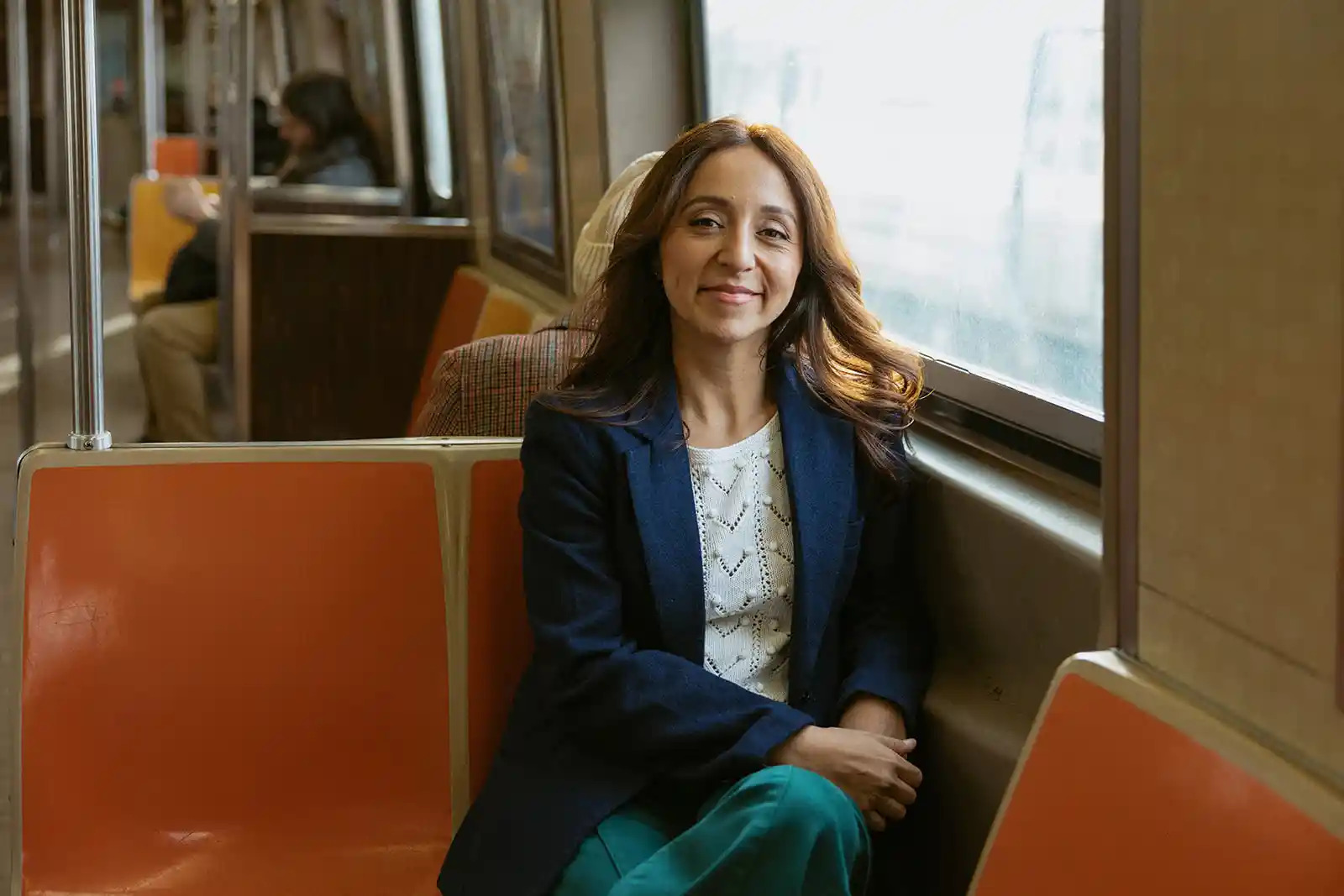
From Astoria to city hall, democratic socialism has already reshaped New York politics. Diana Moreno is now carrying that project forward — on her own terms. (Diana for Queens)
Diana Moreno, were she to emerge victorious tomorrow, would have perhaps the largest shoes to fill of any first-term state legislator in New York State history.
Assembly District 36 in Queens, which spans the neighborhoods of Astoria and Long Island City, was, until recently, represented by none other than Zohran Mamdani. On his way to becoming the New York City mayor, Mamdani took the nation by storm: injecting “affordability” into the zeitgeist, coalescing renters into a political class, and winning back disaffected immigrant voters, while rooting his campaign in universal demands.
Mamdani, elected in 2020, built his political base in Astoria: visiting small businesses on Steinway Street (Little Egypt), worshipping at local mosques on Friday evenings, hosting community events and volunteer canvasses at Astoria Park, and attending Queens Democratic Socialists of America branch meetings. The coalition — young people, renters, Muslims, South Asians — that later propelled Mamdani to the mayoralty was first built in western Queens. Now, Mamdani has endorsed a like-minded successor, Diana Moreno, a fellow democratic socialist. Moreno is facing off with two other candidates (Rana Abdelhamid and Mary Jobaida) in the February 3 special election.
But to describe Moreno solely as an acolyte of Mamdani doesn’t do her or the movement that has helped propel her to the precipice of office justice. I met Moreno, thirty-eight, at the Little Flower Cafe on 36th Avenue, a favorite spot of locals. She stands a mighty five feet two inches, with double-braided hair that hangs out of her ZOHRAN FOR NYC beanie. If authenticity is the political currency of the day, Moreno has it in spades: polished rhetoric but raw conviction, the kind of emotion sorely lacking from the Democratic establishment. An immigrant who came to Queens like so many others in the hope of starting anew, Moreno has built a resilient life for herself as an organizer and mother.
Moreno is keenly aware that her campaign is not happening in a vacuum. In the quiet moments of our interview, I can see the weight of the world on her mind. Long reluctant to run, despite repeated urging from people in her political circle, she set any hesitations aside. The political moment, she felt, no longer allowed for it.
Lineages of Dissent
Organizing is in Diana Moreno’s blood, literally.
Her grandfather grew up in the highlands of Ecuador, and could not afford shoes until he was seventeen. After joining the military, his way out of poverty was learning how to drive, becoming a chauffeur and then a bus driver active in his union. As a child, she always heard him talking about politics or listening to the radio (“Grandpa is not home, he’s at a protest”). Being around him, Moreno said, “politicized me without knowing it.”
Moreno was raised in Quito, the capital of Ecuador, to a mother who taught social studies and a father who also drove buses. “My dad was the first feminist I ever knew,” Moreno recalls, encouraging her to always advocate for herself. “He pushed me to the center of the room and told me my voice mattered.” But in 1999, severe inflation and the devaluation of the sucre imperiled the middle-class life that Moreno’s family had fought hard to maintain. “They subsidized the banks, but not the people,” she lamented. From 1999 to 2000, approximately four hundred thousand Ecuadoreans migrated to the United States. Moreno and her family were among them, settling in Lakeland, a “medium sized” town between Orlando and Tampa, Florida; a place that, on paper, appears racially diverse, but in actuality remains segregated. “This is not the multicultural United States that I grew up watching on television,” she thought. The family of four had sold everything to start from scratch; after renting an apartment and leasing a car, there was barely any money left in their bank account.
Moreno was one of only a handful of Latino students at her public school. “Early on, I whitewashed my identity,” she reflected, saying she never spoke about her family among her peers. Moreno became her family’s de facto translator, a role all too familiar for immigrant children, and one that “parentifies” them at a young age. She would enroll herself in school, help her parents apply for jobs, and open their bank accounts for them. Her parents were still learning English, and their youngest daughter often bore the brunt of the discrimination directed at her mother and father. As a teenager, Moreno picked up insults her parents did not. “A lot of immigrant kids don’t have emotional room, because their parents are too stressed. I never ‘had’ a problem between middle school and high school. I wanted to be a good kid.”
Her political trajectory is undoubtedly recognizable to many millennials: disillusionment in the wake of the Iraq War, hope upon the emergence of Barack Obama, followed by disappointment at incrementalism. The “drumbeat” toward war after September 11, Moreno tells me, was her first “politicizing” experience. “I organized a walkout of my high school . . . and all of three people, including me, walked out.” She knocked doors for Obama in Gainesville and Lakeland, and even took a road trip to Washington, DC — a twelve-hour drive — for the inauguration. Obama ’08 was the “first time” Moreno heard about “community organizing, grassroots support, engaging the youth” from a political campaign. But her political awakening was happening alongside the Great Recession. Moreno’s parents lost their home during the financial crisis, in a Wells Fargo junk-bond mortgage that was later revealed to have been specifically targeted to immigrant people of color. In Ecuador, the government had bailed out the banks at the expense of working people; now, the United States had done the same.
What Was the American Dream For?
In Florida, Moreno worked as a human rights monitor for farmworkers, tasked with ensuring workers had access to bathrooms, shade, and water. To this day, Moreno is a testament to the oft-overlooked, more progressive organizing community in central Florida (she was part of a group that occupied the Florida capitol after Trayvon Martin was killed). “I feel really sad that what people think of Florida now is Mar-a-Lago and Ron DeSantis.” For Moreno, community and organizing were always intertwined; so naturally, after moving to Queens in 2019, she joined New York City Democratic Socialists of America (NYC-DSA).
“Coming to Queens was the first time I felt at home since I was in Ecuador. I could be fully myself.” At branch meetings in the “World’s Borough,” home to more immigrants than any other county in the country, Moreno met “beautiful, interesting, and value-aligned people.” One of them was Zohran Mamdani. The two first crossed paths at a Queens DSA meeting, and the future mayor invited Moreno to Diamond Dogs, a local watering hole. When Mamdani ran for state assembly at the height of the COVID-19 pandemic, Moreno “wrote so many postcards [her] hands hurt.” Like many, when Mamdani, always organizing, approached her with his audacious plan to run for mayor, Moreno was originally taken aback but ultimately decided “this was not a moment to be pragmatic.” Moreno, wearing a keffiyeh, is featured in Mamdani’s launch video, pushing a stroller carrying her newborn son, saying “I want to raise my kid in New York.”
“I got pregnant one month after the genocide in Gaza started. My relationship to motherhood cannot be divorced from witnessing the world dehumanize children in Palestine.” For years, Moreno had been asked by comrades, friends, and neighbors to run for office. Even after Donald Trump was reelected president, Moreno resisted, wanting to spend time with her son. She tried to recruit others, but to no avail. The political moment, which Moreno has described as a mix of crisis and awakening, wore heavily on her.
“Everybody has a role to play. If I don’t do this, I will regret it.”
But she doesn’t see it all as self-sacrifice. “When you play a role in the movement,” she tells me, “you feel alive. Sometimes, we frame involvement as sacrifice. But this is not the exploitative work of capitalism, this is the generative and fulfilling work of building power.”
The People’s Republic of Astoria
A victory tomorrow would cap off a decade of electoral wins (Alexandria Ocasio-Cortez, Tiffany Cabán, Kristen Gonzalez, Zohran Mamdani) in Astoria for the New York City chapter of Democratic Socialists of America. But such success can only be sustained with connection.
“Zohran did a beautiful job of getting people out of the house and connecting them at a time when we are told that people who look like me, or are Muslim, or are trans, are the enemy. Democratic socialism sees class as our main point of connection. My comrades come from different backgrounds, faiths, and ethnicities, but we find such a healing point of connection in our belief and vision for a world where people have their basic needs met. This work is how we survive these times.”
Moreno and I spoke at length in December, before Immigration and Customs Enforcement (ICE) and Border Patrol were deployed en masse by the Trump administration to Minneapolis, which led to the murders of Renee Nicole Good and Alex Pretti. In reviewing Moreno’s remarks, I could tell she was preparing for such a grim scenario, a potential federal occupation of New York City. “These people have the megaphone, but they have always been there.” Moreno, who came to the United States at age eleven, was never naive to the depth of these anti-immigrant sentiments. “At the bare minimum,” she tells me, “anyone who is running for office in 2026 should be calling for the abolition of ICE. That’s the floor.” The political calculations felt like a distant priority, though, as Moreno presciently and passionately talked about mass disruptions, rapid response, and community training as the bulwark against the Right. “You can’t legislate your way out of fascism.”
Motherhood, which once made Moreno hesitant to run for office, now spurs her forward: “I want to fight like hell for my son, I want to fight like hell for all kids. I call myself a Ms Rachel socialist. When I think about the path forward, I am choosing the path that I want for my child. The alternative is so f—king dark, a tech oligarch–led dystopia. I can’t even wrap my head around raising my kid in that kind of future.”
Moreno pauses, as tears well in her eyes.
“We have to fight for something better,” her voice cracks. “We have to.”