Today’s Protests in China Have Been Years in the Making
After years of uniquely repressive COVID policies, protesters across China are demanding the lifting of restrictions and democratic rights. But this eruption is the latest manifestation of conflict that has been roiling China for the past three decades.
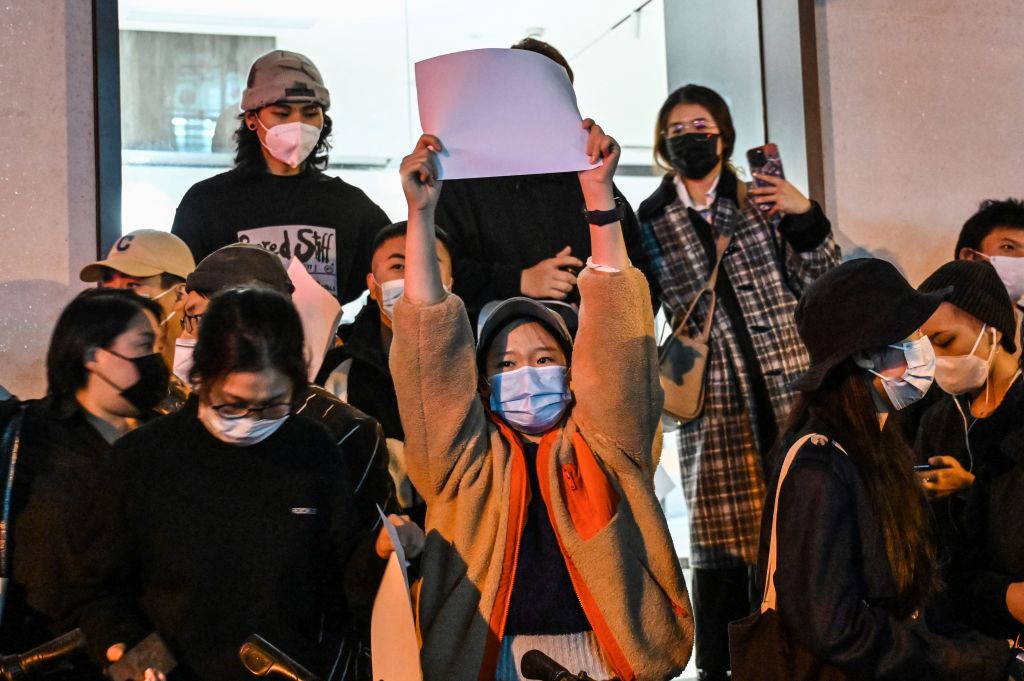
People in Shanghai hold up blank signs as a way of protesting China’s zero-Covid policy on November 27, 2022. (Hector Retamal / AFP via Getty Images)
On November 24, at least ten people — and maybe many more — died in an apartment fire in Ürümqi, the capital of China’s Xinjiang region. Videos filmed by helpless neighbors suggested the victims could not escape the building and rescuers could not reach them because of harsh COVID restrictions. The restrictions had been in place in the city for over a hundred days, longer than anywhere else in China (although the lockdown in Lhasa, the capital of the Tibet Autonomous Region, came close). And the controls were layered on top of Xinjiang’s already elaborate system of police checkpoints, surveillance cameras, neighborhood watches, and home visits by Communist Party cadres.
In other regards, though, conditions in Ürümqi echoed those in other parts of the People’s Republic during the pandemic: daily tests required to enter public spaces; disinfectant sprayed everywhere, sometimes even through the doors of people’s homes; sudden cordons imposed on neighborhoods; forced bus rides to bare quarantine facilities; and, crucially, blocked fire exits. After initial pride in the government’s zero-COVID strategy, which had up to then spared the country the high death tolls seen elsewhere in the world, many in China had become weary with authorities’ inhumane, imperious implementation of the policy.
When protests erupted across China in the days after the Ürümqi fire, they rightly captured the world’s attention. The anger on the streets was palpable. And the gutsiness of the demonstrators drew immediate comparisons to the 1989 Tiananmen Square democracy movement.