Trump Is Breaking His Word on Credit Card Regulation

Donald Trump has long claimed he wants to lower credit card interest rates. His regulators are intervening in a legal battle to do the opposite.
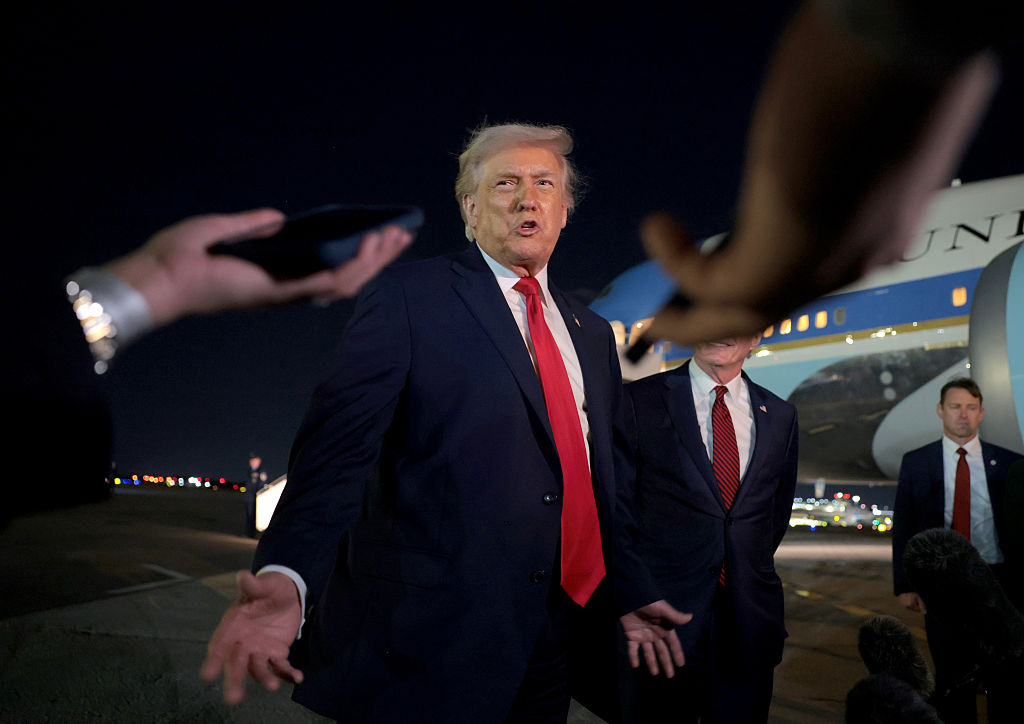
Trump regulators argued a Colorado law that would cap credit card interest rates cuts into credit card companies’ profit margins, forcing lenders to be more selective in extending credit to borrowers. (Anna Moneymaker / Getty Images)

A month before President Donald Trump renewed his calls last week to take on Americans’ crushing consumer debt by capping credit card interest rates, his administration quietly intervened in a legal battle to do the opposite.

In December, Trump’s Office of the Comptroller of the Currency and the Federal Deposit Insurance Corporation (FDIC), which oversee the nation’s financial regulations, filed legal briefs in a case opposing a new Colorado state law that would rein in soaring interest rates on financial products, including credit cards.

Colorado’s effort shares similar aims as a 10 percent credit card interest rate cap that Trump has repeatedly claimed he wants to implement at the federal level, a policy championed by progressive lawmakers such as Sen. Elizabeth Warren (D-MA), Sen. Bernie Sanders (I-VT), and Rep. Alexandria Ocasio-Cortez (D-NY).

In recent years, credit card interest rates — charged on outstanding balances that customers haven’t fully paid off each month — have increased to an average of 24 percent, becoming one of the most significant expenses for households and costing consumers an estimated $120 billion every year. Credit card debt has reached a record high for Americans, potentially dampening consumer spending among other economic downsides.

For years, financial lenders have been pushing those rates higher by exploiting a loophole called “rent-a-bank.” This scheme allows financial institutions to circumvent state-level rate-capping laws by applying light-touch regulations from their home states to other locales where they do business.

A 1978 US Supreme Court ruling legalized the practice, but Congress subsequently created a pathway for states to opt out of this system and enforce their own usury laws. A handful of states and US territories, such as Iowa and Puerto Rico, have since cracked down on these rent-a-bank schemes, with Colorado becoming the latest to do so in 2023. Oregon is currently weighing similar legislation.

The December legal briefs filed by Trump’s banking regulators demand a rehearing after an appeals court in November 2025 upheld the Colorado law, dealing a blow to a legal challenge from three trade associations representing the financial services and banking sectors. The Trump administration’s intervention in the case on the side of the financial industry comes months after Trump’s FDIC withdrew its prior Biden-era support for Colorado’s law.

In the legal briefs, the Trump regulators argued the law cuts into credit card companies’ profit margins, forcing lenders to be more selective in extending credit to borrowers.

“The panel decision threatens to diminish the vibrancy of the dual banking system and to harm consumers by reducing their access to credit across the country,” reads the brief from the Office of the Comptroller of the Currency submitted to the Tenth Circuit Appeals Court.

The American Bankers Association made a near-identical argument in its amicus brief in the Colorado case. Now those same talking points are being weaponized against Trump’s promise to cap credit card interest rates.

Shortly after Trump’s announcement last week, the American Bankers Association, a trade association representing the banking sector, responded with a press release noting that “Evidence shows that a 10% interest rate cap would reduce credit availability and be devastating for millions of American families.”

Proponents of stricter regulations on the matter point to evidence that suggests the opposite. They argue the caps would save consumers billions of dollars each year and that credit card companies could easily absorb the lower rates, given that the financial sector has reams of other profitable cash cows, such as credit card swipe fees charged to merchants.

The industry players suing to block Colorado’s interest-cap law have donated large sums to the Republican Party and Trump in recent years. For instance, the American Financial Services Association contributed nearly $500,000 to Republican candidates and spending vehicles in the 2024 election cycle through the trade group’s political action committee.

The American Bankers Association’s membership includes major US banks that contributed to the Trump Inaugural Committee. JPMorgan Chase, Goldman Sachs, and Capital One each donated $1 million to the fund.

When Trump reannounced on January 9 that he intends to make good on his campaign promise to cap credit card rates, he did not specify whether he would do so via executive order or push for congressional legislation. The post was immediately met with resistance from members of the Republican Party in league with the financial services industry.

Meanwhile, Trump has gutted the Consumer Financial Protection Bureau, one of the top financial regulators tasked with safeguarding consumers from predatory behavior. During the Biden administration, the agency used its authority to cap the overdraft and late fees that banks charge their customers. The Trump administration has since withdrawn this rule, which was projected to save consumers an estimated $6 billion a year.