Seattle’s New Mayor on Her “Sewer Socialist Mentality”
Ahead of her swearing in today, Seattle mayor Katie Wilson talks to Jacobin about the everyday pressures squeezing working-class people and why she’s a democratic socialist.
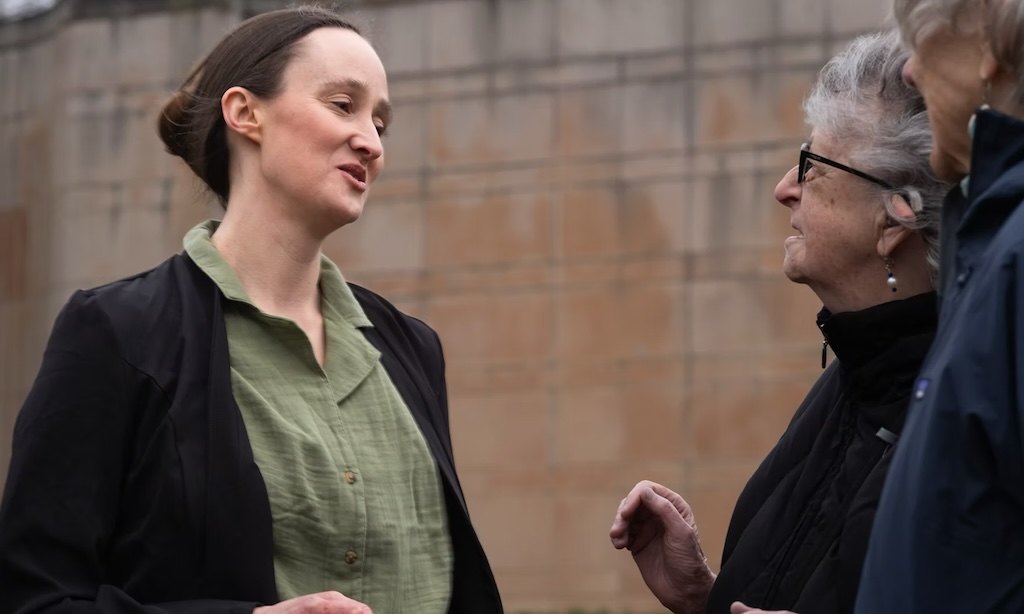
Katie Wilson, a self-described democratic socialist and longtime community organizer, narrowly defeated incumbent Mayor Bruce Harrell in November in a race that reflected deep public frustration with rising housing costs, homelessness, and economic inequality. (Photo by Sarah Kusz / courtesy of Katie Wilson for Mayor)
Katie Wilson is being sworn in today as the fifty-eighth mayor of Seattle, following one of the closest and most consequential mayoral contests in the city’s recent history. Wilson, a self-described democratic socialist and longtime community organizer, narrowly defeated incumbent Mayor Bruce Harrell in November in a race that reflected deep public frustration with rising housing costs, homelessness, and economic inequality.
Wilson’s path to City Hall was not conventional. A political newcomer in terms of elected office, she built her reputation over more than a decade as cofounder and leader of the Transit Riders Union, advocating for transit equity, renter protections, and progressive revenue measures such as the JumpStart payroll tax on large employers. Her campaign tapped into widespread dissatisfaction with Seattle’s affordability crisis — where many households spend a disproportionate share of income on housing — and offered a platform centered on expanding affordable and social housing, rethinking public safety approaches, and pursuing tax and spending reforms to shift the city’s policy priorities.
In a wide-ranging conversation with Jacobin, Katie Wilson discusses how her administration plans to confront Seattle’s affordability crisis, and what it would mean for a democratic socialist to govern effectively from City Hall. Wilson reflects on the limits of symbolic politics, the hard trade-offs of executive power, and the challenge of delivering tangible improvements in everyday life — while building a broader working-class coalition capable of sustaining change beyond a narrow electoral victory. The interview has been edited for length and clarity.