Zohran Mamdani Is Right to Stand By Cea Weaver
The failed push to sink Zohran Mamdani’s appointment of tenant organizer Cea Weaver was an attempt to remove a highly effective advocate for renters, who landlords and the real estate industry hate because she has consistently defeated them.
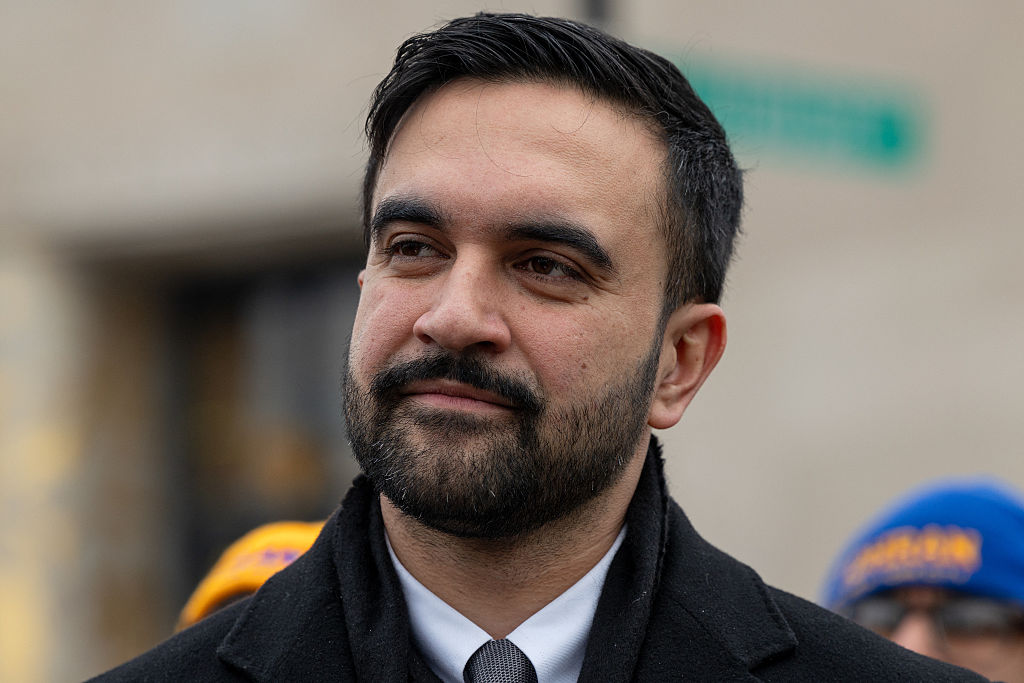
The absurd right-wing campaign to pressure Zohran Mamdani to oust Cea Weaver, his appointed director of the Mayor’s Office to Protect Tenants, has failed, much to landlords’ chagrin. But it won’t be the last time they try. (Jason Alpert-Wisnia / Hans Lucas / AFP via Getty Images)
Last June, a tenant organizer named Cea Weaver wrote an article for Jacobin that bluntly opened with the line, “Real estate runs New York.” She noted that “poll after poll” showed that New Yorkers’ top concern is rent, but “disgraced mayor Eric Adams” openly declared, “I am real estate.” Former governor Andrew Cuomo, who was running to replace Adams, offered more of the same. Cuomo had “a long record of blocking tenant-protection regulations and ensuring that his real estate donors are earning huge returns on their investments.”
There was one candidate, though, who offered a different path. Where Adams and Cuomo identified with the landlords, democratic socialist Zohran Mamdani was campaigning on concrete material improvements for the tenants who make up the great majority of the city’s population. Instead of kowtowing to the “oligarchic real estate industry,” he was talking about going after irresponsible slumlords, freezing the rent for the nearly two million New Yorkers who live in rent-stabilized apartments, and building as many new units as possible of affordable, union-built, publicly subsidized housing.
After being sworn in as mayor, Mamdani took immediate measures to make good on that platform. He issued an executive order to comb through city records to locate city-owned or city-affiliated properties that would be appropriate for new housing construction. His first public appearance as mayor — mere hours after his inauguration, at a time when most politicians would be throwing a black-tie gala — was to personally investigate conditions at a derelict Brooklyn apartment building in Brooklyn where tenants had organized a tenant union.
In the lobby of that apartment building, he revived the withered mayor’s Office to Protect Tenants and appointed Cea Waver to head it.
Naturally, this outraged the real estate industry and their political allies. Weaver is a well-known quantity to them, given her history as an incredibly effective tenant organizer, with numerous and substantive wins for renters under her belt. She played a key role, for example, in winning 2019 legislation that massively strengthened tenant protections and rent stabilization in New York.
“Weaver and her organization, Housing Justice for All, have been a driving force behind policy initiatives most feared by the real estate industry,” wrote Kathryn Brenzel in the New York real estate publication the Real Deal. She “has long been a thorn in the real estate industry’s side.”
So the oligarch-owned New York Post and other right-wing outlets, always eager to carry water for the wealthy, went to work. Apparently unable to find any more recent material for their campaign against Weaver, they started combing through her since-deleted tweets from six to nine years ago. Mostly, what they highlighted was that during the era of peak wokeness, Weaver was advocating material improvements for working-class tenants of all races. But back then, she sometimes couched this advocacy in the kind of identity-based framing that was pervasive in left-wing spaces at the time, focused on disproportionality instead of universalism. Landlords and upper-middle-class homeowners who need their housing value to go up to have a comfortable retirement are disproportionately white, while struggling tenants who could barely afford the rent are disproportionately black or brown. In this era, Weaver sometimes described policies that favored landlords and prosperous homeowners in terms of “white supremacy” or framed more materially egalitarian housing policy as a matter of helping minorities defeat the interests of the “white middle class.”
Anyone who was active on the Left back then will remember that this kind of rhetoric was everywhere. It was a serious problem, but Cea Weaver was very far from the worst offender. If you read her contributions to a discussion of housing policy in 2019, for example, you’ll find mostly class-focused appeals even then. Everything her opponents turned up suggests that when she used racialized rhetoric, the point was mostly to appeal for support for economically egalitarian housing policy in a rhetorical environment where progressives overwhelmingly preferred to frame social justice in terms of marginalized demographic groups getting their rightful piece of the pie.
This strategy was a mistake, as some — including many of us at Jacobin — argued at the time. One vivid illustration of why this framing never made sense was offered by socialist scholar Adolph Reed, who described a frustrating argument with a black nationalist radio host who told him that, even though many white people are poor, the important point is that there’s so much more white “collective” wealth than black “collective” wealth. Reed asked his readers to imagine “a white nurse down on her luck and in danger of eviction trying to dip into the collective pot of white wealth for a subsidy, or maybe texting Elon Musk to pitch in.”
Rather than confusing the issue by mixing in identity politics, it’s far better to directly appeal to people of all races who share the same material interests on the basis of those material interests. Such broad mobilizations of the working class are actually a powerful tool for combating racism and other harmful prejudices.
If Cea Weaver in 2019 or 2020 combined elements of both approaches, in more recent years, like much of the Left, she’s evolved toward a consistently better rhetorical approach. There’s a reason why the tools of the real estate industry poring over her posts like the worst wokescolds of times gone by haven’t been able to find anything from the last several years. She has evolved alongside Zohran Mamdani, who tightened up his own rhetoric to, in his own words, pursue “a relentless focus on an economic agenda.” Rarely has any candidate been better at sticking to a message. As I wrote for Jacobin when he was first elected, “If you woke Zohran up in the middle of the night, I expect he’d mumble something about ‘affordability.’”
Some critics have argued that her improvement can’t be genuine because she never did any sort of big public mea culpa until her old tweets were thrown in her face last week. This is ridiculous. The goal of the universalist dissenters’ critique of such rhetoric on the Left was never to induce leftists who erred to engage in some dramatic act of public repentance. That’s not how political evolution generally works. Usually, when people change their minds and attitudes, their approach just quietly matures. And the more you demand performative repentance, the less space you create for normal growth. Inability to understand this was, in fact, one of the primary complaints about the woke style of left politics from critics like me.
And the debate over all of this rhetoric obscures the more important issue here: that the Right was going after a tenant organizer because she is extremely good at organizing tenants. The good news is that the campaign to embarrass Mamdani with Weaver’s old posts and pressure him to drop her fell flat.
Last Wednesday, the mayor was asked about the controversy while he was announcing another appointment. Instead of entertaining any insinuation that Weaver would somehow use her office to go after white landlords while leaving nonwhite landlords alone, Mamdani stood by his appointee. “Cea Weaver is someone that we hired to stand up for tenants across the city,” he told reporters, “based on the track record that she had of standing up for tenants across the city and the state.” In other words, precisely because he cares about broad-based class politics, he’s not going to give into the real estate oligarchs and the New York Post and fire Weaver.
As Ross Barkan argued in New York Magazine’s Intelligencer, Weaver brings a lot of experience on the issue to her new role, and she wouldn’t be “easily replaced.” Moreover, Mamdani would have little to gain and much to lose by folding to pressure at the outset of his administration. His popularity with New Yorkers is robust, and the media will move on. Meanwhile, handing his opponents an “early victory” would hardly pacify them. It would signal weakness and invite more of the same. What would hurt Mamdani, Barkan argued, would be actual “failures of governance.”
In other words, what matters for translating his early popularity and momentum into lasting success is delivering the goods for working-class New Yorkers. And a key part of the agenda is precisely the tenant advocacy to which Cea Weaver has dedicated her adult life. Shrugging off the pearl-clutching demands to drop her was absolutely the right call.
Mamdani understands that this won’t be the last time right-wing media tries to undermine his affordability agenda with manufactured controversies. Such attacks will be incessant. Given that the mayor himself and many key members of his administration came of age politically at a moment when counterproductive identitarian rhetoric was everywhere on the Left, we’ll probably even see repetitions of this particular script — where in a neat inversion of woke logic, Mamdani-aligned figures are canceled over their wokest tweets from 2020. As he did with the campaign against Weaver, Mayor Mamdani will need to again brush these attacks aside. The betterment of millions of working-class New Yorkers’ lives will depend on it.